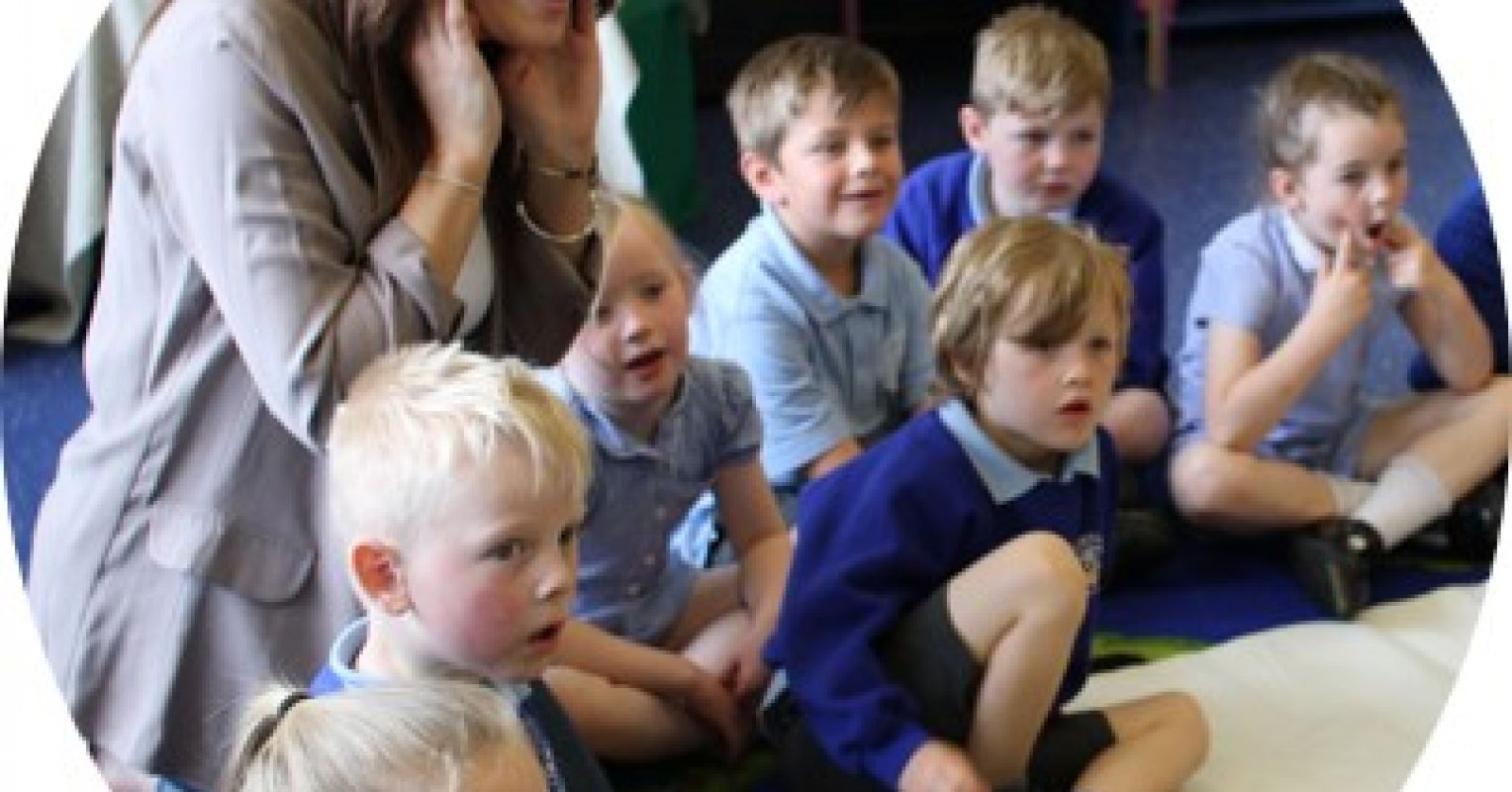
"Systematic developmental and neuro-phenomenological research is needed to understand childhood consciousness. Anyone who has spent time with young children knows they have a way of saying things that make you pause and reconsider what you thought you understood. Many report non-ordinary experiences-moments of "just knowing," feeling outside their bodies, or sensing a deep unity with the world around them. These accounts suggest a form of consciousness that is relational, pre-linguistic, and not yet organized around a solid, separate self."
"In a recent preprint, Donna Thomas and I teamed up to explore the striking parallels between these early exceptional experiences and adults' pursuit of altered states of consciousness (ASCs). While children may slip naturally into states of self-transcendence or extrasensory sensitivity, adults often rely on "gateway tools" to revisit similar territory- meditation, prayer, breathwork, psychedelics, or other consciousness-altering practices. ASCs can arise in many ways."
Young children frequently report non-ordinary experiences such as 'just knowing', out-of-body sensations, or a felt unity with the world, reflecting relational, pre-linguistic consciousness not organized around a separate self. Early childhood descriptions (ages 4–5) often portray consciousness as holistic, love-infused, and connected to family, nature, and a purposeful universe; by ages 10–11 many children begin to construe consciousness as an individual 'I-ness.' Parallels exist between children's spontaneous self-transcendence and adults' pursuit of altered states via meditation, prayer, breathwork, or psychedelics. Systematic developmental and neuro-phenomenological study is needed to clarify trajectories and mechanisms.
#childhood-consciousness #altered-states-of-consciousness #self-transcendence #developmental-research
Read at Psychology Today
Unable to calculate read time
Collection
[
|
...
]