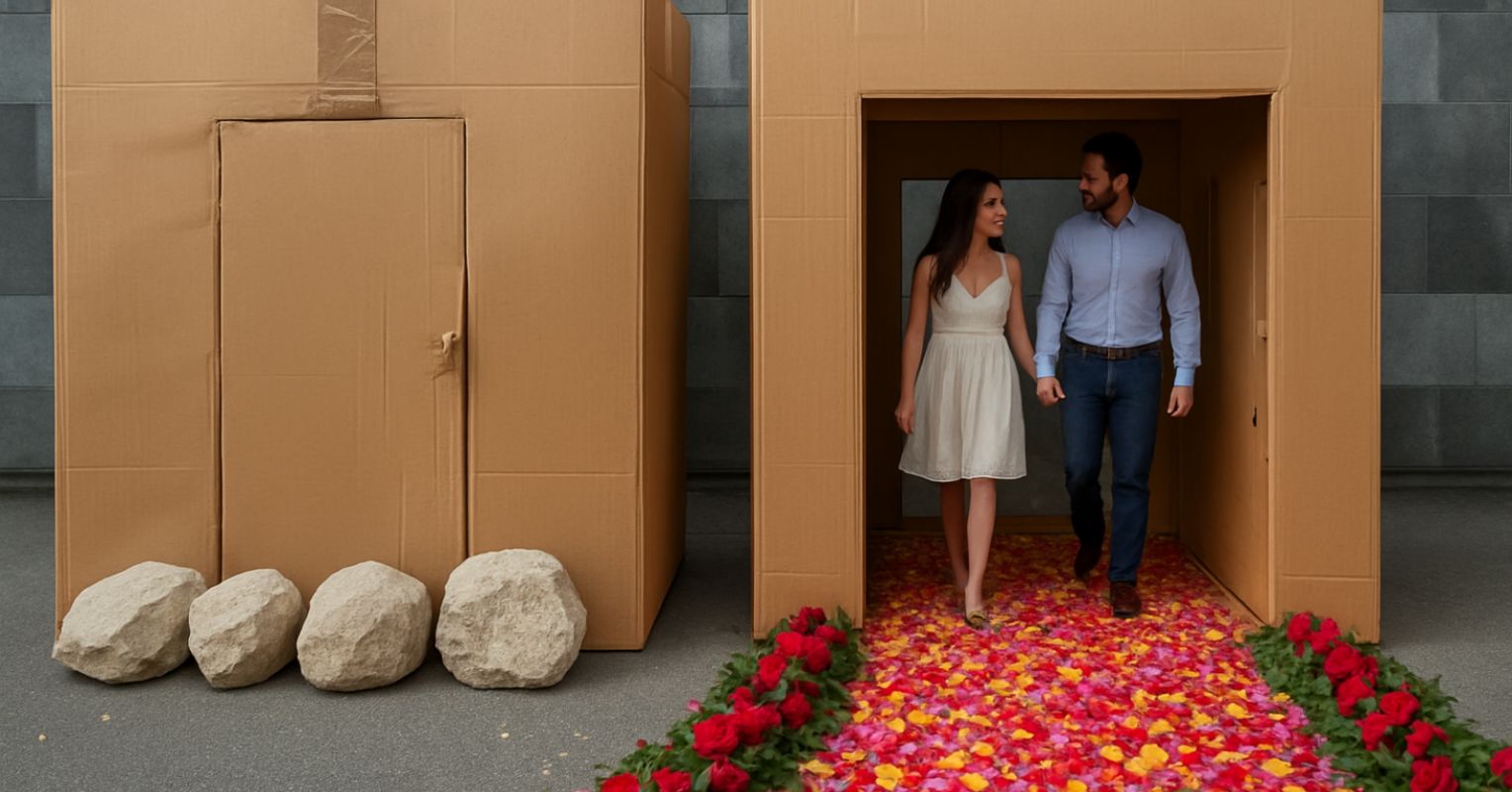
Studies comparing single people to coupled people frequently present findings that suggest singles are deficient while couples excel, but this framing often ignores critical contextual differences. Using a hypothetical box-escape study, the analysis demonstrates how researchers might report that coupled people escape boxes faster without mentioning that singles face additional obstacles like boulders and taped tops, while couples have open access. This selective reporting creates misleading narratives that gain media attention, causing singles to feel inadequate and couples to feel superior, despite the differences stemming from unequal circumstances rather than actual capability differences. The hidden context fundamentally changes the interpretation of results.
"The researchers think it is fine to tell you only about the time it took each participant to get out of the box. After all, it is a study of box-escaping skill. Often, there is a highly relevant context to the story that is not mentioned. In my hypothetical example, it looks like this: The single person is in the box on the left. The door is shut, and there are boulders in front of it. The top of the box is taped shut."
"They find that the coupled people get out of their boxes more quickly, maybe much more quickly. They publish their study and say that it shows that single people are deficient at getting out of boxes. Maybe it's a psychological thing, and they should get counseling or therapy. The coupled people, in contrast, have great box-escaping skills."
#research-methodology #contextual-bias #single-vs-coupled-comparison #media-misrepresentation #scientific-framing
Read at Psychology Today
Unable to calculate read time
Collection
[
|
...
]