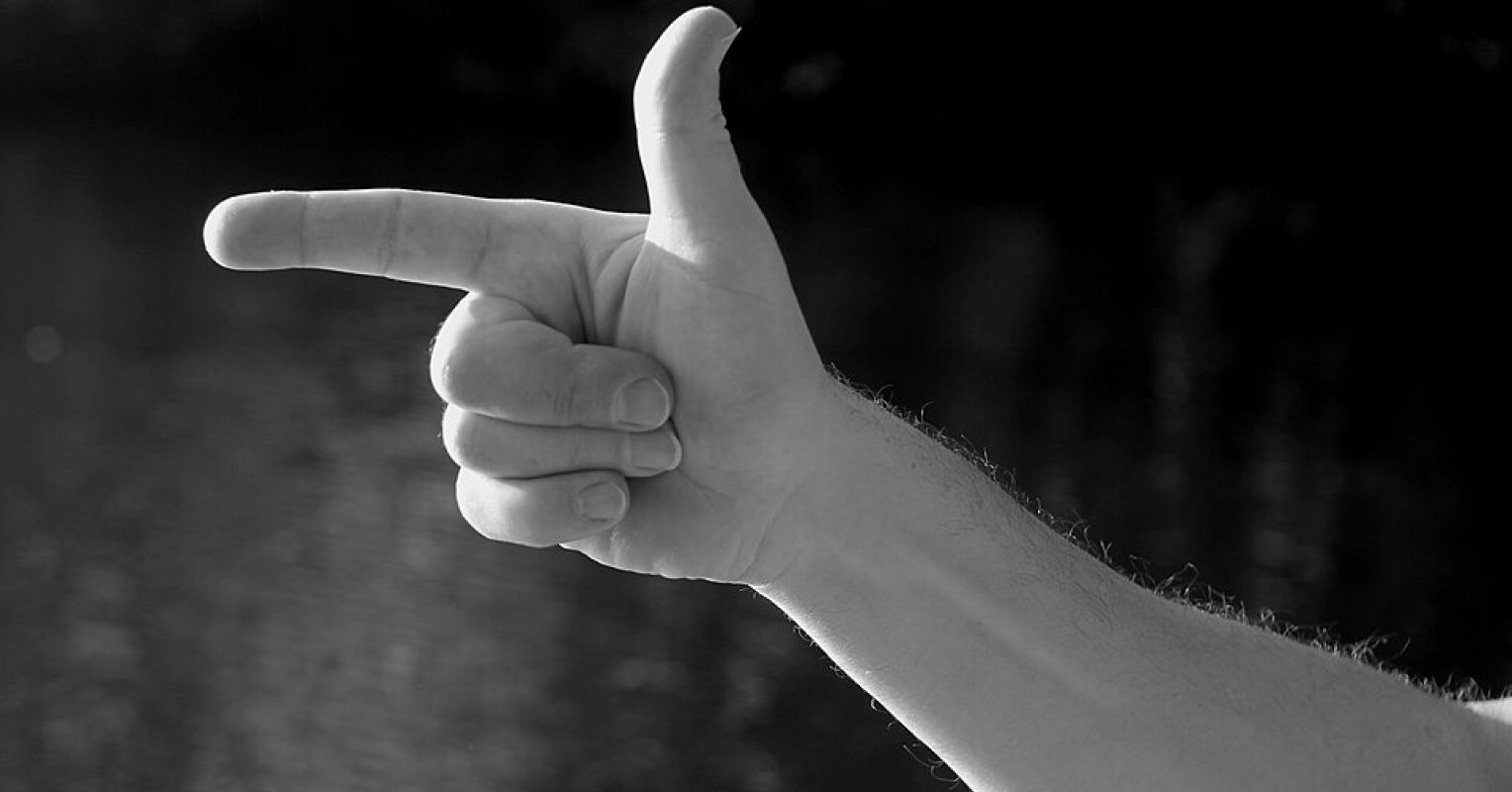
"In most parts of the United States, pointing an actual gun at someone constitutes a crime, even if the gun isn't loaded. Because pointing weapons at people can make them fear for their lives, "brandishing" can qualify as a crime of assault. A finger representing a gun can't hurt anyone physically, but emotionally, it can do powerful work. A murderous gesture can arouse anger and fear, maybe because it signals a desire to kill without making an actual threat."
"People unfamiliar with sign languages underestimate the communicative power of bodies, especially the hands. Studies of early humans indicate that vocal language evolved only after evolutionary breakthroughs in the motor system enabled hominids to retrieve motor memories and control and model their movements (Donald 739-40). People's ability to communicate by making sounds has evolved through exaptation of the motor system, exploiting structures and mechanisms that evolved to guide motions (Gallese and Cuccio, 11)."
"Human language relies on motor function not just for the production of speech but for the organization of words into comprehensible phrases (Glenberg and Gallese, 907-8). Given language's d"
Pointing a gun at someone is treated as a crime in many places because it can create fear for safety, even when the weapon is not loaded. A finger used as a gun cannot cause physical injury, but it can still produce strong emotional effects. Gestures can communicate emerging ideas and emotions rather than fully formed thoughts, and they can influence listeners during conversation. Research on language evolution links communication to the motor system, showing that vocal language depends on motor control and that gestures can reflect internal processes. Violent-looking gestures can function as brief flashes within developing thought rather than literal death wishes.
Read at Psychology Today
Unable to calculate read time
Collection
[
|
...
]