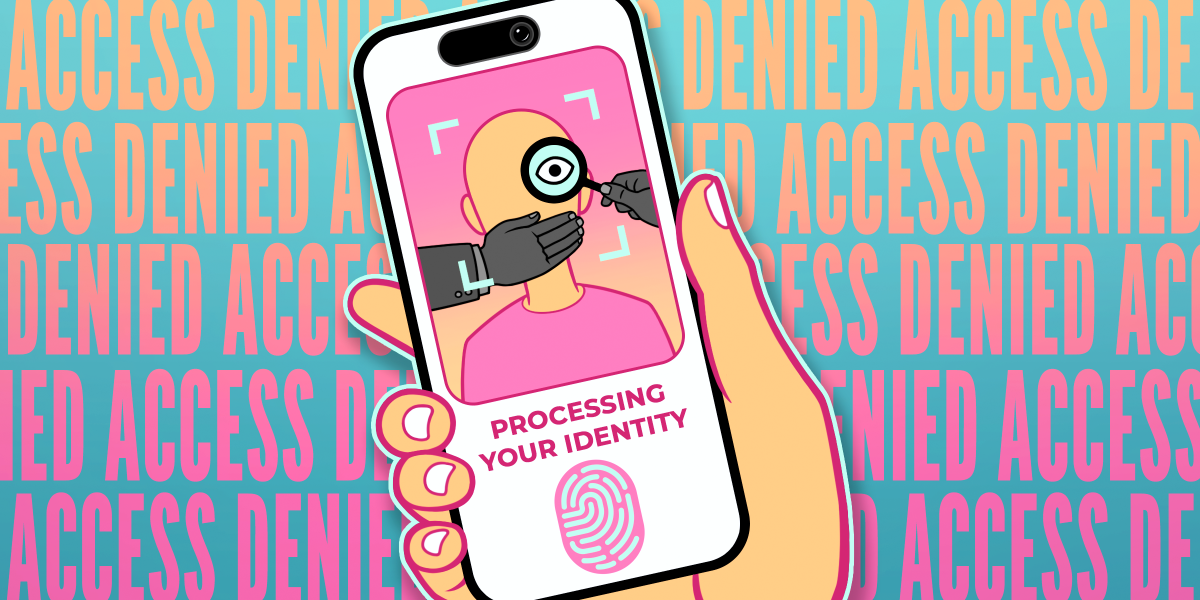
"Though these mandates claim to protect children, in practice they create harmful censorship and surveillance regimes that put everyone -adults and young people alike-at risk. The term "age verification" is colloquially used to describe a wide range of age assurance technologies, from age verification systems that force you to upload government ID, to age estimation tools that scan your face, to systems that infer your age by making you share personal data."
"While different laws call for different methods, one thing remains constant: every method out there collects your sensitive, personal information and creates barriers to accessing the internet. We refer to all of these requirements as age verification, age assurance, or age-gating. If you're feeling overwhelmed by this onslaught of laws and the invasive technologies behind them, you're not alone. It's a lot. But understanding how these mandates work and who they harm is critical to keeping yourself and your loved ones safe online."
Age verification laws are rapidly spreading across the United States and worldwide, producing confusing rules that limit online access. Mandates claim to protect children but instead enable censorship and surveillance that endanger both adults and young people. Age verification encompasses a spectrum of technologies: government-ID uploads, facial age-estimation, and data-driven inference systems. Every method collects sensitive personal information and erects barriers to internet use. The EFF has launched an Age Verification Resource Hub to explain legal effects, risks, opposition to such methods, protective measures, and ways to advocate for a free, open, private, and safe internet. Many U.S. states already enforce these laws, with federal proposals under consideration.
Read at Electronic Frontier Foundation
Unable to calculate read time
Collection
[
|
...
]