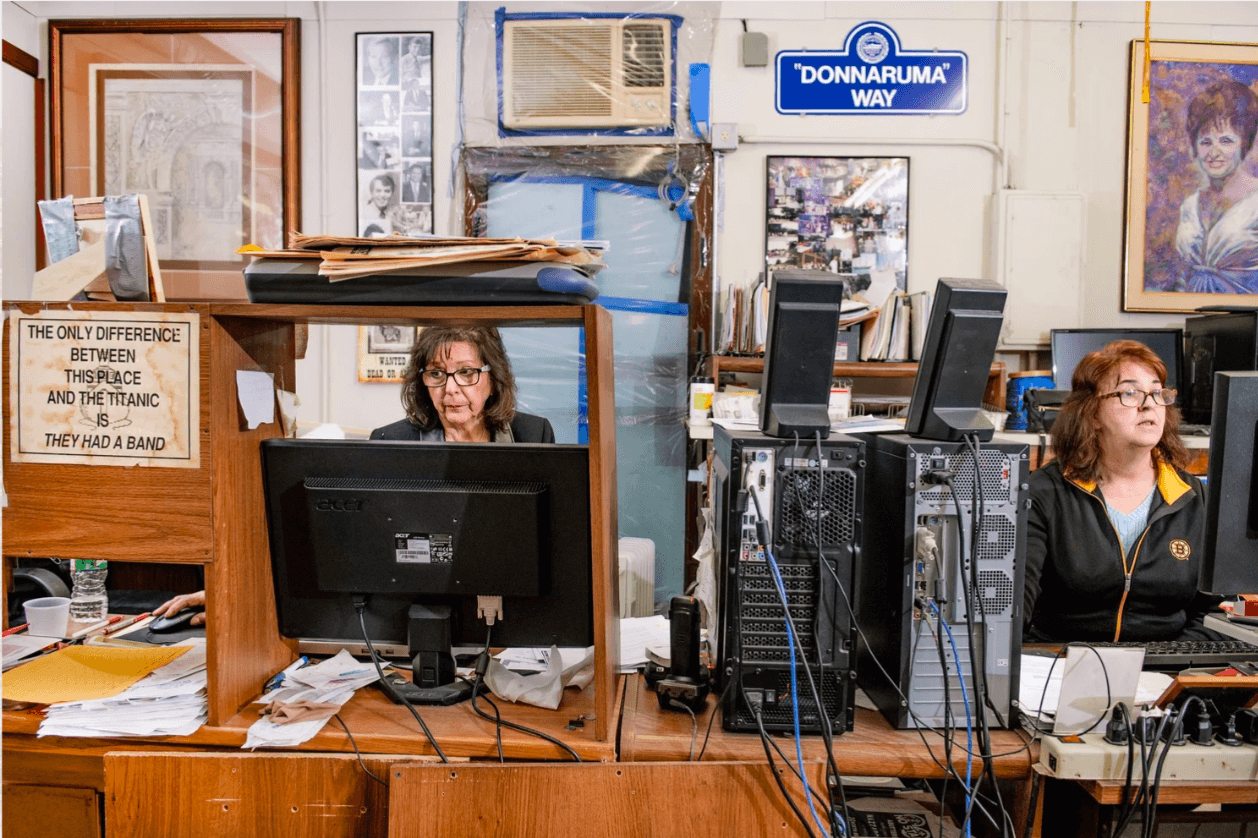
Ann Hermes photographs people and places undergoing change, from international markets and protests to local institutions such as newsrooms. Hermes began focusing on local newspapers after 2016 amid debates over "fake news" and perceptions of journalists, seeking to show the realities of community newsrooms. The project concentrates on family-owned and small local papers rather than metro outlets, and Hermes has visited more than 50 newsrooms. She uses news-desert reports from Medill and the University of North Carolina to select locations. The images record empty desks, shrinking staff and the cultural role of local journalism at risk.
"But the work that's closer to home reveals something Hermes is skilled at seeking out. It might look like nostalgia, that's there for sure, but Hermes is really capturing something else - people and places on the brink of change. She photographed the last Morse code station in the United States, a JCPenney Portrait Studio, and, for several years now, small local newspaper newsrooms."
"The idea first started percolating around 2016, as we all got painfully familiar with the term "fake news" and claims that journalists were all elitists. 'And for me, it was like, have you been in a local newsroom?' Hermes said. 'At the local level, that couldn't be further from the truth.' The photographer, who worked at Christian Science Monitor, started her career in local newsrooms at the Northwest Arkansas Times in Fayetteville and The Eagle-Tribune on the outskirts of Boston."
"Her idea for documenting local newspapers grew while visiting family in southern Illinois. The St. Louis Post-Dispatch was too thin, her family complained. 'And I walked into the newsroom for the first time, and I saw a sea of empty carpet with the outline of where the desks had been,' Hermes said. She thought: 'If I could show my family this scene, they would understand what they're seeing in the newspaper.'"
Read at Poynter
Unable to calculate read time
Collection
[
|
...
]