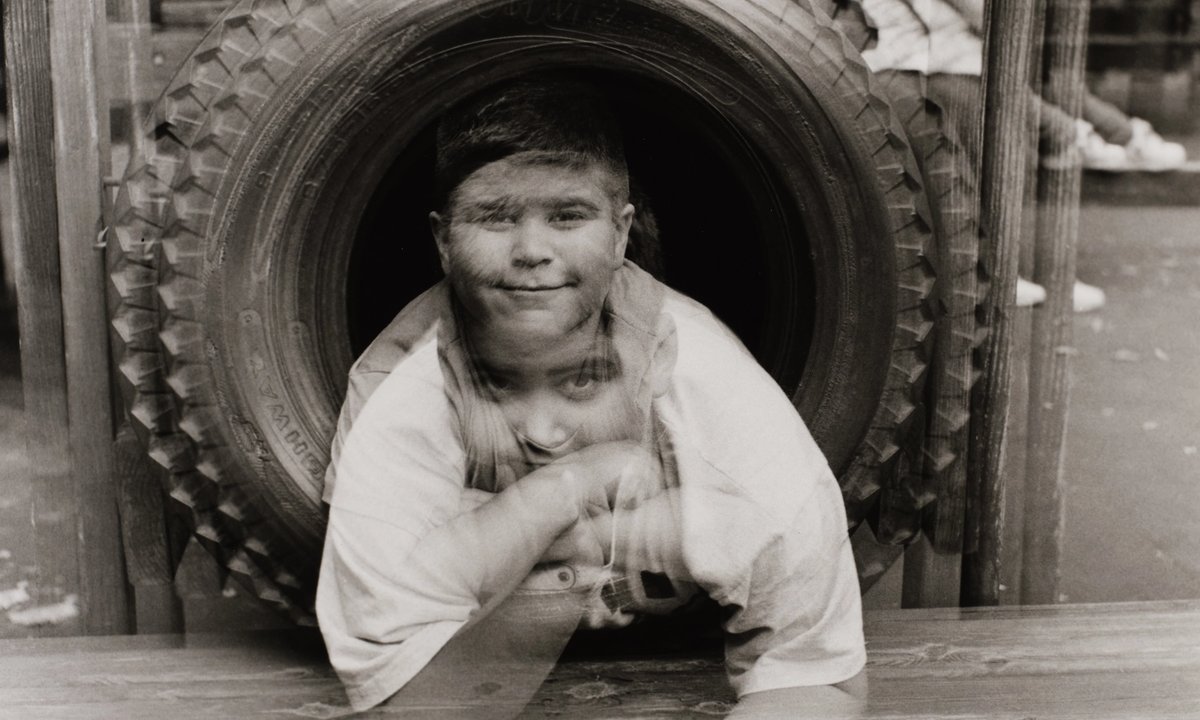
"Although she engaged with and celebrated Latinx communities, Rivera never wanted her work to be confined to identity politics. In fact, much of her output was highly experimental. Double Exposures, her first career survey, reassesses Rivera's practice, situating the artist within the broader discourse of post-war photography while foregrounding both her political activism and technical skill."
"Temkin attributes the genesis of the show to an enigmatic work Rivera donated to the museum in the late 1980s: the colour photograph Alternators (1975, printed 1986). Rivera captured the image from the inside of a subway car while looking out a window through graffiti. Alternators speaks to Rivera's "experience as a New Yorker, which she was through and through", Temkin says, as well as her long relationship with El Museo."
"Temkin says that calling her "unknown" is inaccurate. The artist worked across portraiture, photojournalism and experimental image-making, and exhibited widely during her lifetime. She was actively involved in artist-led movements in New York, and she worked with networks of Latinx and feminist photographers and community organisers."
"She adds that Rivera's writing also merits greater attention, "especially the articles she published in the 1970s-where she advocated for the freedom of women artists to exhibit nudes, for example, just as men were able to do.""
Sophie Rivera (1938–2021) was a Puerto Rican American photographer known for the 1978 Nuyorican Portraits series. She photographed Puerto Rican sitters in Manhattan’s Morningside Heights in black and white, aiming to uplift the Latinx diaspora in New York City. Rivera engaged with and celebrated Latinx communities but did not want her work limited to identity politics, and much of her output was experimental. Her first career survey, Double Exposures, places her within post-war photography while emphasizing activism and technical skill. She worked across portraiture, photojournalism, and experimental image-making, exhibited widely, and participated in artist-led movements. A key catalyst for a museum show was her donated color photograph Alternators, made by photographing from inside a subway car through graffiti. Her writing also deserves attention, including advocacy for women artists’ freedom to exhibit nudes.
Read at The Art Newspaper - International art news and events
Unable to calculate read time
Collection
[
|
...
]