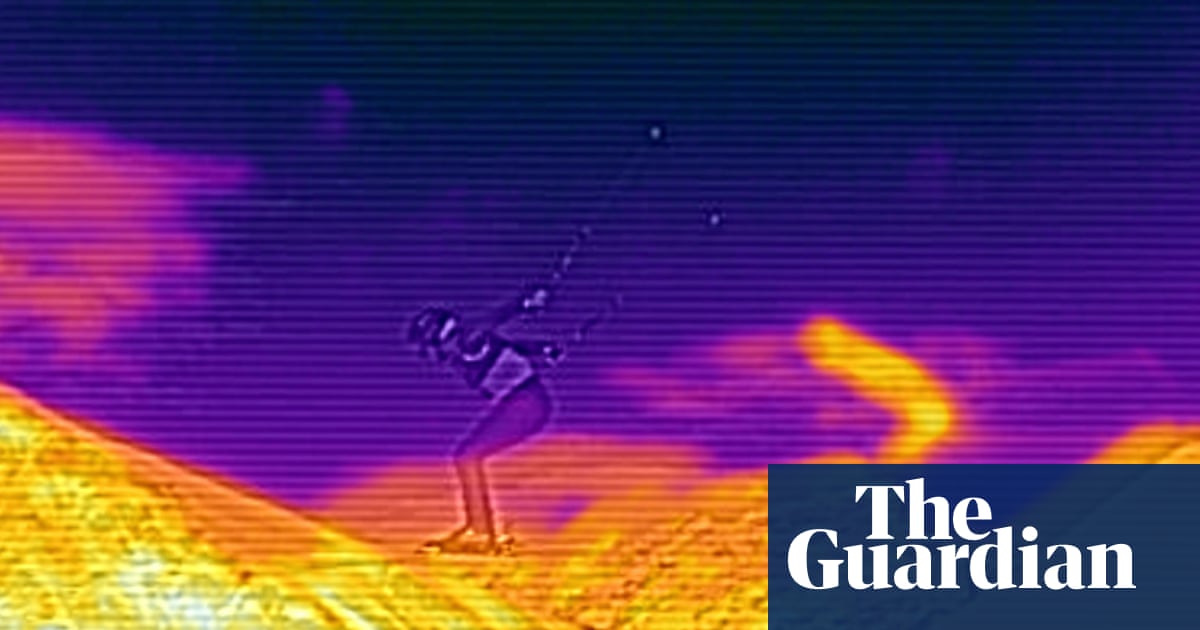
"While most photographers are striving to freeze' motion using traditional cameras at the Winter Olympics this month, a creative trio from the photo agency Getty Images are seeking something much more unexpected: heat. Equipped with compact thermal-imaging cameras the kind typically reserved for scientific or industrial purposes Pauline Ballet, Ryan Pierse and Hector Vivas have been crafting eerie pictures of athletes on the slopes of Cortina and in the rinks of Milan."
"As visual artists, we're drawn to photography as a form of art that allows us to be expressive, creative and experimental, Ballet says of their work. Thermal cameras capture the infrared radiation emitted by bodies, thereby revealing heat, muscular effort and the thermal exchanges between the athlete and the environment in which they perform. It's both a documentary tool and a poetic medium."
"In fact, each camera has two lenses one thermal and one photographic allowing the operator to produce a curious foreshadowing effect if both images are combined (best seen in the luge and free-skating images below). A luge athlete trains at Cortina Sliding Centre. Photograph: Ryan Pierse/Getty Images [You] can see the body in motion and its delayed thermal imprint, like a memory of the gesture, Ballet says. It creates a visual dialogue between the visible and the invisible."
A creative trio from Getty Images — Pauline Ballet, Ryan Pierse and Hector Vivas — use compact thermal-imaging cameras at the Winter Olympics in Cortina and Milan to record athletes' heat signatures. Thermal images render bodies as yellows and reds while ice and snow appear cyan or indigo, revealing muscular effort and thermal exchanges between athlete and environment. Each camera combines a thermal lens and a photographic lens, allowing overlays that create foreshadowing effects and show delayed thermal imprints like memories of gestures. Composing thermal images requires relearning visual language and experimentation with temperature-based contrast.
Read at www.theguardian.com
Unable to calculate read time
Collection
[
|
...
]