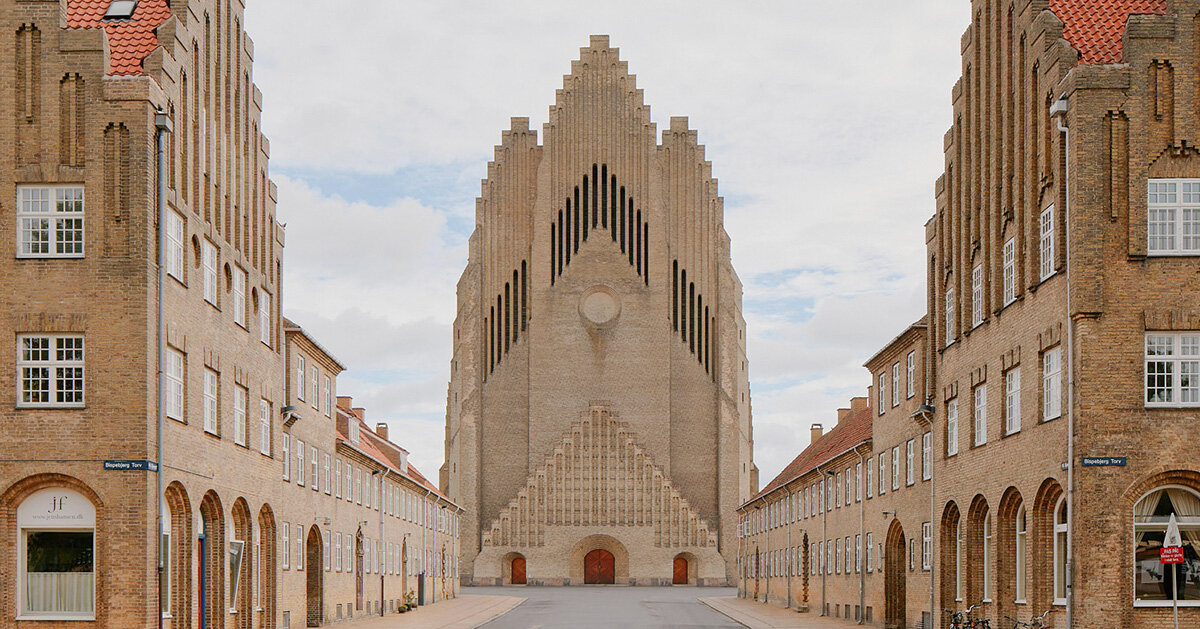
"Standing in the Bispebjerg district of Copenhagen, Grundtvigs Kirke, one of the most singular works of 20th-century ecclesiastical architecture, is the protagonist of David Altrath's latest photography series. Designed by Peder Vilhelm Jensen-Klint and completed in 1940, the church translates the vertical ambition of Gothic architecture into an austere expressionist language built entirely from yellow Danish brick. Structure, surface, and ornament collapse into a single architectural system, where material discipline replaces decoration."
"The west facade rises as a monumental sequence of stepped gables, a sculptural composition that sets the rhythm for the building as a whole. Inside, this cadence continues through pointed arches and soaring brick vaults, forming an interior that feels both monumental and measured. Light filters gently across the textured masonry, revealing subtle shifts in tone and depth, while repetition and proportion guide movement through the nave. The absence of applied ornament sharpens attention to craftsmanship, scale, and the expressive potential of brick itself."
Grundtvigs Kirke sits in the Bispebjerg district of Copenhagen and was designed by Peder Vilhelm Jensen-Klint, completed in 1940. The design transposes Gothic vertical ambition into an austere expressionist language executed entirely in yellow Danish brick. Structure, surface, and ornament unify into a cohesive architectural system where material discipline replaces applied decoration. A monumental west facade of stepped gables sets a rhythmic composition that continues inside through pointed arches and soaring brick vaults. Light across textured masonry reveals subtle tonal shifts, while repetition and proportion guide movement through a calm, monumental nave. Photographic framing treats the interior as a lived space of stillness, highlighting moments of pause and the expressive potential of brick.
Read at designboom | architecture & design magazine
Unable to calculate read time
Collection
[
|
...
]