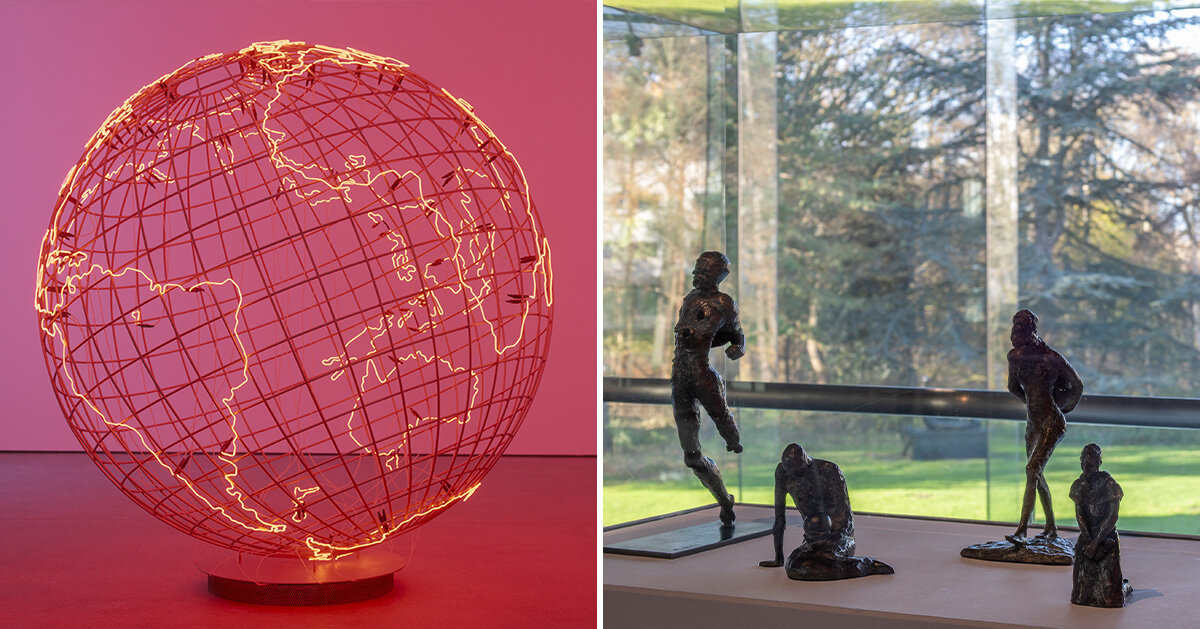
"Until May 17th, 2026, the Sainsbury Centre in Norwich, England, presents Seeds of Hate and Hope, an exhibition that brings together artists' personal and political responses to some of the most devastating acts of violence of the 20th and 21st centuries. Set within the Centre's wider investigative season titled Can We Stop Killing Each Other?, the show examines how art has confronted genocide, ethnic cleansing, war crimes, and crimes against humanity through reflection, memory, and acts of resistance rooted in lived experience."
"Seeds of Hate and Hope focuses on how artists process and translate trauma into form. The exhibition features works by Mona Hatoum, William Kentridge, Zoran Mušič, Peter Oloya, Kimberly Fulton Orozco, Indrė Šerpytytė, Gideon Rubin, and Ishiuchi Miyako, among others. Across different geographies and generations, these artists bear witness to conflict through strategies that include abstraction, erasure, material transformation, and symbolic gesture."
"Key works featured in the exhibition include William Kentridge's Ubu Tells the Truth (1997), which confronts the violence and injustice of apartheid-era South Africa through his distinctive animated language. Gideon Rubin's Black Book (2017) systematically redacts every page of Adolf Hitler's Mein Kampf, emptying the text of its ideological force while leaving behind a stark material trace. Ishiuchi Miyako's photographic series documents everyday objects once owned by victims of the atomic bombings of Hiroshima and Nagasaki, using absence and intimacy to register loss."
Seeds of Hate and Hope at the Sainsbury Centre in Norwich presents artists' personal and political responses to devastating violence of the 20th and 21st centuries, running until May 17, 2026. The program sits within a wider season titled Can We Stop Killing Each Other? Artists including Mona Hatoum, William Kentridge, Zoran Mušič, Peter Oloya, Kimberly Fulton Orozco, Indrė Šerpytytė, Gideon Rubin, and Ishiuchi Miyako translate trauma into form through strategies such as abstraction, erasure, material transformation, and symbolic gesture. Featured works confront apartheid, redact Mein Kampf, and photograph belongings of atomic-bomb victims, using absence and intimacy to register loss and resistance.
Read at designboom | architecture & design magazine
Unable to calculate read time
Collection
[
|
...
]