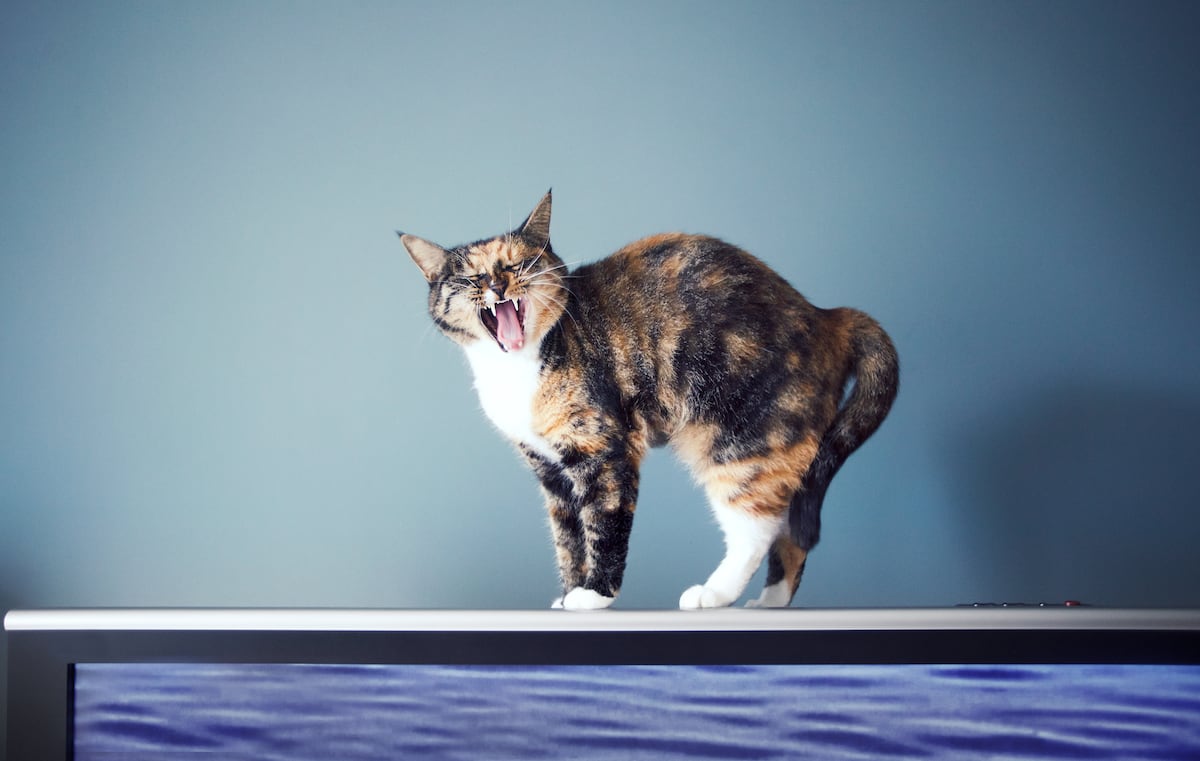
"The feline gaze has its visual preferences: they are drawn to scenes featuring birds, fish, or other animals they might hunt. But not all cats like to look at screens, nor is it good for them; in some cases, it can even cause anxiety."
"They see in different colors because they are dichromatic and perceive shades of blue, green, or yellow, but they perceive reds or pinks as grays. Their visual acuity is lower than that of humans, although their peripheral vision is wide and, at close range, excellent for hunting."
"The images must awaken their predatory instinct, with sudden or smooth movements that mimic the behavior of their favorite prey, such as mice, birds, or butterflies. Modern televisions have high resolution, with many frames per second, which allows them to capture movement well, which is what attracts their attention."
Cats watch television primarily due to movement and specific visual content rather than narrative enjoyment. Their dichromatic vision perceives blues, greens, and yellows, but sees reds and pinks as grays. Cats possess lower visual acuity than humans but excel at detecting rapid movements and have superior peripheral vision, making them effective hunters. Their interest in screens stems from natural curiosity and predatory instincts. Effective cat programming requires images that mimic prey behavior through sudden or smooth movements, such as mice, birds, or butterflies. Modern high-resolution televisions with increased frame rates better capture movement that attracts feline attention, whereas older televisions appear blurry to cats. Color intensity and contrast also influence viewing preferences.
Read at english.elpais.com
Unable to calculate read time
Collection
[
|
...
]