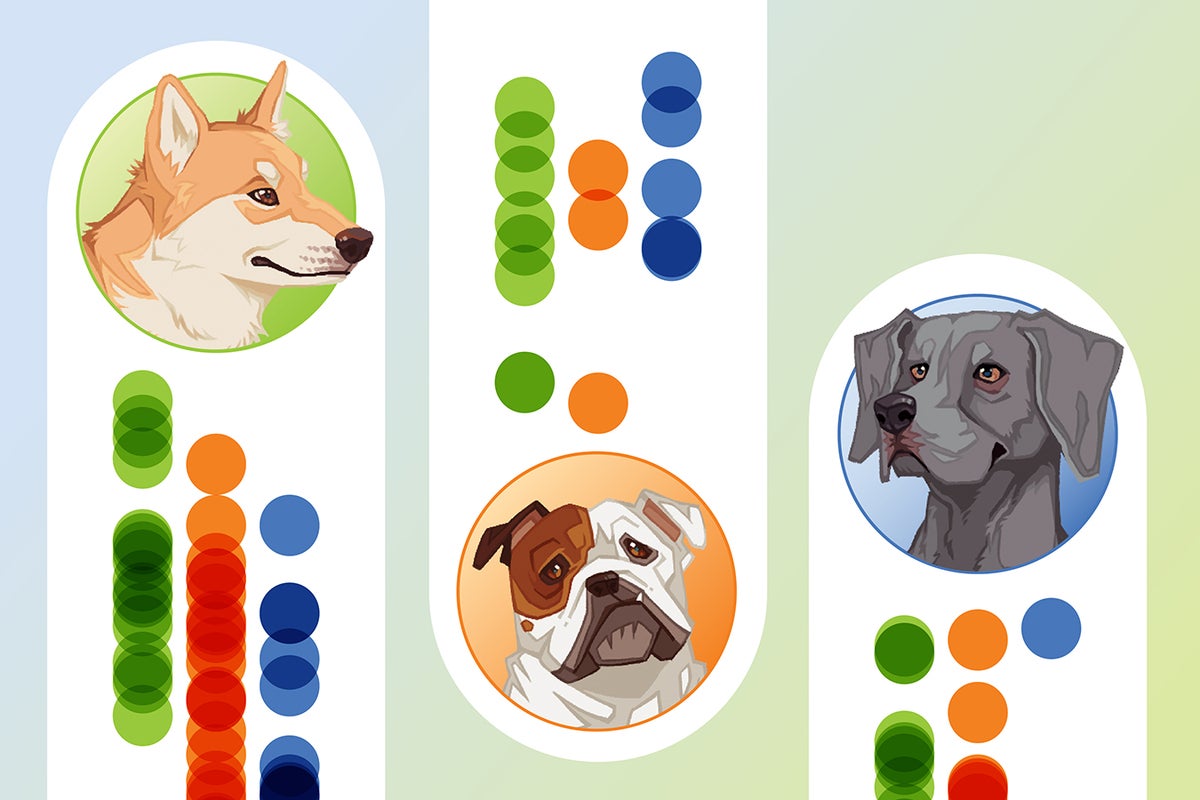
"Dogs can have wildly different personalities, which often vary by breed and size. Although individual temperament matters most, larger trends can help predict which pooch will be meek and mild and which is most likely to bite the postal worker. The Dog Aging Project, a long-term study on canine aging, has collected data on dog behavior from more than 50,000 owners, distilling the results into scores for traits such as trainability, excitability and aggression."
"Owners of mixed-breed dogs reported higher average scores for fear and aggression than owners of single-breed dogs, for instance. And compared with larger dogs, smaller dogs tended to score higher for fear, aggression and excitability and lower for trainability. Understanding these patterns is key to improving the compatibility of people and their pets. Dogs are entirely dependent on their owner, says veterinarian Audrey Ruple of the Virginia-Maryland College of Veterinary Medicine, a collaborator on the Dog Aging Project."
The Dog Aging Project collected behavior data from more than 50,000 dog owners and converted responses into scores for traits including trainability, excitability, fear, and aggression. Owners of mixed-breed dogs reported higher average fear and aggression scores than owners of single-breed dogs. Smaller and toy breeds scored higher on fear, aggression, and excitability and lower on trainability compared with larger and giant breeds, which on average were most trainable and least aggressive and anxious. Matching dog temperament with owner expectations and capacity is essential because dogs depend entirely on their owners; a poor match can harm dog welfare while a good match supports proper care.
Read at www.scientificamerican.com
Unable to calculate read time
Collection
[
|
...
]