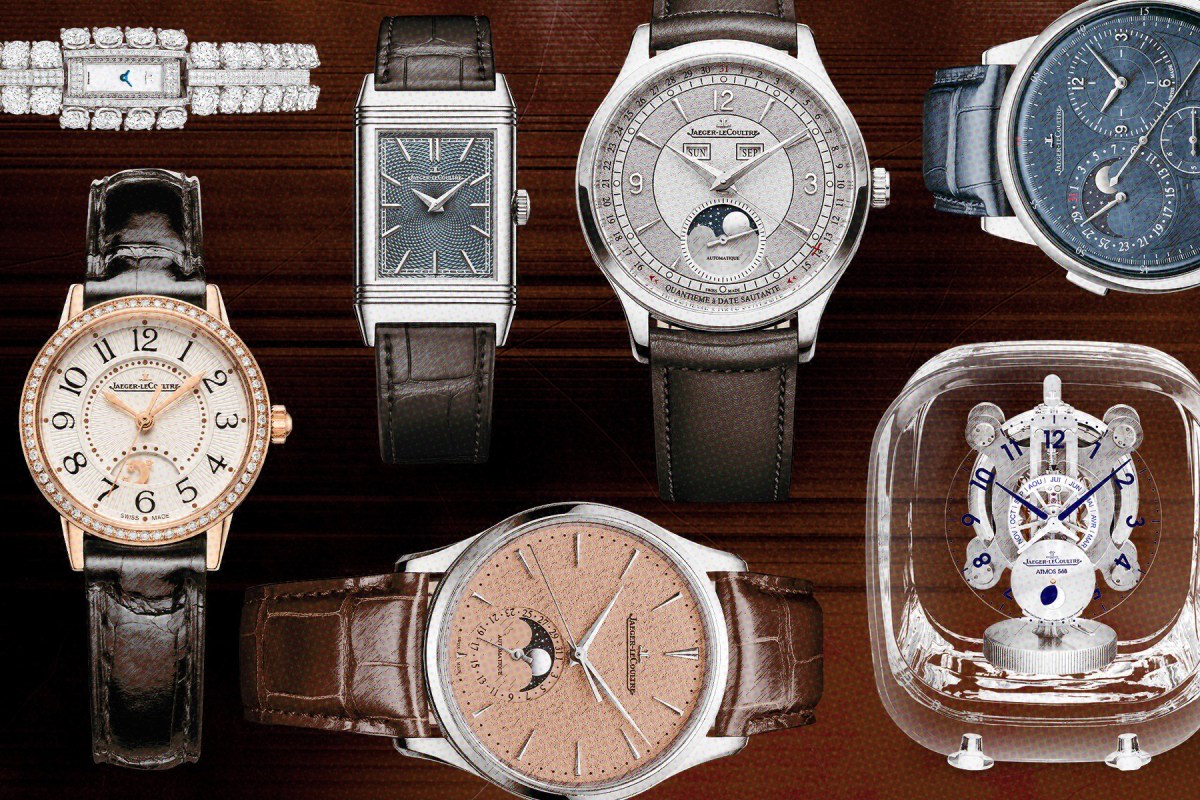
"In 1903, French watchmaker Edmond Jaeger dared Jacques-David LeCoultre, son of Antoine, to manufacture an ultra-thin movement that he had designed himself. The two joined forces, delivering that svelte pocket watch by 1907 and forming the basis for a partnership that would be formally cemented in 1937."
"The resulting watch, dubbed the 'Reverso,' is still the most famous model from the maison. This innovative design featured a swiveling case that protected the dial, showcasing the brand's commitment to creativity and functionality."
"Though it has faced headwinds over the past two years as both sales and profits have shrunk within Richemont's Specialist Watchmaking division, Jaeger-LeCoultre remains a potent force within the greater watchmaking industry."
"By 1888, LeCoultre ran not only the most important watchmaking concern in the region, but also one of the largest, with nearly 500 workers, leading to the company's nickname, 'La Grande Maison.'"
Antoine LeCoultre established the first watchmaking manufacture in Vallée de Joux in 1833, focusing on precision and self-made tools. He integrated all manufacturing functions, leading to significant growth by 1888. A pivotal moment occurred in 1903 when Edmond Jaeger challenged Jacques-David LeCoultre to create an ultra-thin movement, resulting in a partnership that formalized in 1937. The creation of the Reverso watch, featuring a swiveling case, marked a unique innovation. Despite recent challenges, Jaeger-LeCoultre remains influential, with a turnover of CHF 524 million in 2024.
Read at InsideHook
Unable to calculate read time
Collection
[
|
...
]