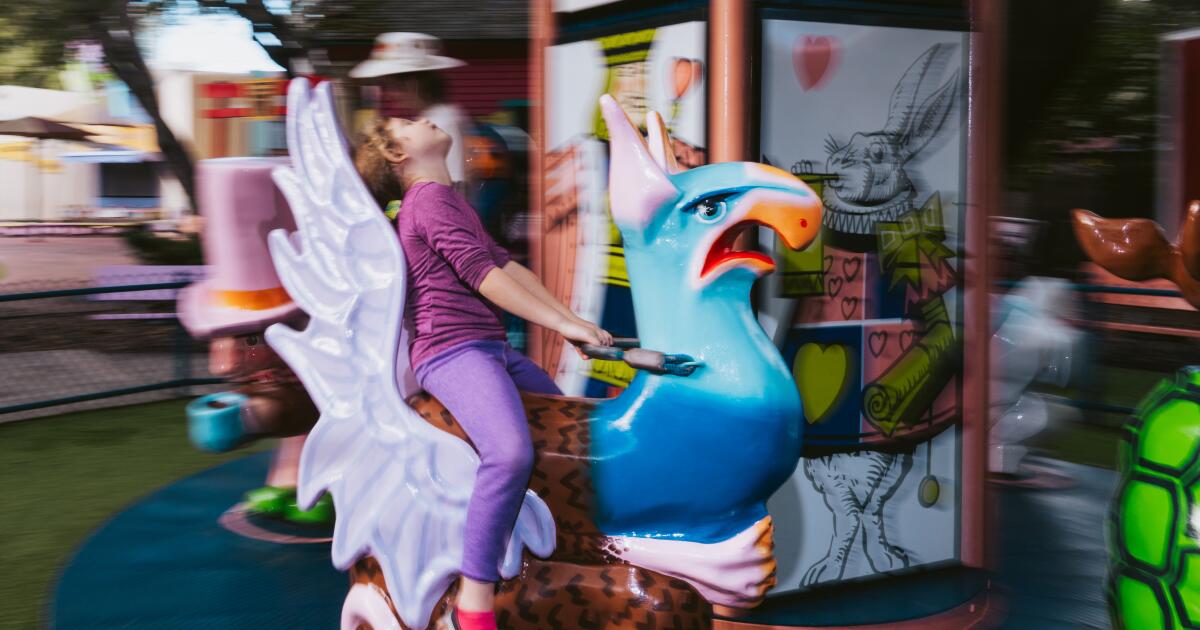
"The 10-acre garden wonderland, nestled around Oakland's urban sanctuary of Lake Merritt, has maintained one core rule since it opened its gates on Sept. 2, 1950: "No child without an adult, and no adult without a child." For Fairyland aims to show the world through the eyes of a young'un - a place filled with curiosity, but also perhaps a bit off-kilter, where one can walk into a whale and find a fishbowl, slide down a dragon and get lost in an "Alice in Wonderland" maze of cards."
"And yet, for more than 75 years now, Fairyland has had a grown-up sized influence. Fairyland is considered the first "storybook"-style park in the country, launching a national fad. Legend has it that Walt Disney visited Fairyland while Disneyland was in the planning stages and was so taken with it that he poached some staff. Fairyland's "magic keys," which unlock audio tales throughout the park, were an innovation felt across numerous industries. And the park has been instrumental in the puppet space, home to what's said to be the oldest ongoing puppet-focused theater in the country. Those at L.A.'s own long-running Bob Baker Marionette Theater today cite Fairyland as an inspiration."
A pink, oversized ankle boot inspired by the nursery rhyme "There Was an Old Woman Who Lived in a Shoe" greets visitors at Children's Fairyland. The shoe originally sat flat on the ground, requiring grown-ups to duck to enter. The park opened on Sept. 2, 1950 and enforces the rule: "No child without an adult, and no adult without a child." Attractions present the world through a child's eyes, with a whale containing a fishbowl, a dragon slide, and an Alice in Wonderland card maze. Fairyland pioneered the storybook-park model, introduced "magic keys" for audio tales, and fostered a longstanding puppet theater tradition. The park emphasizes storytelling, simple family experiences, and low-tech imaginative learning.
Read at Los Angeles Times
Unable to calculate read time
Collection
[
|
...
]