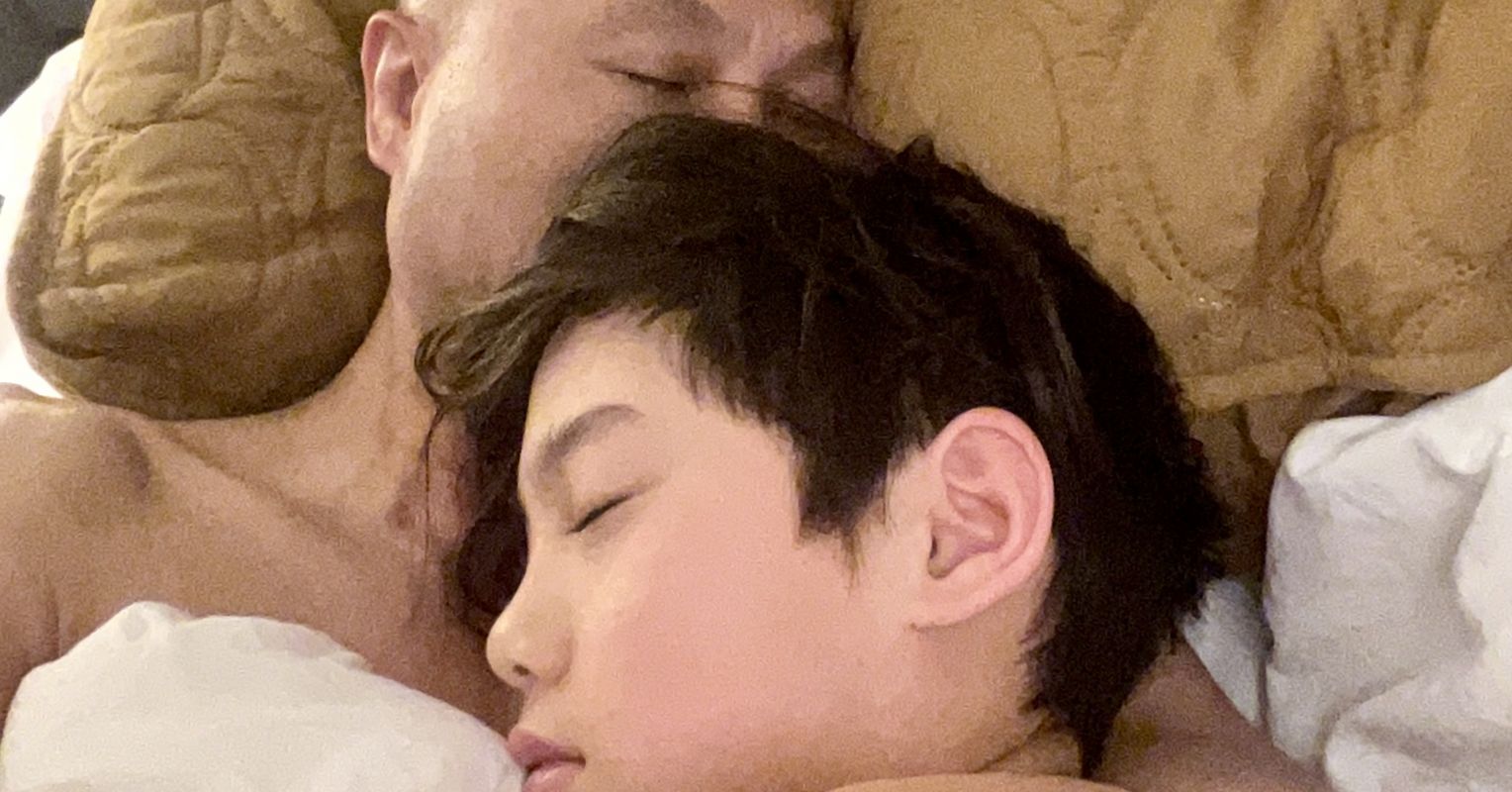
"When your kid curls up next to you, there's no report card. No trophy. No 'Did you get an A?' He's not earning anything. He's just there. And what he hears—without you saying it—is: You don't have to perform to be close to me. You don't have to be impressive to be loved. You are loved just for being you."
"As a child of Chinese immigrants, I grew up in a home where the love language was doing and not necessarily felt through physical touch or words of affirmation and praise. My parents sacrificed and toiled hard in their jobs at various Chinese restaurants. They made us food and provided a roof over our heads. That was love. But we didn't get hugs, words like 'I'm proud of you,' or moments to cuddle, hold their hands, or sit close to them, just because."
"Children who do not get non-sexual, physical touch from their parents or caregivers have a significant unmet need. I learned unconsciously that I 'didn't need' physical touch, cutting it off to the point where I viewed people as 'soft' or with contempt when they hugged or needed praise."
Children from immigrant families often internalize that love is earned through sacrifice, achievement, and performance rather than expressed through physical affection or verbal affirmation. This creates unmet needs for non-sexual physical touch from parents and caregivers. When parents engage in physical affection like snuggling without any expectation of achievement or performance, children receive a powerful implicit message: they are loved simply for existing. This unconditional physical closeness interrupts shame-based thinking patterns and builds security. For boys especially, who face cultural pressure to suppress emotional needs, such moments of physical affection provide essential reassurance that vulnerability and closeness are acceptable and that their worth is inherent rather than earned.
#parenting-and-physical-affection #immigrant-family-dynamics #unconditional-love #childhood-emotional-needs #cultural-shame-and-achievement
Read at Psychology Today
Unable to calculate read time
Collection
[
|
...
]