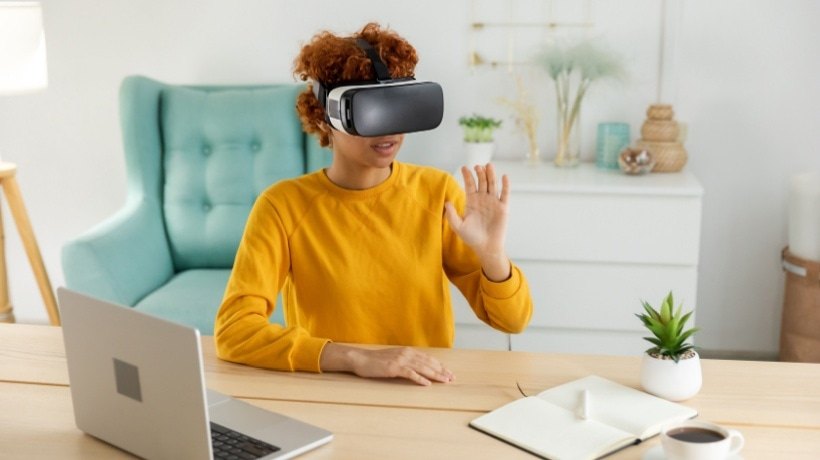
"Not long ago, a training manager shared a story with me. She said, "We spent weeks preparing onboarding material, but new hires still asked the same questions. They did not feel connected to the place." It was not about the quality of the content; it was the way the content was delivered. Many learners do not want more information. They want to experience the environment, understand the workflow, and feel the culture. This is where VR has quietly become a powerful partner."
"VR allows learners to enter a fully designed environment and interact in ways that feel natural. They can open panels, walk around, operate machines, and observe processes as if they were right there. This level of immersion sparks focus and excitement. There is no temptation to multitask or drift away. A leader in a global manufacturing company once told me that VR made his most reluctant employees curious again. These employees usually avoided training, but they were eager to try VR. This natural engagement is one of the biggest advantages that VR brings."
Virtual reality creates immersive training environments that let learners experience workplace contexts, workflows, and culture rather than only absorbing information. Immersion promotes active participation, natural interactions, and focused attention, reducing multitasking and increasing curiosity even among training-averse employees. VR enables safe practice of risky tasks with repeated trials and learning from mistakes without real-world consequences. Advances in hardware and development tools have made VR increasingly practical, affordable, and scalable for modern learning and development teams, enabling organizations to deliver experiential onboarding and skills practice that better connects employees to their roles and environments.
Read at eLearning Industry
Unable to calculate read time
Collection
[
|
...
]