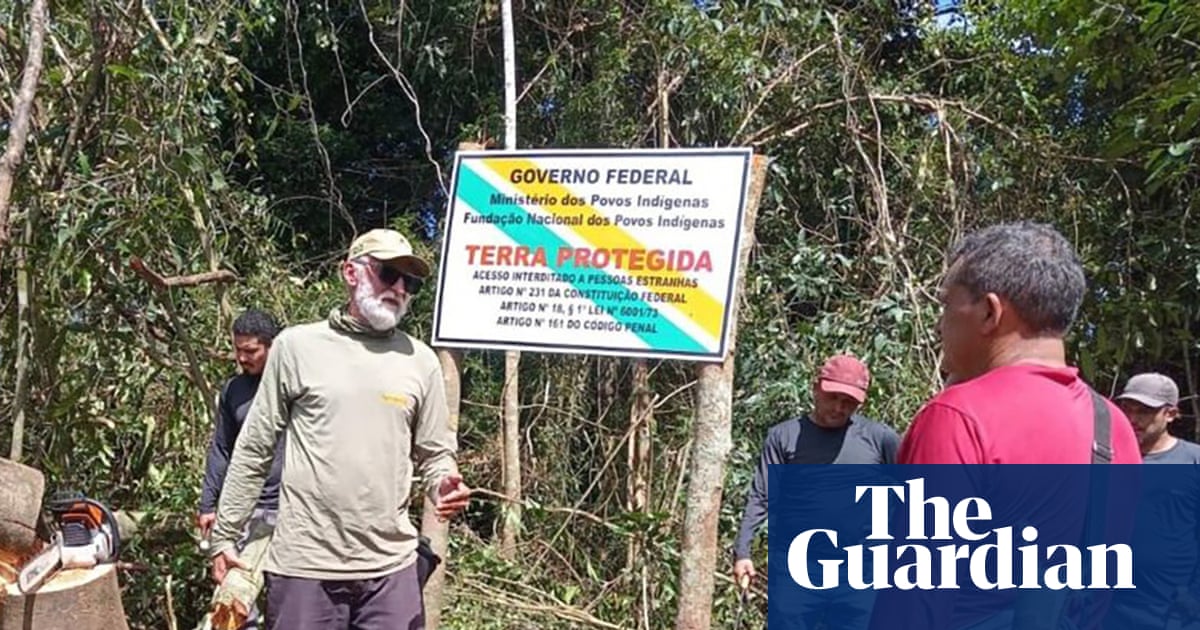
"The demarcation of the 410,000-hectare (1m-acre) territory located between the states of Mato Grosso and Amazonas in north-west Brazil, was confirmed by the National Indigenous Peoples' Foundation (Funai) last week. But the process remains fraught, with legal challenges from groups linked to the country's agribusiness sector, and the forthcoming presidential election in October."
"Although highly threatened by armed groups linked to the expansion of farming, land grabs, illegal logging and mining in the region, some isolated Indigenous peoples are showing signs not only of surviving but even thriving in the Amazon. Yet anthropologists and experts say the Kawahiva's survival relies on land being clearly mapped and physically marked to establish protected natural sanctuaries, which will help shield them from economic exploitation."
"The go-ahead for demarcation of the Kawahiva do Rio Pardo Indigenous territory, home to about 290 Kawahiva people, has taken 27 years, after specialists first proved the existence of the uncontacted community in 1999. Campaigners say progress has only been possible thanks to Funai agents such as Jair Candor, whose expeditions into the forest have been crucial to identifying and protecting the Pardo River Kawahiva."
"Funai needs to be valued by Brazil as a body responsible for about 14% of the national territory, Beto Marubo, an Indigenous leader from the Javari valley, said of the foundation's work and the environmental reserves under its control. Indigenous lands have recorded the lowest rates of deforestation in the Amazon in recent years, he"
Brazil has started demarcating the 410,000-hectare Kawahiva Indigenous territory along the Pardo River between Mato Grosso and Amazonas. Funai confirmed the demarcation after 27 years, following specialists proving the uncontacted community’s existence in 1999. The process faces legal challenges from groups linked to agribusiness and is affected by the upcoming October presidential election. The Kawahiva are threatened by armed groups tied to farming expansion, land grabs, illegal logging, and mining. Experts say survival depends on clearly mapped and physically marked land to create protected natural sanctuaries. Funai agents have played a key role in identifying and protecting the community, and Indigenous lands under such protection have shown low deforestation rates.
#indigenous-rights #amazon-deforestation #land-demarcation #uncontacted-peoples #brazil-agribusiness
Read at www.theguardian.com
Unable to calculate read time
Collection
[
|
...
]