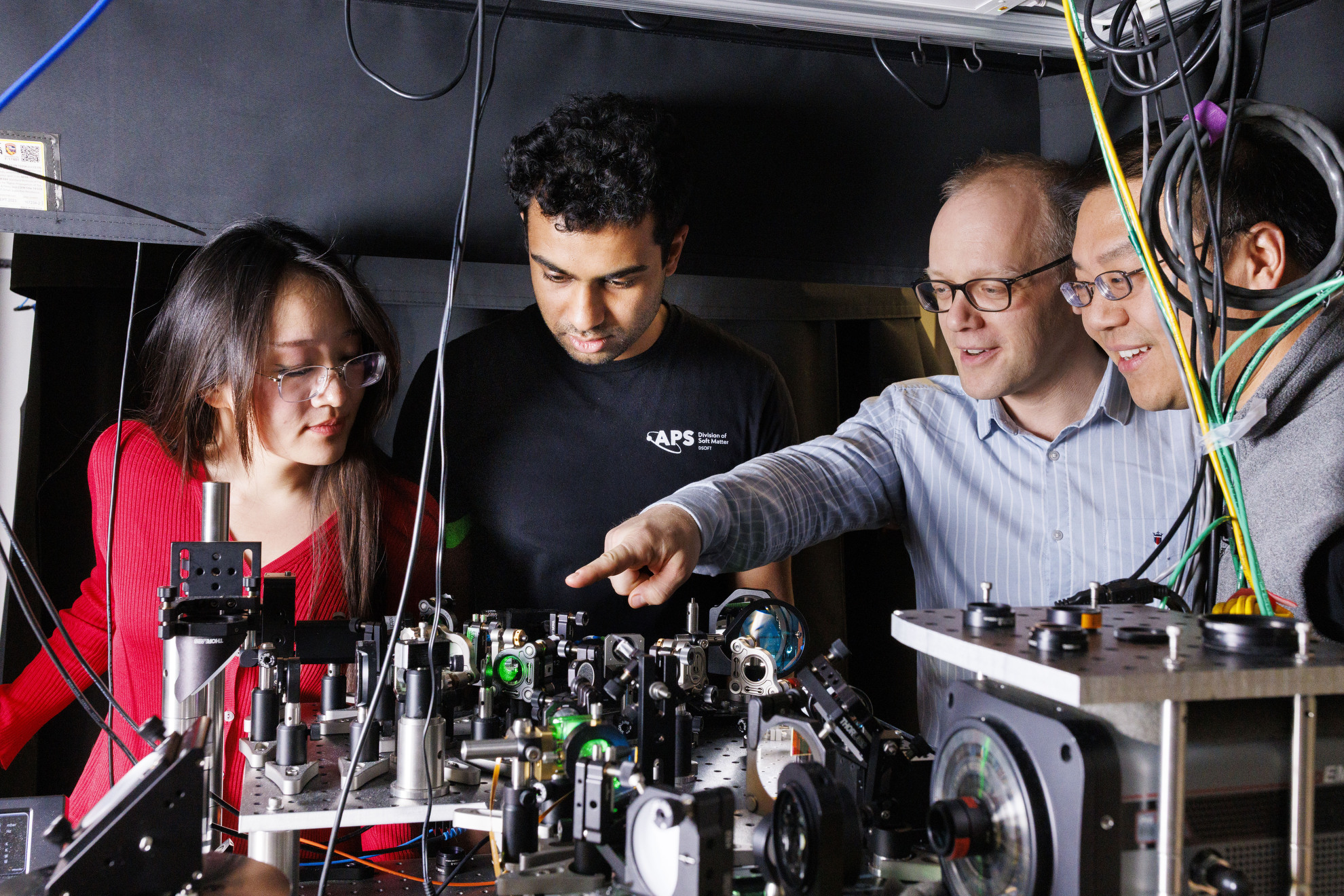
Condensed matter physics has long sought to develop room-temperature superconductors that transmit electricity without energy loss. Harvard physicists recently published findings in Nature describing new insights into inconsistent performance in a promising superconductor material. The team improved a classical pressure measurement device originally developed by Nobel laureate Percy Bridgman by integrating quantum sensors, enabling unprecedented high-pressure measurements. This innovation allows researchers to investigate material properties under extreme conditions previously inaccessible. Superconductors could revolutionize energy transmission and reduce the approximately 5 percent electricity loss occurring during transmission in the U.S. Applications extend to MRI machines, maglev trains, particle accelerators, and magnet technologies, potentially enabling long-distance renewable energy distribution.
"We can ask questions at high pressure that we could never ask before. And the question that we've been getting the most from our colleagues is: Can you measure our rock too? This reflects the broad applicability of the enhanced measurement technique across the physics research community."
"Most existing conductors cannot transmit electricity without some resistance and thus lose power (in the U.S., about 5 percent of electricity is lost in transmission but in some countries the losses amount to half of energy production). Superconductors have zero resistance - and thus no energy loss - making them potentially a revolutionary innovation."
"In theory, better superconductors could make it economically feasible, for example, for wind farms in Siberia to power eastern Asia or solar panels in the Sahara Desert to supply Europe. They also hold great potential in other applications such as magnet technologies, motors, maglev trains, high-energy particle accelerators, and magnetic resonance imaging (MRI) systems."
#superconductivity #high-pressure-physics #quantum-sensors #energy-transmission #condensed-matter-physics
Read at Harvard Gazette
Unable to calculate read time
Collection
[
|
...
]