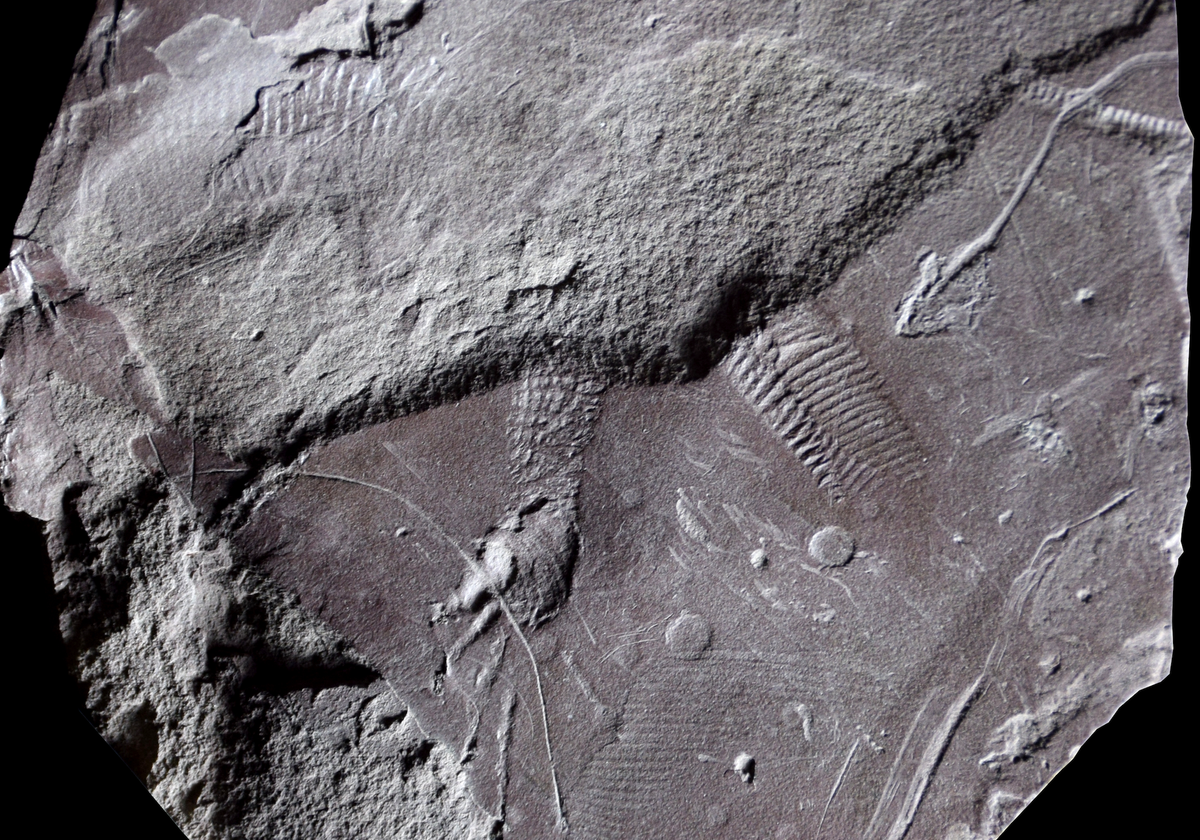
Volcanic eruptions in central Germany approximately 299 million years ago buried mud containing fossilized impressions of an ancient animal, including the oldest known imprint of a cloaca—a single rear opening used for excretion, urination, reproduction, and egg-laying. Unlike marsupials and placental mammals with separate orifices, most animals possess this multipurpose opening. Paleontologist Lorenzo Marchetti discovered the structure while examining unusual diagonal and hexagonal scale imprints in the fossil. The cloaca appears as a slit-shaped vent preserved with remarkable fidelity. This represents only the second known fossil example of a cloacal vent in reptiles, with the other being a 130-million-year-old ceratopsian called Psittacosaurus discovered in 2021. The rarity of such preserved structures has kept cloacal vent evolution largely mysterious.
"The animal literally cemented itself—and its nether regions—into eternal history like the movie stars on the Hollywood Walk of Fame. The structure imprinted into the fossilized mud is a slit that is technically called a cloaca. Unlike marsupials and placental mammals that split their business elements into separate orifices, most other animals have the Swiss Army knife equivalent of a rear opening."
"I noticed something unusual, and after a comparison with modern animals, it became clear what it was. Cloacal vents vary in size and shape across the reptile world, but a lack of fossil preservation has kept their evolution mysterious. Only two examples of this structure are currently known in fossil reptiles."
Read at www.scientificamerican.com
Unable to calculate read time
Collection
[
|
...
]