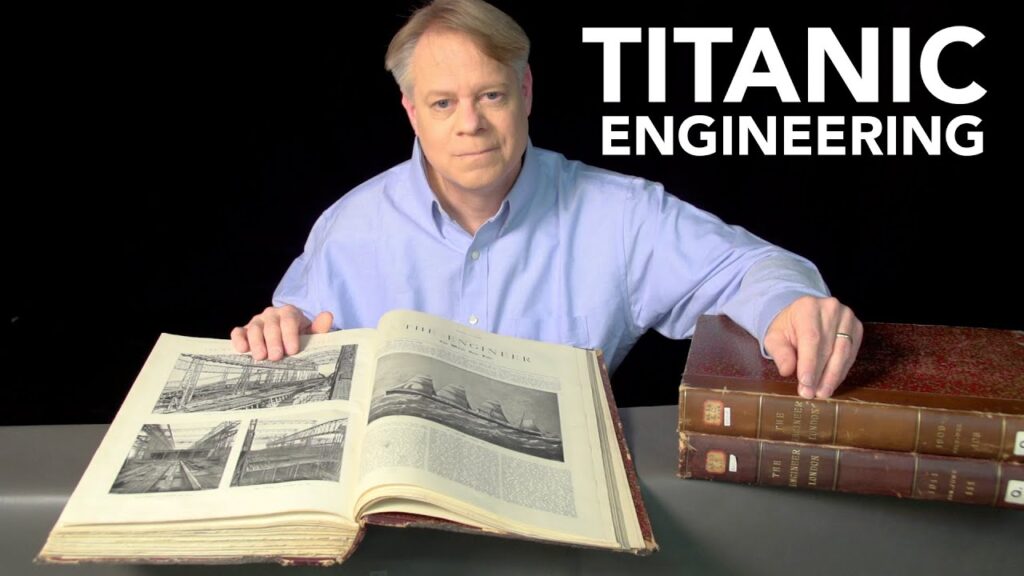
"The Titanic was one of a trio of similar White Star Line ships completed in the early nineteen-tens. In the video above, Bill Hammack, known on YouTube as Engineerguy, tells the story of not just the Titanic, but also the Olympic and the HMHS Britannic. An engineering professor at the University of Illinois, he found in the campus library issues of the journal The Engineer published between 1909 and 1911 that contain detailed photographs of the construction of both the Titanic and Olympic, sister ships that were built side-by-side."
"One element highlighted that we may not much consider today is the sheer scale of the things: each was held together by three million rivets, could contain 1.5 million gallons of ballast water, weighed"
The RMS Titanic is commonly remembered as history's greatest irony—the unsinkable ship that sank on its maiden voyage. Beyond the human tragedy and survivor accounts, the mechanical engineering of the Titanic and its sister ships represents remarkable achievement. The Titanic was one of three similar White Star Line vessels completed in the early 1910s, alongside the Olympic and HMHS Britannic. Engineer Bill Hammack examined historical construction photographs from The Engineer journal published between 1909 and 1911, documenting the detailed building process of these sister ships constructed side-by-side. The scale of these vessels was extraordinary, with each held together by three million rivets and capable of containing 1.5 million gallons of ballast water.
#titanic-engineering #white-star-line-ships #maritime-construction #historical-engineering #ship-design
Read at Open Culture
Unable to calculate read time
Collection
[
|
...
]