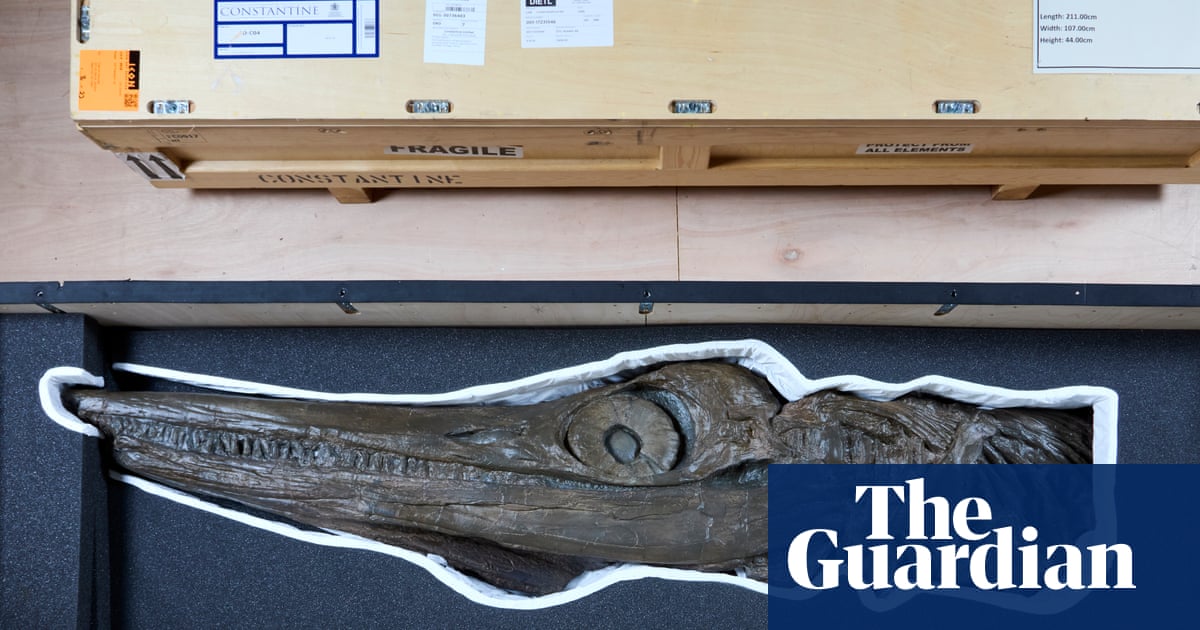
A 23-foot plesiosaur skeleton illustrates how long-necked marine reptiles could seize prey by reaching ahead of their body movement. An immersive exhibition presents fossils, casts, and 3D-printed sculptures of ocean-dwelling creatures that lived more than 66 million years ago while dinosaurs existed on land. The exhibition connects ancient marine environments to modern deep-water conditions. During the Jurassic, the sun was slightly dimmer but the planet was warmer and more humid due to higher atmospheric CO2. Permanent ice caps were absent, sea levels were higher, and much of Earth was covered by water. Land was largely joined as Pangaea, surrounded by the vast, slow-moving Panthalassa ocean, which limited circulation in many regions and favored ammonites and related cephalopod-like animals.
"Its long neck allowed its head to get a head start on its body, says the museum's exhibition and interpretation manager. So it could sneak up on prey and grab it [with its mouth] before its body and flippers created a disturbance in the water."
"The bones of this immense predator are among the centrepieces of Jurassic Oceans: Monsters of the Deep, an immersive exhibition showcasing fossils, casts and 3D-printed sculptures of the marine creatures that ruled the oceans while dinosaurs roamed the land more than 66m years ago."
"[In the Jurassic era], the sun was slightly dimmer, about 2% less powerful, he says, but the planet was much warmer, much more humid, because there was a lot more CO2 in the atmosphere. That meant there were no permanent ice caps, so sea levels were higher, with more of the planet covered by water, he adds."
"Indeed, at the beginning of the Jurassic era, nearly all land was joined together in the supercontinent Pangaea, surrounded by a single global ocean known as Panthalassa. Because that ocean was so vast and slow moving, circulation was limited in many places, Jones says. Particularly well suited to these conditions were ammonites, a group of soft bodied, shell-dwelling creatures related to modern cephalopods such as octopus, squid and nautilus."
Read at www.theguardian.com
Unable to calculate read time
Collection
[
|
...
]