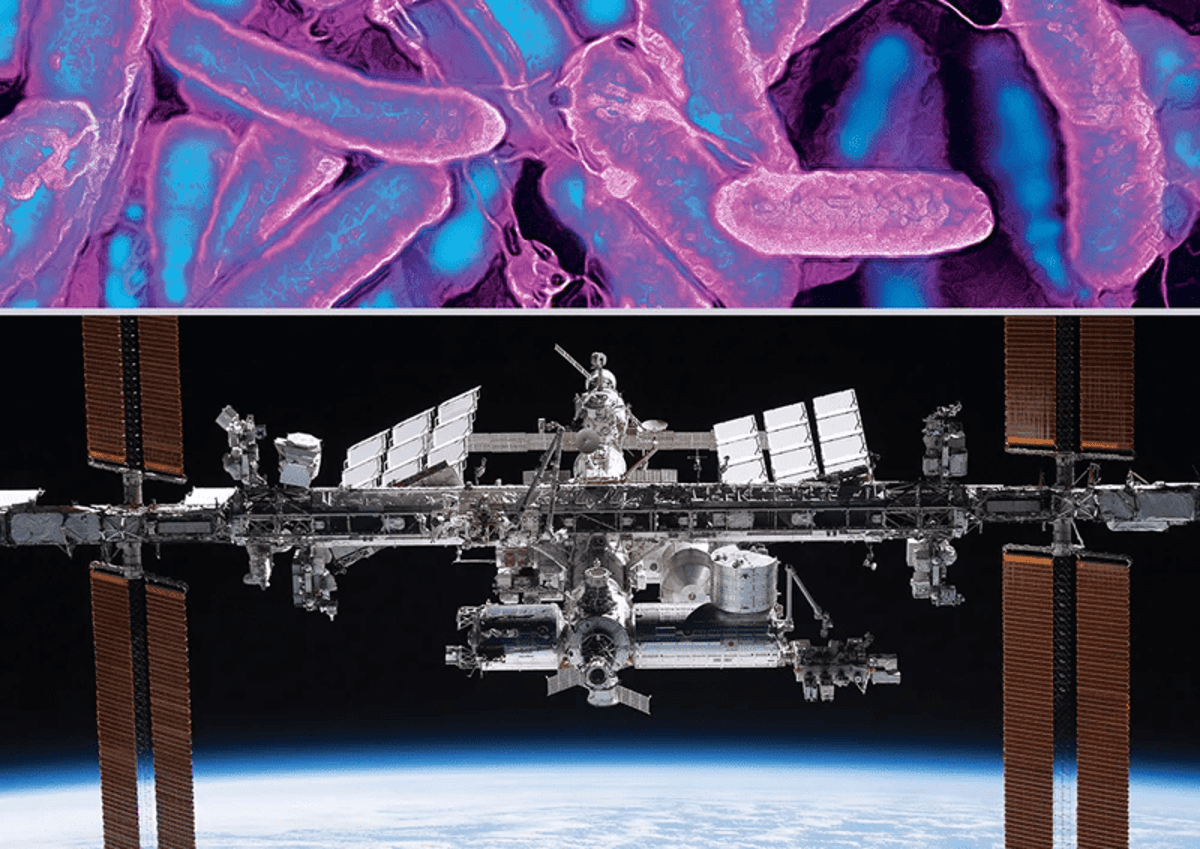
Bacteria and bacteriophages engage in constant evolutionary competition across diverse environments. Researchers sent bacteriophages T7 and Escherichia coli bacteria to the International Space Station to study microgravity's effects on viral adaptation. Space-based viruses took longer than four hours to infect bacteria, compared to two to four hours on Earth, due to microgravity acting as an unfamiliar stressor. However, once viruses adapted to microgravity through subtle shape-shifting mutations, they became significantly more effective at killing bacteria. The difference in infection rates between Earth and space relates to fluid mixing patterns, where normal gravity continuously stirs the environment, increasing viral-bacterial encounters, while microgravity lacks this natural mixing mechanism.
"Bacteria and the viruses that infect them are perpetually at war. Their deadly clashes push both kinds of microbes to evolve new traits that meet the challenges of every environment they inhabit, from the human digestive tract to the seafloor's hydrothermal vents and even the harsh conditions of space."
"The terrestrially reared viruses infected bacteria within two to four hours, but those in space took more than four hours to breach bacteria's defenses. The infection took longer in orbit because microgravity is an unfamiliar stressor to which both microbes must adapt, the researchers suggest."
"Once the viruses adapted to microgravity by subtly shape-shifting, though, they became even more effective bacteria killers. A simple microgravity experiment exposes these mutations that have much higher efficacy against pathogens, says senior study author Srivatsan Raman, a chemical and biological engineer at the University of Wisconsin-Madison."
#bacteriophage-adaptation #microgravity-research #viral-evolution #space-biology #bacterial-infection
Read at www.scientificamerican.com
Unable to calculate read time
Collection
[
|
...
]