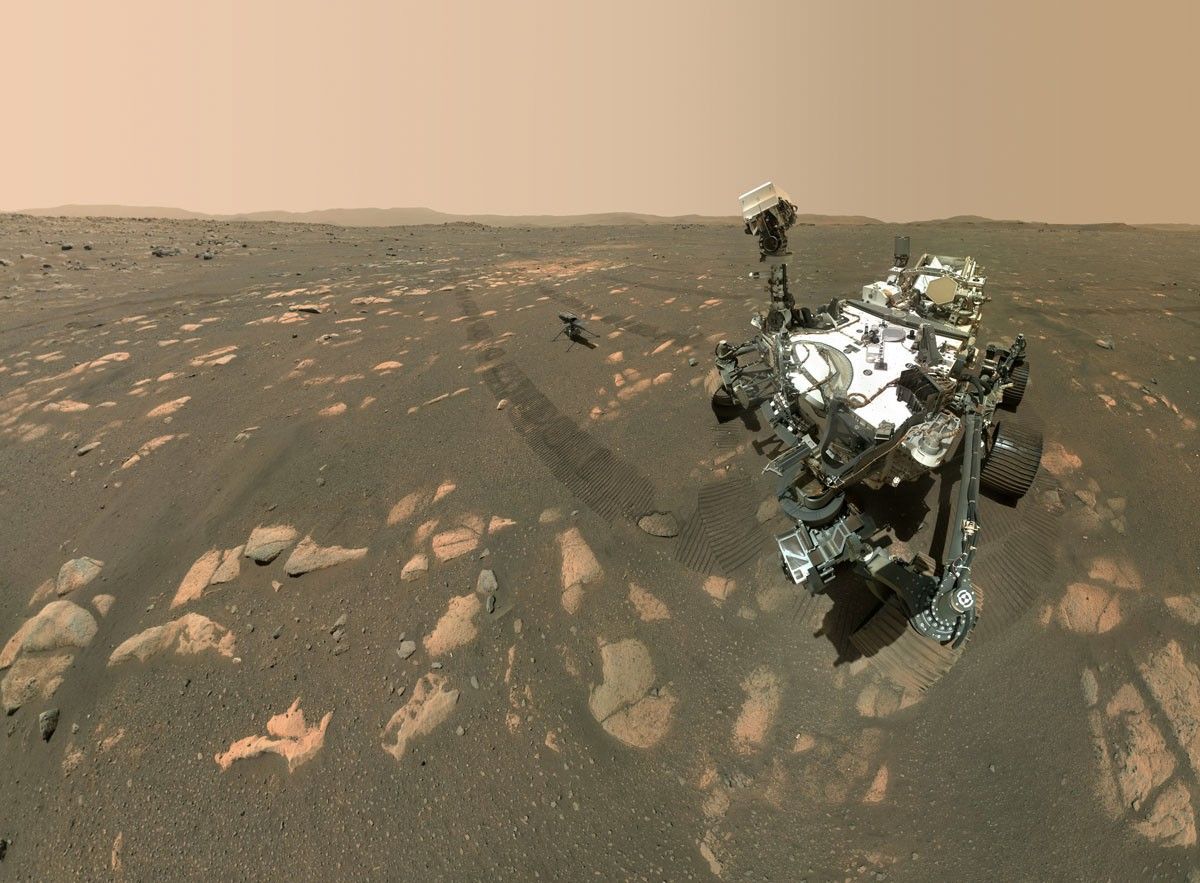
"A paper published in April analyzed observations of stones inside the planet's Jezero Crater made by NASA's Perseverance rover's near-infrared spectrometer. The instrument can identify minerals by analyzing their light signatures. It found that the light-toned stones contained high amounts of corundum, a form of oxidized aluminum. That's the family of minerals that includes expensive jewels such as rubies and sapphires."
"But while the stones on Mars bear a passing resemblance to gems such as rubies on a molecular level, they are not the shimmering red rocks we might find on Earth, says Candice Bedford, a co-author of the study and a research scientist at Purdue University. On our planet, rubies are made in the extreme heat and pressure of Earth's crust as a result of plate tectonics."
"But on Mars, the corundum likely formed as a result of an asteroid impact in which aluminum in the asteroid rapidly fused with Martian minerals. The means the stones on Mars are not really going to be gem quality, because they're made within seconds of this intense impact, Bedford says."
Mars shows evidence of gemstone-like minerals, including corundum, based on observations from NASA rovers and orbiting satellites. A study using the Perseverance rover’s near-infrared spectrometer analyzed light signatures from stones in Jezero Crater. The light-toned stones contained high amounts of corundum, an oxidized aluminum mineral family that includes rubies and sapphires on Earth. Despite molecular similarities, the Martian stones are not expected to be gem quality. On Earth, rubies form under extreme heat and pressure in the crust through plate tectonics. On Mars, corundum likely formed during an asteroid impact that rapidly fused aluminum from the asteroid with Martian minerals within seconds.
Read at www.scientificamerican.com
Unable to calculate read time
Collection
[
|
...
]