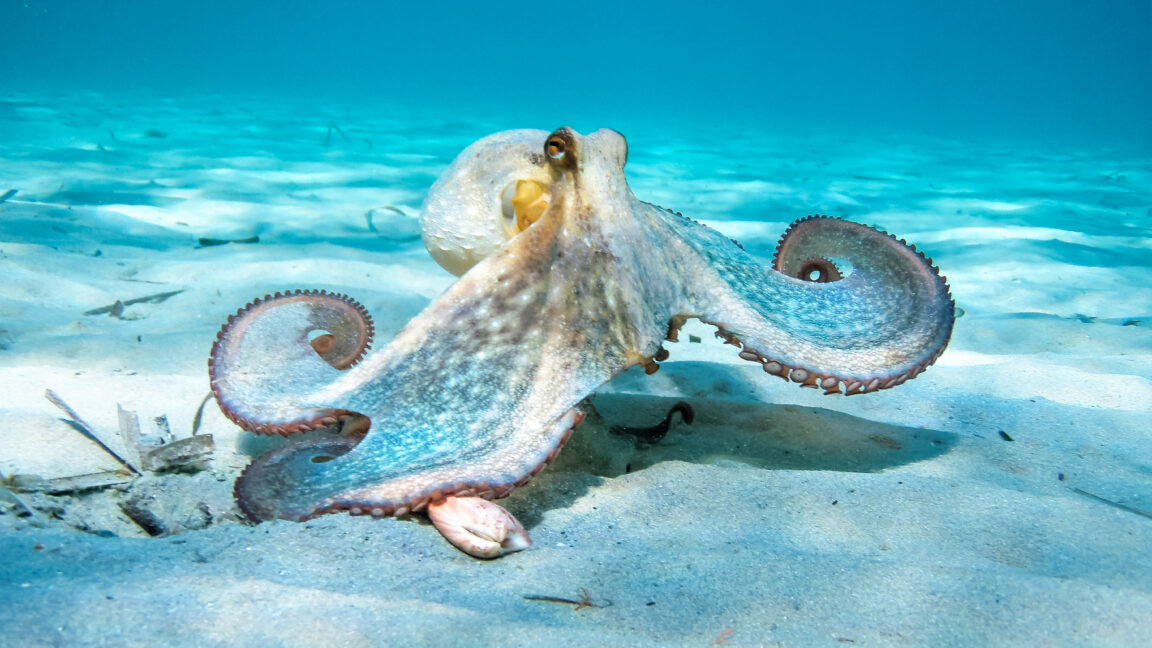
Pohlsepia mazonensis, initially identified as the oldest octopus fossil, dates back to the late Carboniferous period. Recent imaging tests revealed it is not an octopus but a decomposed nautiloid. The fossil's preservation process in the Mazon Creek Lagerstätte led to its misinterpretation, as soft tissues were flattened into two-dimensional stains. This confusion highlights the challenges paleontologists face when interpreting fossilized remains, akin to interpreting abstract art.
"Pohlsepia mazonensis was hailed as the oldest known octopus in the fossil record, dating back to the late Carboniferous period, roughly 311 to 306 million years ago."
"The high iron content in the sediment where Pohlsepia was buried triggered the precipitation of the mineral siderite, preserving soft tissues but resulting in flat, two-dimensional stains."
"The first paleontologists who worked with Pohlsepia were staring at a vague smear on a rock, trying to interpret its anatomy, similar to interpreting Rorschach test drawings."
"The supposed oldest octopus fossil was actually an outlier, as all other fossil records suggested that crown coleoids diverged much later, during the Jurassic."
Read at Ars Technica
Unable to calculate read time
Collection
[
|
...
]