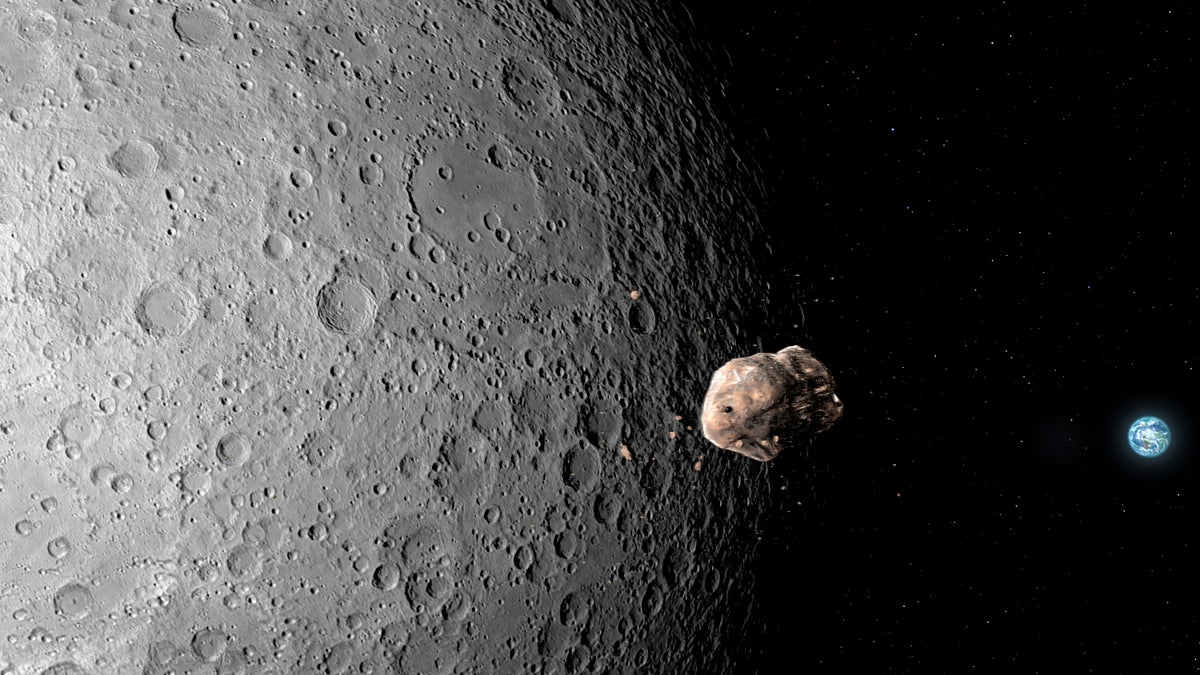
"Soon after it was spotted in December 2024, worldwide telescopic observations quickly positioned it as the most dangerous space rock ever discovered—one that stood a 3.1-percent (or 1-in-32) chance of crashing into Earth on December 22, 2032. If it were to hit one of the cities potentially in its path, this 60-meter asteroid would have unleashed a force comparable to several atomic bombs, devastating the unfortunate metropolis."
"Its incredibly perceptive infrared vision, however, was able to track the asteroid in February when it was 450 million kilometers from Earth—a feat no other telescope could manage. We think this is certainly the faintest solar system object that has ever been observed, says Andy Rivkin, an astronomer and planetary defense researcher at Johns Hopkins Applied Physics Laboratory in Maryland."
"Now, a concerted effort by astronomers indicates the asteroid will comfortably miss our alabaster companion too—by 21,200 kilometers. Remarkably, this revelation comes from the James Webb Space Telescope (JWST), an observatory that was designed to look at ancient black holes, distant galaxies, convulsing stars and far-flung planets—not help defend the planet from rogue asteroids."
Asteroid 2024 YR4 was discovered in December 2024 and initially posed an unprecedented threat to Earth, with a 3.1-percent chance of impact on December 22, 2032. The 60-meter asteroid would have caused catastrophic damage comparable to multiple atomic bombs if it struck a populated city. Earth impact was ruled out in February, but analysis revealed a 4.3-percent chance of lunar collision. The James Webb Space Telescope, designed for observing distant cosmic phenomena, unexpectedly played a crucial role in tracking the asteroid when it was 450 million kilometers away—a capability no other telescope possessed. Refined observations confirmed the asteroid will miss the Moon by 21,200 kilometers, eliminating the threat entirely.
#asteroid-detection #planetary-defense #james-webb-space-telescope #space-threat-assessment #astronomical-observation
Read at www.scientificamerican.com
Unable to calculate read time
Collection
[
|
...
]