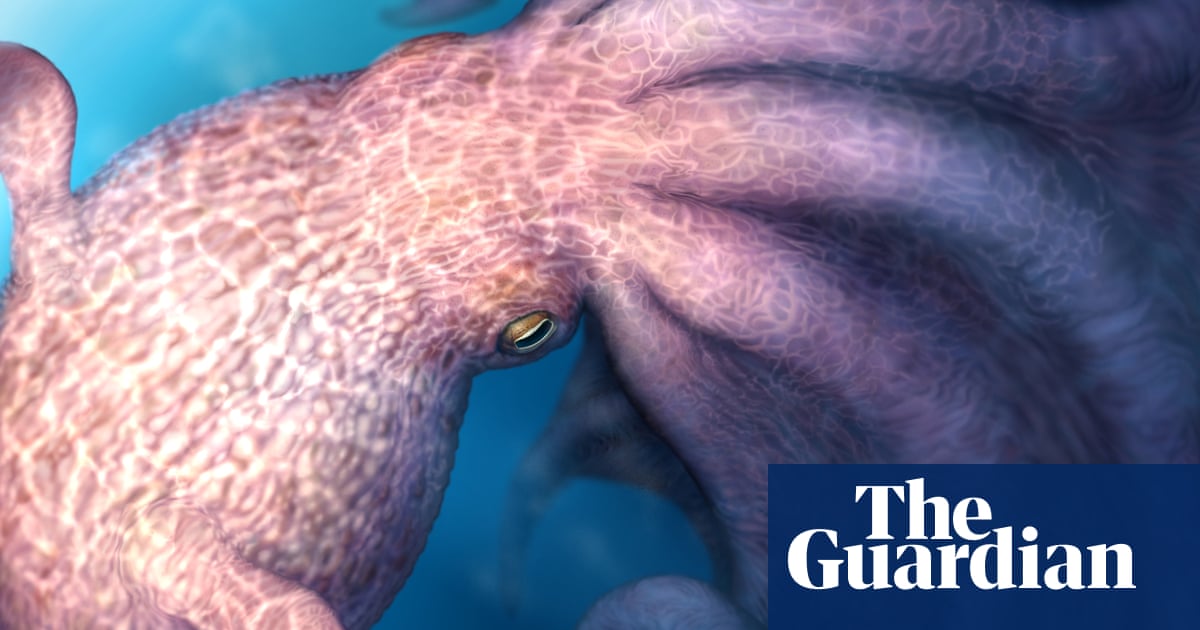
"Giant kraken-like octopuses that used powerful beaks to crunch through bones of prey were among the most formidable predators of the Cretaceous oceans. Some ancient octopus species reached up to 19 metres in length, meaning they would have rivalled and possibly even preyed upon apex predators such as mosasaurs and plesiosaurs."
"Distinct wear patterns on the enormous fossilised beaks suggest they would have routinely crushed hard bones and shells. This changes the view that Cretaceous seas were dominated only by large vertebrate predators."
"One species, Nanaimoteuthis haggarti, was found to have a beak larger than that of the modern giant squid, which reaches about 12 metres in length and until now had been regarded the largest known invertebrate."
Research reveals that ancient octopus species, some reaching 19 meters, were apex predators in Cretaceous oceans. Fossilized beaks show distinct wear patterns from crushing bones and shells. These octopuses, part of the Nanaimoteuthis group, challenge the belief that large vertebrates dominated the seas. The study identified 15 large fossil beaks and uncovered 12 more, indicating significant size and predatory capabilities. One species, Nanaimoteuthis haggarti, may be the largest invertebrate ever, surpassing the modern giant squid in size.
Read at www.theguardian.com
Unable to calculate read time
Collection
[
|
...
]