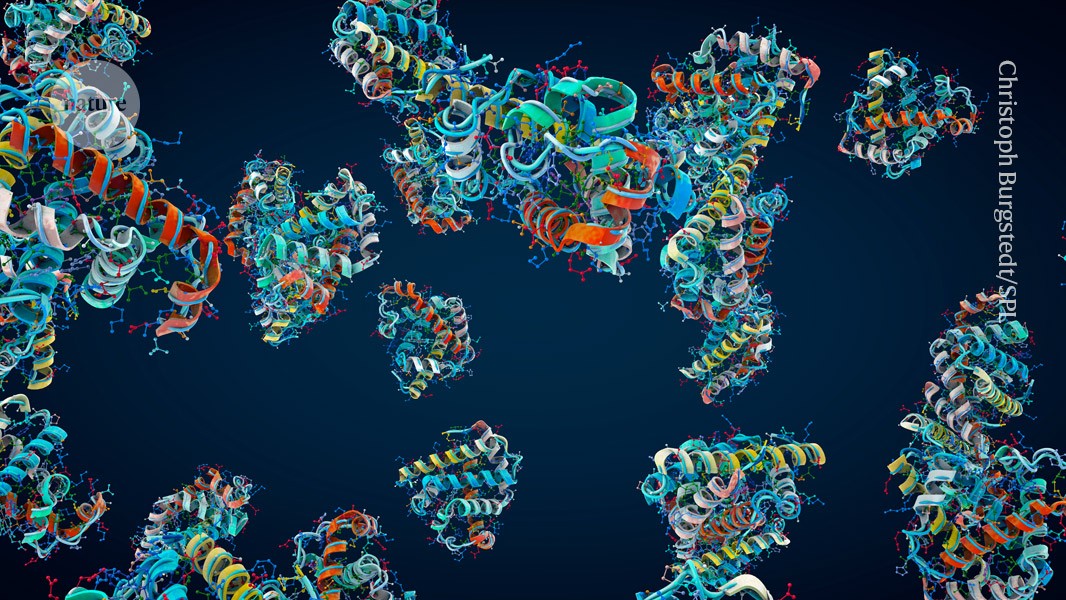
Scientists achieved direct measurements of individual protein folding times using improved single-molecule fluorescence spectroscopy, revealing surprising findings published in Physical Review Letters. The transition-path time—the actual duration of folding itself—shows no correlation with protein sequence or size. Proteins fold more efficiently than other biomolecules like DNA, despite their more complex structural requirements. Proteins begin as linear amino acid chains that must fold into precise 3D structures essential for their biological functions. Understanding folding dynamics is critical because misfolded proteins cause dysfunction, disease, and toxicity. Previous research measured overall folding time including unsuccessful attempts, but direct observation of the actual folding transition remained impossible until this advancement in measurement resolution.
"Proteins' functions are closely tied to their often-complex 3D structures. Some have specialized pockets or protrusions that allow them to lock onto cell receptors to send messages, for example. But no matter how intricate its ultimate design, a protein starts out as a string of amino acids, "like a long spaghetti noodle" that can fold in any number of ways."
"Identical protein molecules floating in a beaker will all reach their final 3D structure at different times, each making many unsuccessful attempts along the way. Scientists know how much time the overall process of folding, including those unsuccessful attempts, generally takes. But until now, it's been essentially impossible to measure the duration of the act of folding itself - this sprint is called the transition-path time."
"The results were surprising: they found no relationship between a protein's sequence or size and how long it takes to fold into its 3D shape. And proteins seem to fold more efficiently than do other biomolecules, such as DNA - despite proteins having a more complex set of ingredients."
#protein-folding #single-molecule-spectroscopy #transition-path-time #biophysics #molecular-dynamics
Read at Nature
Unable to calculate read time
Collection
[
|
...
]