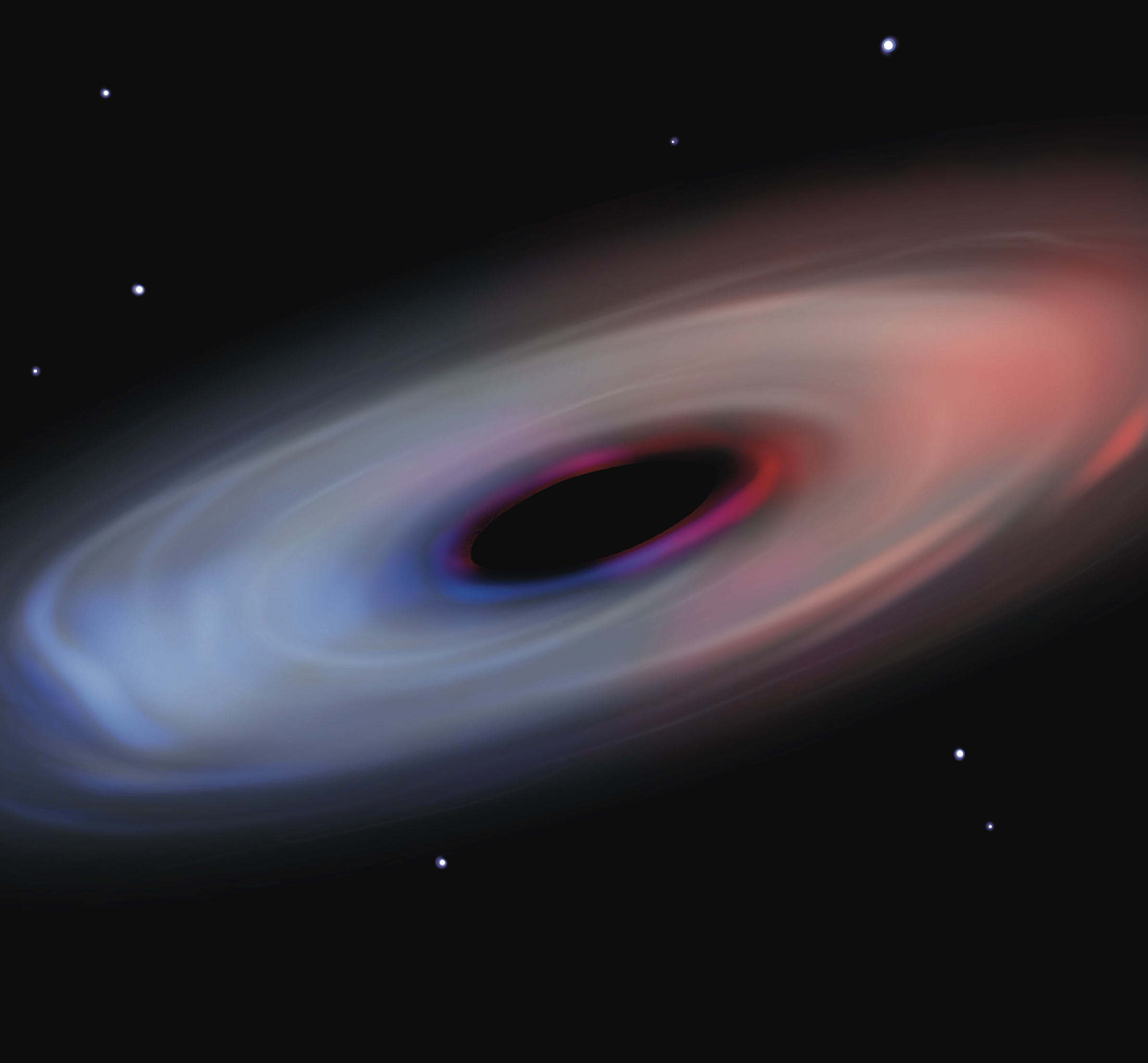
JWST observations from 2022 revealed tiny glowing red dots in the early universe, within the first few billion years after the Big Bang. Most astronomers interpret these LRDs as distant, star-like objects powered by growing black holes at their centers. The key uncertainty concerns the black hole masses, which affects ideas about how and when these objects formed. A Nature paper reports a mass measurement for an LRD at about 50 million times the Sun’s mass, using JWST data from roughly 700 million years after the Big Bang. The claimed early existence of such massive black holes would imply they formed before the galaxies that host them, potentially at the dawn of cosmic time. Skepticism followed because the result would overturn prevailing beliefs.
"Almost as soon as NASA's James Webb Space Telescope (JWST) turned on in 2022, gathering light from the first few billion years after the big bang, it saw an ancient sky festooned with tiny flecks of glowing red. Ever since, these little red dots (LRDs) have challenged practically everything scientists thought they knew about the early universe. Most astronomers now agree that each of these minuscule crimson speckswhich bear a striking resemblance to enormous, faraway starsactually has a burgeoning black hole at its center."
"A paper published today in Nature stakes a claim on the heavy side of this cosmic guess-my-weight competition. Using JWST to gaze back to just 700 million years after the big bang, the paper's authors report their measurement of an LRD's mass by a novel, purportedly less equivocal method: they have found it to be some 50 million times the mass of our sun. The result has spurred skepticism ever since it appeared as a preprint last August, however, because its conclusions would overturn the beliefs of most astronomers."
"Finding such massive black holes so early in the universe's life would suggest that they predate the galaxies that engulf themand that they were perhaps born at the dawn of time itself. If everything in this paper is true at face value, then we are living in a stranger world, says Jenny Greene, an astronomer at Princeton University, who was not involved in the study. That's why this is very important. The debate boils down to which came fir"
Read at www.scientificamerican.com
Unable to calculate read time
Collection
[
|
...
]