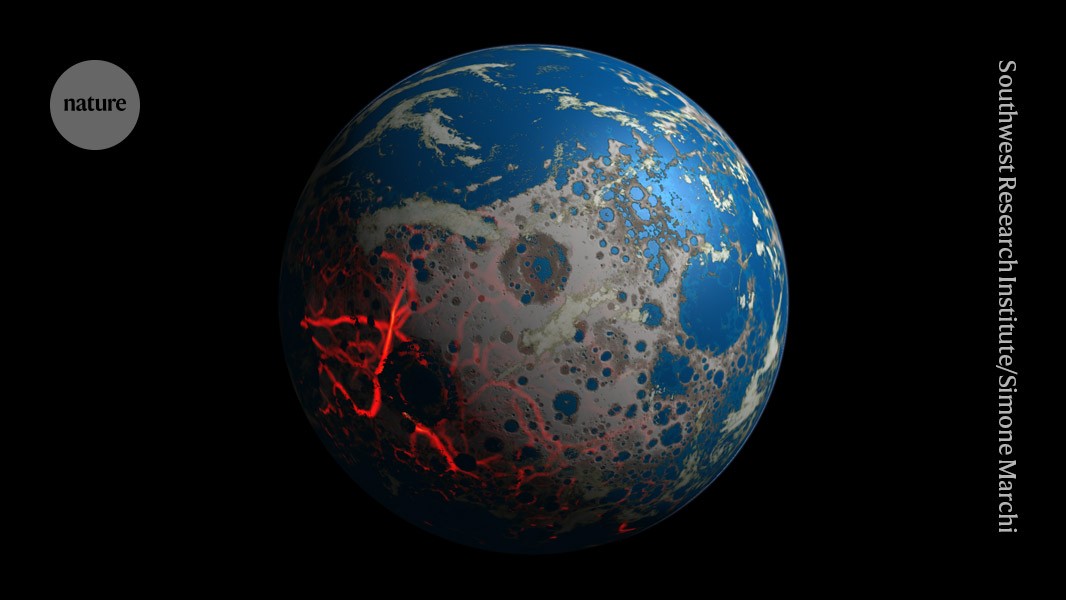
"A zircon study published today finds that the ancient Earth could have contained more oxygen - and possibly more water - than researchers had suspected, and suggests that the movement of tectonic plates was already happening at least 3.3 billion years ago, relatively early in Earth's 4.5-billion-year-old history."
"The presence of more oxygen than expected in these ancient rocks suggests that conditions on the planet could have been more conducive to life during this period than previously thought. And if tectonic plates were already moving, this suggests that Earth was already hosting some of the geological processes that shape the planet and that - by recycling crucial chemicals - help to make life possible."
"Houchin and his colleagues studied dozens of zircon crystals from the Jack Hills in Western Australia. These are the oldest known fragments of Earth rocks. Some date back to the Hadean Eon, which began when the planet formed and ended around four billion years ago."
Analysis of zircon crystals from Australia's Jack Hills provides crucial insights into early Earth's conditions. These ancient rock fragments, some dating to the Hadean Eon, contain chemical information preserved in their durable mineral structures. The research indicates that early Earth contained more oxygen and possibly more water than scientists previously suspected. Additionally, evidence suggests tectonic plate movement was already occurring at least 3.3 billion years ago, relatively early in Earth's 4.5-billion-year-old history. These findings suggest that early Earth's conditions were more conducive to life than previously thought, with geological processes already recycling crucial chemicals necessary for life. However, researchers emphasize these findings represent only a small portion of understanding early Earth's complete history.
Read at Nature
Unable to calculate read time
Collection
[
|
...
]