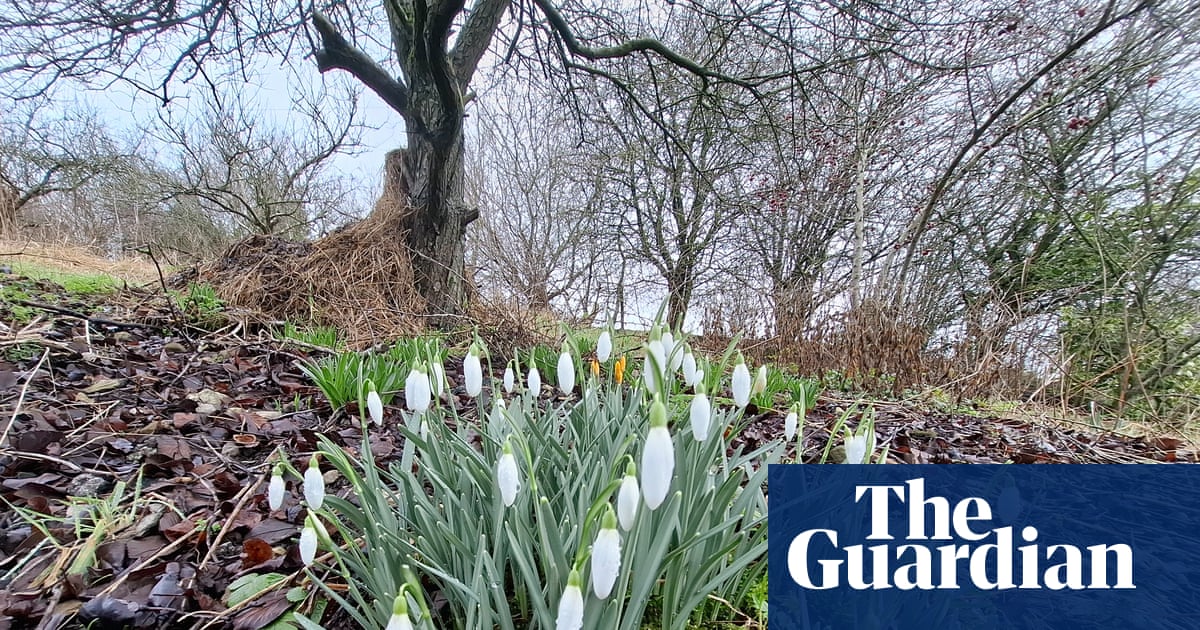
"My mother first planted those same bulbs (or their parents) in her garden, which is half a mile from here, in the 1970s. When she died a decade ago, I took them first to our old house and now to this property. I'd actually forgotten the last transfer: a scoop of both the bulbs and surrounding soil, a short car journey, then a hasty reinterment in a hole on this south-facing slope."
"Prof Robert Fosbury, a distinguished astrophysicist who researches the impacts of light upon eukaryotic life, which is essentially you and every other complex organism on Earth. We're all deeply familiar with the idea that visible light drives photosynthesis, in turn making life possible at all. But Fosbury has discovered that light we cannot see, in the infrared spectrum—which can penetrate exposed surfaces and reach every cell in our bodies—is also crucially important."
"Infrared light has been shown to have conditioning and essential healthful impacts upon our mitochondria, those organelles that oversee energy distribution within every one of our cells. If we're not exposed to infrared light, which penetrates us even when it's first intercepted by a tree canopy, then all mitochondria-bearing organisms—including snowdrops and the person who loves them—will suffer."
Snowdrops carry personal significance as inherited plants passed through generations, connecting family memories across decades and locations. Beyond their sentimental value, snowdrops represent a broader biological reality: all complex organisms depend on infrared light for cellular health. Research by astrophysicist Robert Fosbury reveals that infrared radiation, invisible to human eyes but capable of penetrating surfaces and reaching individual cells, plays a crucial role in mitochondrial function. Mitochondria regulate energy distribution throughout cells in all organisms. Without adequate infrared light exposure, even when filtered through tree canopies, all mitochondria-bearing organisms—from snowdrops to humans—experience compromised health and vitality.
Read at www.theguardian.com
Unable to calculate read time
Collection
[
|
...
]