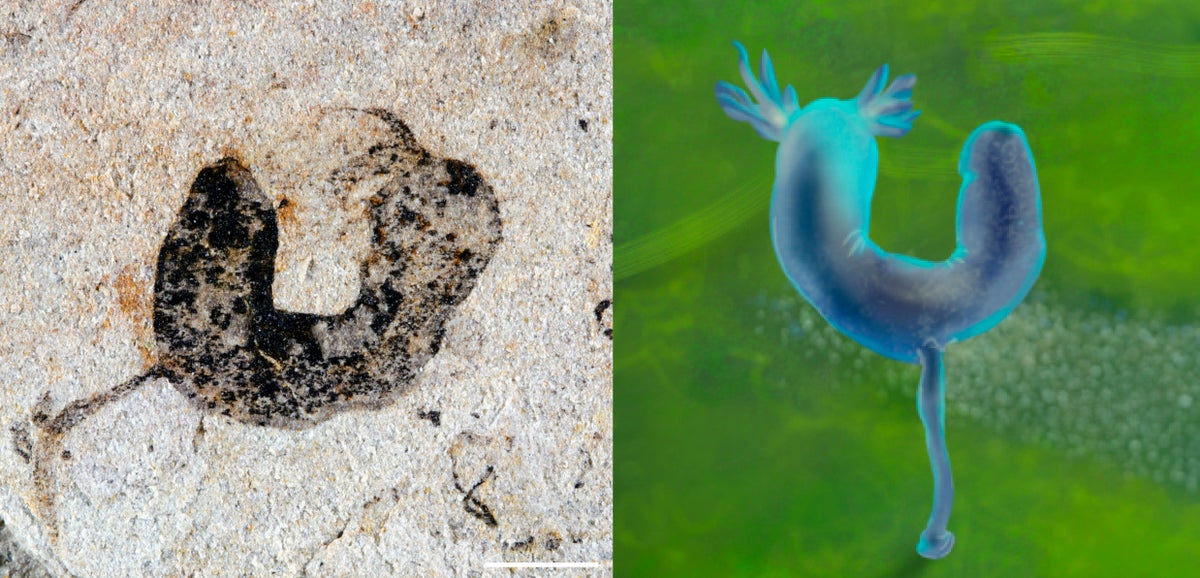
Recent discoveries in Yunnan, China, reveal over 700 fossils from the Ediacaran period, indicating that complex life forms existed millions of years before the Cambrian explosion. These fossils include unusual creatures, such as wormlike organisms and sausage-shaped animals. The findings challenge the traditional timeline of evolutionary history, suggesting that some life forms previously believed to have emerged during the Cambrian period were actually thriving earlier. This significant discovery was made accidentally while researchers were searching for algal fossils in the region's well-preserved rocks.
"Hundreds of fossils uncovered in southern China's province of Yunnan reveal that at least some of the life-forms scientists had thought arose in the Cambrian period were alive and thriving millions of years earlier, in an era known as the Ediacaran period."
"The discovery was something of an accident, says Frances Dunn, a senior researcher of natural history at the Oxford University Museum of Natural History and a co-author of the paper."
"This chance finding, Dunn says, turned out to hold some of the most significant early animal fossils found in decades."
Read at www.scientificamerican.com
Unable to calculate read time
Collection
[
|
...
]