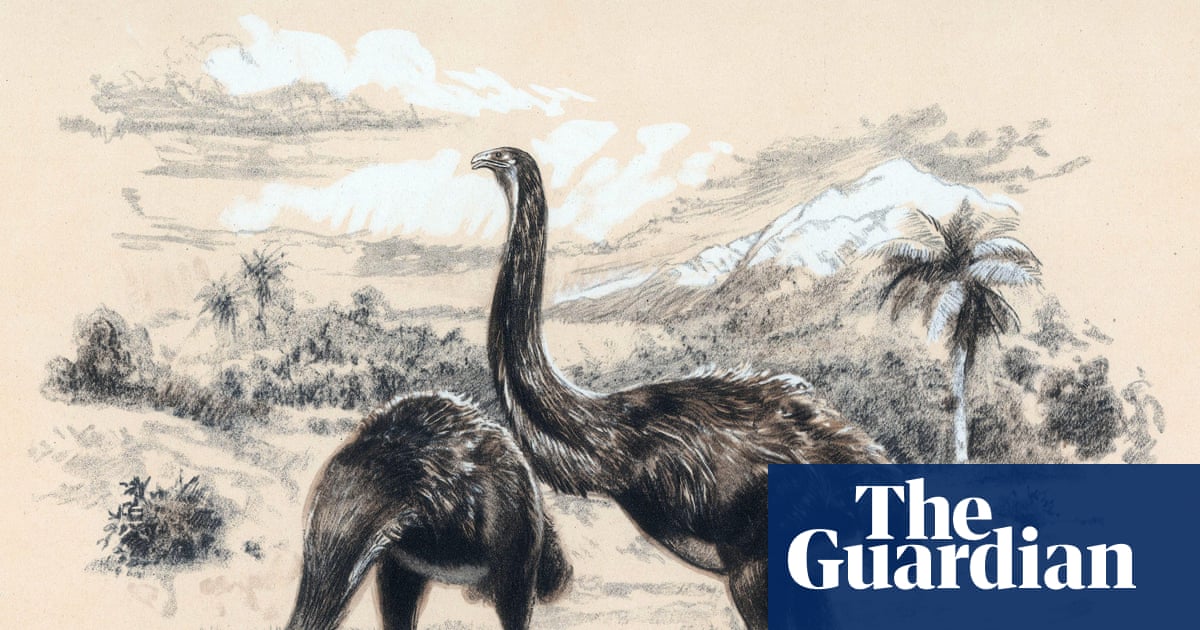
The flightless moa was a very large extinct New Zealand bird with eggs larger than those of any living bird. Colossal Biosciences claims progress toward de-extinction after creating an artificial eggshell and a scalable incubation approach. The company says its shell-less culture system can be biologically accurate and that its artificial incubation platform, previously used to hatch chickens, could be scaled for a bird as large as the moa. The platform uses a silicone membrane intended to allow oxygen through at a rate comparable to a chicken eggshell, addressing limited survival seen with other artificial eggshell methods. Scientists express skepticism because the claims rely on limited data and press-release information, and because moa egg size may exceed available surrogate capacity.
"The flightless moa, an extinct bird of New Zealand, stood more than 3 metres tall, weighed over 200kg and had eggs larger than those of any bird now living. Now the de-extinction company Colossal Biosciences says it is a step closer to resurrecting the moa after creating an artificial eggshell. Colossal hopes the artificial incubation system, which it successfully used to hatch chickens, could be scaled up to create a bird as big as the moa in future."
"We've created a novel shell-less culture system that is fully scalable and biologically accurate, said Prof Andrew Pask, the chief biology officer at Colossal. The company previously provoked controversy with claims to have de-extincted the dire wolf and its ambition to bring back the woolly mammoth. The latest advance has been met with scepticism by scientists who say its scope is impossible to judge given that the company made the announcement through a press release with scarce scientific detail or data."
"It is already possible to hatch chicks from artificial eggshells but the survival rate is limited because chicks may not get enough oxygen. Colossal suggests its new platform, a silicone membrane, is better than existing ex-ovo approaches because it allows oxygen through at the same rate as a chicken eggshell. It sounds impressive but then it would, because it's a press release, said Dr Louise Johnson, an evolutionary geneticist at the University of Reading."
"Moа eggs are estimated to have been approximately 80 times the volume of a chicken egg and roughly eight times the volume of an emu egg, placing them beyond the capacity of any available avian surrogate. Even if the artificial eggshell is effective and can be scaled up, Colossal will still face significant scientific challenges in its attempt to bring back to moa. The species went extinct about 600 years a"
Read at www.theguardian.com
Unable to calculate read time
Collection
[
|
...
]