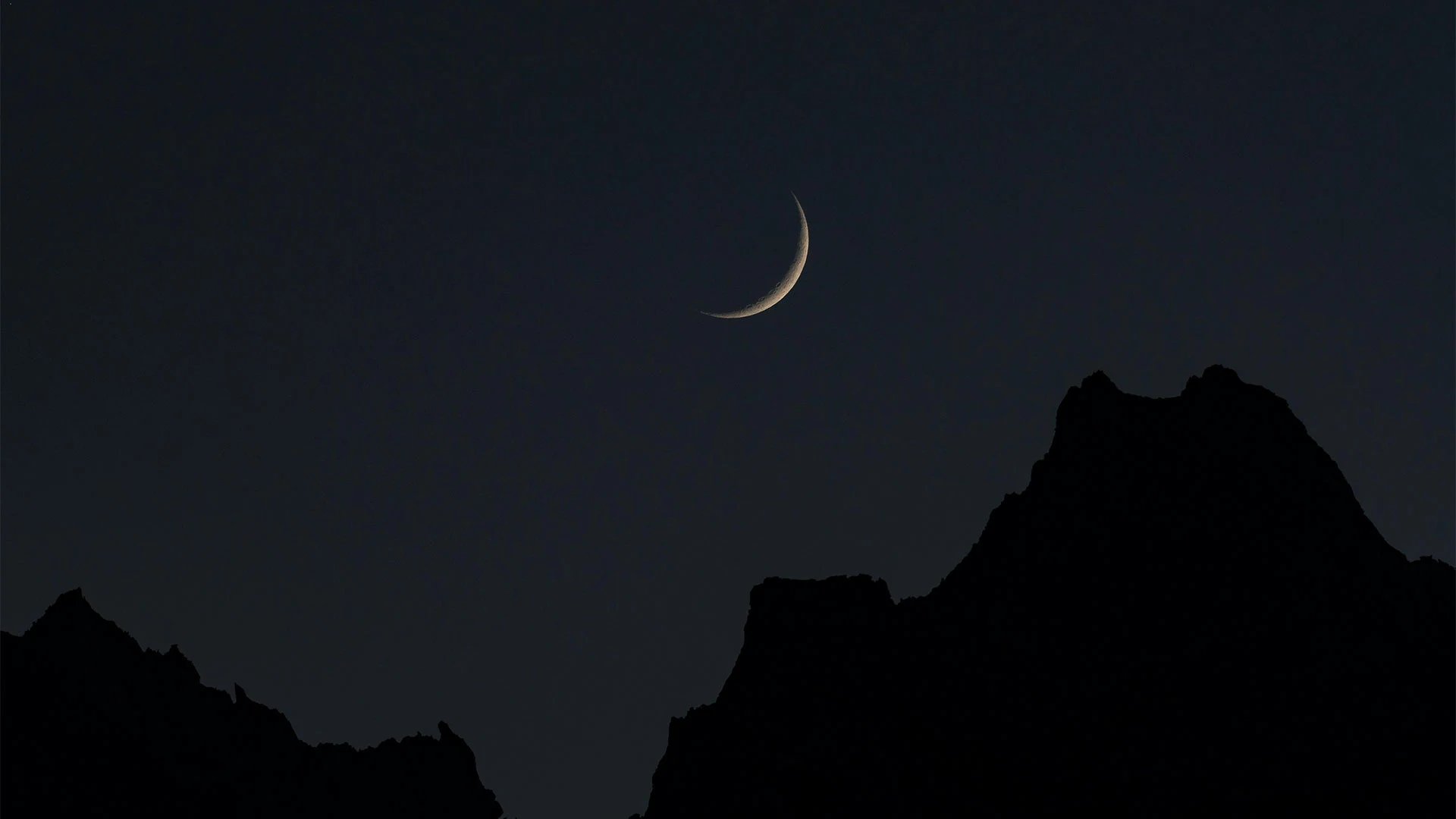
"The moon, Saturn, and Mars will form a cosmic triangle as the sun rises before dawn in the early hours of Thursday morning. The razor-thin moon will be in its waning crescent phase (day 27 of its 29.5 day cycle), and appear as a mere sliver in the sky, as only 8% will be lit up by the sun, according to Space.com."
"At the same time, two other planets, Saturn and Mars, will be visible to the right and left of the moon, respectively-with Saturn appearing like a bright star, and Mars deep red. (Neptune will also be present, but not visible with the naked eye.) Skywatchers will want to look east on the horizon, as all three will be less than 20 degrees above the horizon before they disappear amid the glare of the sunrise."
"The best time to catch this waning crescent moon is about 45 minutes before sunrise on Thursday, May 14. (That will be approximately 4:55 a.m. ET in New York, 4:36 a.m. ET in Boston, and 5:01 a.m. ET in Philadelphia.)"
"Another bonus: May 2026 has a second full moon, or "Blue Moon" (although it doesn't appear that color), at the end of the month. It will appear fullest on the night of Saturday, May 30 here in North America, before it enters into the morning hours of Sunday, May 31. (The last Blue Moon appeared on August 19, 2024.)"
Before dawn on Thursday, May 14, the moon, Saturn, and Mars will appear close together, forming a cosmic triangle in May’s dark sky. The moon will be a razor-thin waning crescent, about 8% illuminated, and will look like a small sliver. Saturn and Mars will be visible to either side of the moon, with Saturn appearing bright and Mars appearing deep red. Neptune will also be present but will not be visible to the naked eye. The lineup will be low, under 20 degrees above the eastern horizon, and will disappear as sunrise glare increases. The best viewing time is about 45 minutes before sunrise.
Read at Fast Company
Unable to calculate read time
Collection
[
|
...
]