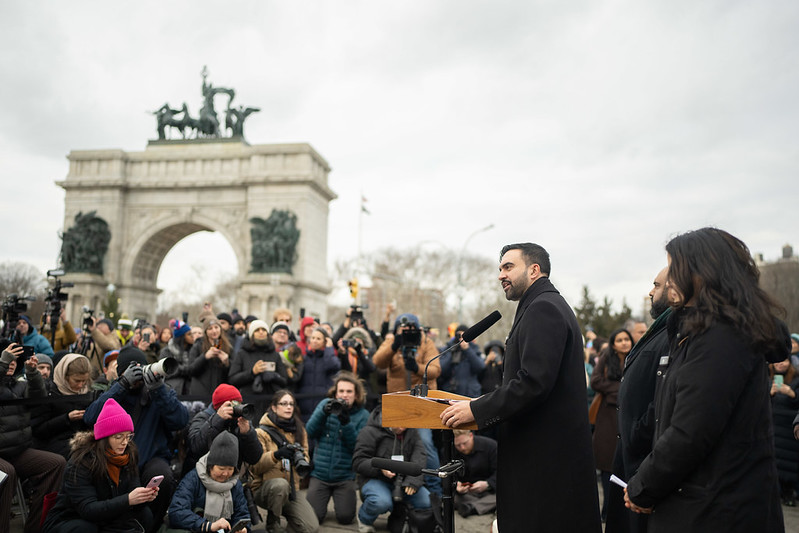
"The order names a problem that anyone who has spent time in civic life recognizes. Too often, "community" is defined by the few who repeatedly show up or happen to be in the room. That is not because they care more, but because they have the time, flexibility, and familiarity with civic processes that many New Yorkers do not. When those voices are treated as synonymous with an entire district, our understanding of the public and consensus becomes distorted."
"The Office of Mass Engagement is designed to build consensus and inform policy decisions through mass engagement, not just by listening to whoever shows up to meetings. There are degrees of consensus. One rare area of broad agreement in New York City is the need to make the city more affordable, with housing being the biggest driver of cost. How to fix that problem has less consensus, but the 2025 election gave us real insight and a real opportunity for this new mayor."
"After millions were poured into campaigns both supporting and opposing the pro-housing ballot measures, voters approved them decisively. These measures removed a councilmember's ability to veto housing in their district, a power that has been used repeatedly to block housing. The evidence is overwhelming that building housing at the right scale makes a city more affordable, and New Yorkers demonstrated they understand this."
Mayor Mamdani signed an executive order creating an Office of Mass Engagement to broaden civic participation and link engagement to concrete outcomes. The office targets the problem of narrow representation where a few repeat participants shape district consensus due to time, flexibility, and familiarity with civic processes. The office aims to build policy consensus through mass engagement rather than relying solely on meeting attendees. Voters approved pro-housing 2025 ballot measures that removed council veto power over housing, signaling public support for housing-driven affordability. Building housing at appropriate scale is presented as a key path to greater city affordability.
Read at City Limits
Unable to calculate read time
Collection
[
|
...
]