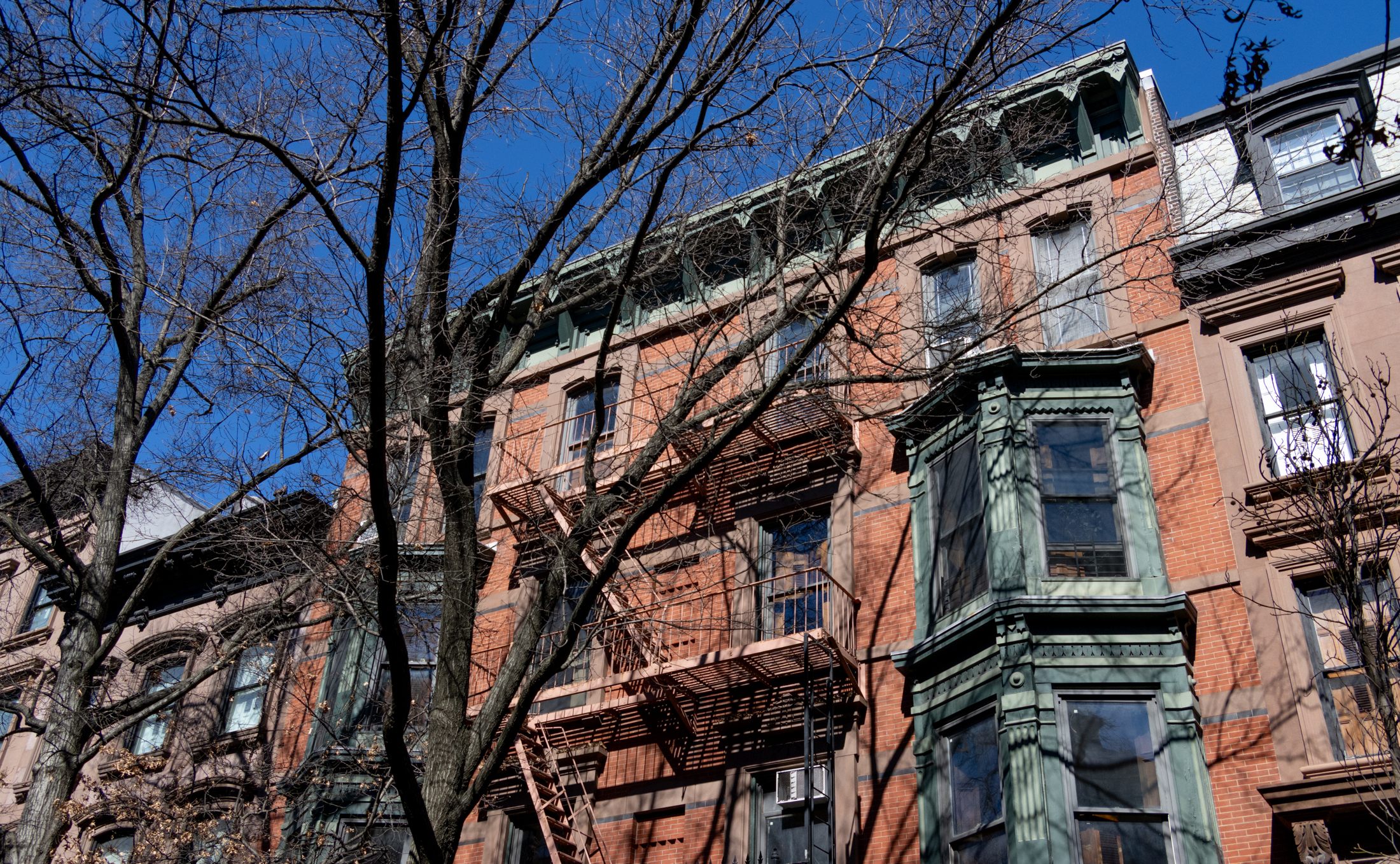
"But many of the wealthy people who lived in the city of Paris, for example, didn't live in individual homes. These sophisticated urban French lived in large apartment flats, one apartment on top of another in a beautiful building with a common staircase opening into a courtyard and windows that opened onto the courtyard and the street. How chic, an almost decadent way to live in a city!"
"Perhaps it is a by-product of that vaunted 'frontier spirit,' or the idea that a man's home is his castle, but the American middle classes and those above firmly believed that a successful man and his family should live in their own one-family home. Hence our row house neighborhoods, whether they are wood frame, brick, or stone, not to mention freestanding houses and mansions."
"The word tenement has been in use in Scotland and Great Britain since the Middle Ages and simply meant 'tenant houses.' But as the definition evolved through the centuries, it went from being value neutral to defining run-down, overcrowded buildings in poor neighborhoods filled with very poor people living in unimaginably horrible conditions."
During the late 19th century, wealthy Americans traveled extensively through Europe, particularly to Paris, London, and Rome. These travelers encountered sophisticated urban living arrangements featuring elegant apartment buildings with shared courtyards and common staircases. This contrasted dramatically with American middle-class values emphasizing single-family home ownership, rooted in frontier spirit ideology. While European apartments represented chic, refined urban living, identical multi-unit buildings in New York carried the stigmatized label of tenements. The term tenement, originating in medieval Scotland and Britain as a neutral reference to tenant housing, evolved into a pejorative descriptor for overcrowded, deteriorating buildings housing impoverished populations in poor neighborhoods. This linguistic and cultural distinction reflected fundamental differences in American and European urban housing philosophies.
#19th-century-american-travel #housing-culture-differences #urban-living-preferences #tenement-history #european-vs-american-architecture
Read at Brownstoner
Unable to calculate read time
Collection
[
|
...
]