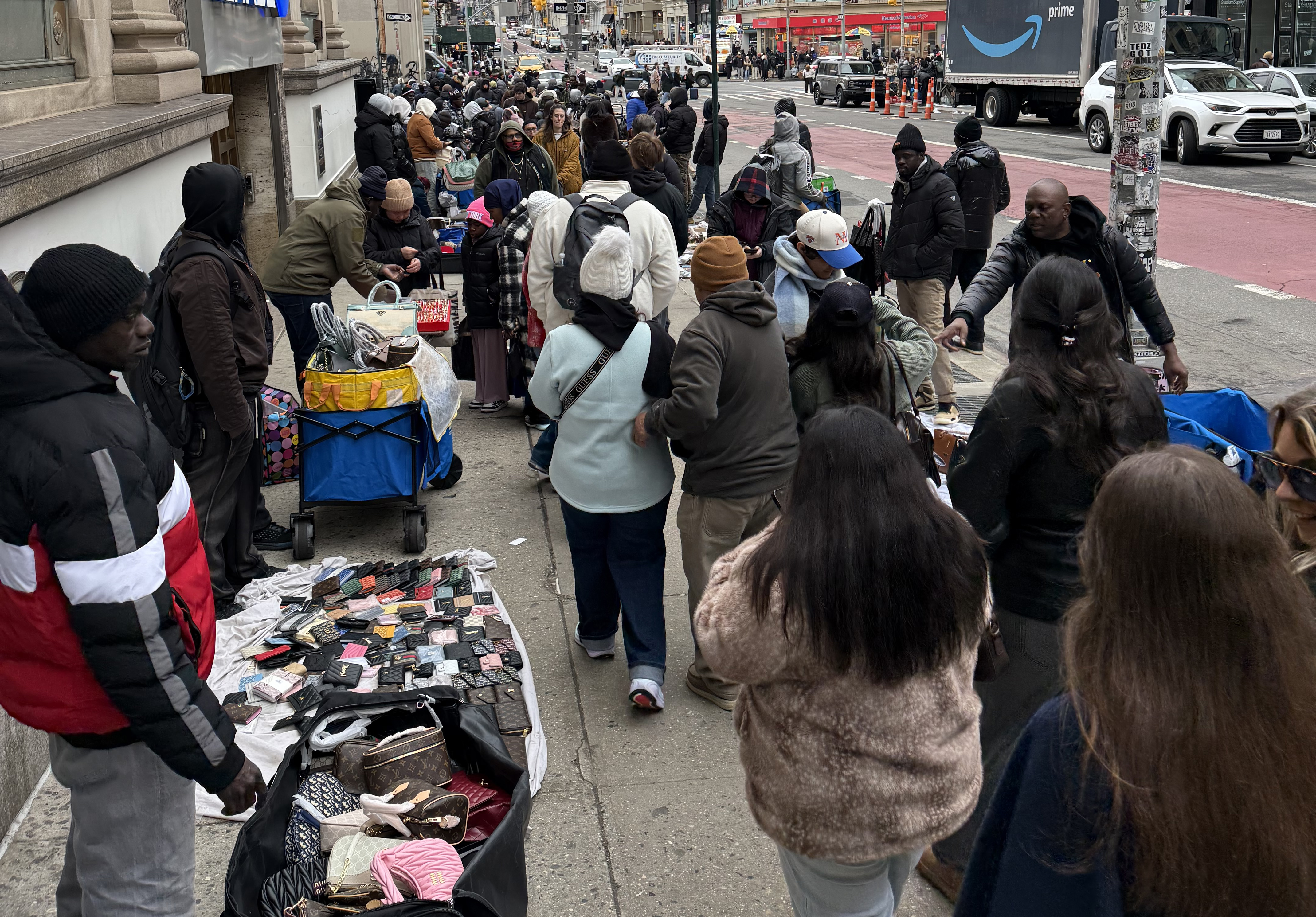
"On my most-recent visit, I watched two cops arrest a single street vendor. I asked one of the officers - name tag, Benedetto - why this man was being arrested when vendors on the other side of the street were not. "There's only two of us," he said, looking around, "and a lot of them." He and his partner left with their collar. Within moments, the sidewalk reset. Selling resumed. Business as usual."
"The sidewalks don't function In a two-block radius around the Broadway and Canal intersection, sidewalks are routinely blocked by blankets covered in merchandise - handbags, t-shirts, watches - laid edge to edge. Vendors move goods in a coordinated system: vans and SUVs pull up, carts are loaded, inventory is distributed in waves. It is organized, constant, and massive."
"Some vendors are open about it. Others operate more discreetly, quietly showing prospective buyers glossy, high-color catalogues displaying handbags, sneakers and watches bearing the logos of luxury brands. When a customer agrees to buy, a runner disappears down the block and returns moments later carrying the item from a nearby van or truck. The parking lot at the corner of Lispenard and Broadway (and the abandoned building on the southwest corner of Broadway and Canal, which also benefits from the cover of scaffolding) appears to serve as a kind of informal warehouse and dispatch center, with vehicles constantly arriving, unloading merchandise and redistributing inventory back onto the street."
"Canal Street no longer feels like a collection of isolated vendors. It feels like a fully functioning informal economy - a parallel retail infrastructure operating just beneath the surface of the formal city. The scale is astonishing: thousand"
Police sirens interrupt the usual street activity near Broadway and Canal, prompting people to run across intersections while vendors continue operating. Two officers arrest a street vendor, then leave, and selling resumes within moments. Sidewalks in the area are routinely blocked by blankets covered with merchandise such as handbags, t-shirts, and watches. Vendors coordinate inventory movement using vans and SUVs that load carts and distribute goods in waves. Some vendors openly display items, while others use discreet catalogues and runners to retrieve purchases from nearby vehicles. A nearby parking lot and an abandoned building provide informal warehouse and dispatch functions, with vehicles constantly unloading and redistributing inventory. The result is a parallel retail infrastructure operating beneath the formal city.
Read at Streetsblog New York City
Unable to calculate read time
Collection
[
|
...
]