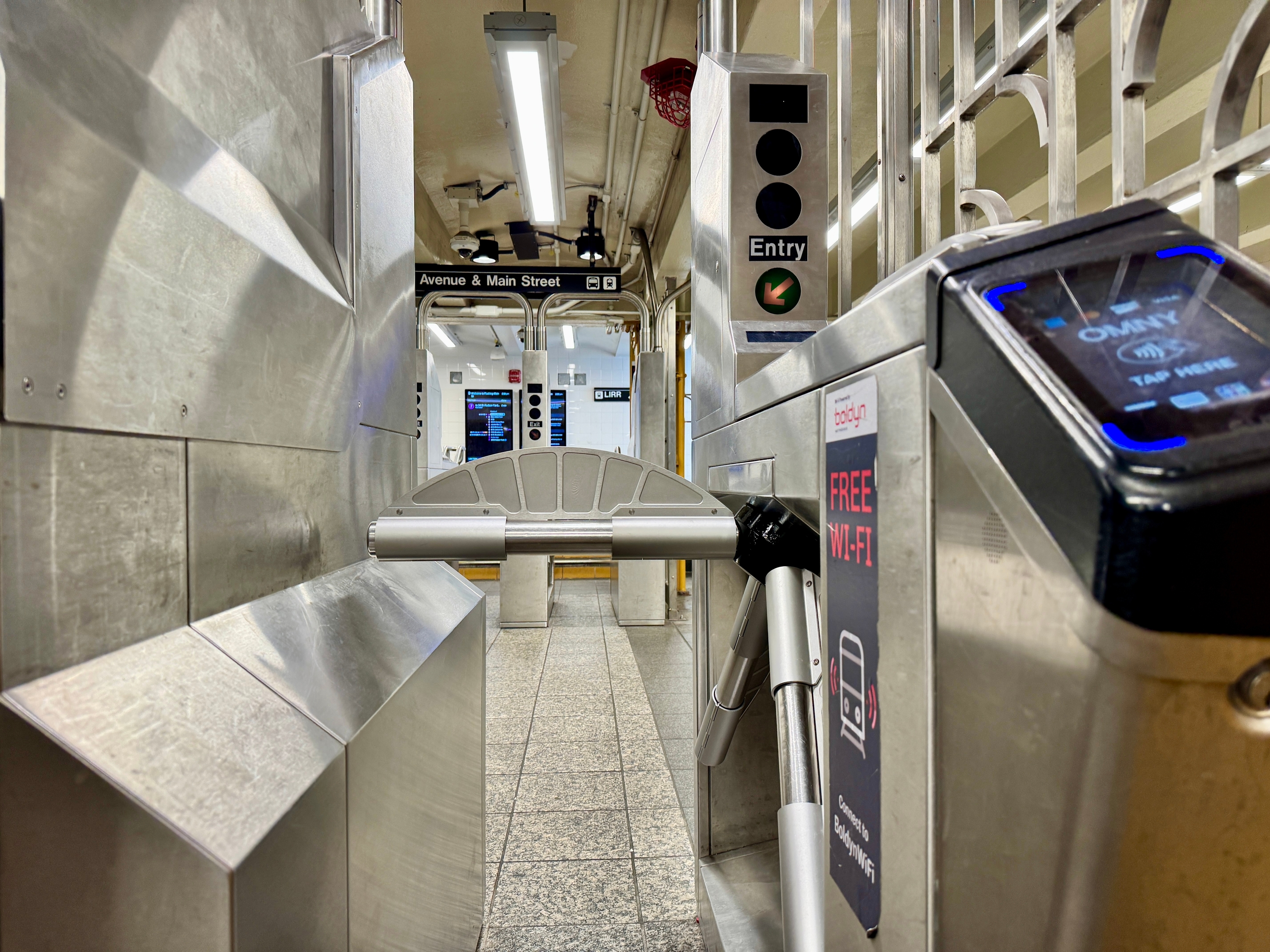
"Those jagged metal fins and awkward plastic paddles popping up across the system are part of a citywide push by the MTA to make fare evasion harder-and they're coming to nearly every station. According to documents published by the transit agency , the anti-hopping hardware has already been installed at 327 of the city's 472 subway stations. Another 129 stations are slated to get the upgrades by the end of next month, which means most New Yorkers will soon be tapping in alongside what look like shark fins bolted to the fare array."
"The MTA is spending $7.3 million on the rollout, a relatively modest price tag by transit standards, especially compared to the $1.1 billion it has budgeted to install fully redesigned fare gates at 150 stations as part of its five-year capital plan. Think of the spikes and paddles as the fast, cheap fix while the big-ticket turnstiles are still on the way."
"The metal fins are about three feet tall and sit between turnstiles, with spikes along the top designed to stop people from grabbing the sides and hoisting themselves over. The plastic paddles attach directly to the turnstile arms, making it harder to leap cleanly across without tripping. Together, they're meant to shut down some of the most common fare-dodging moves."
MTA has installed anti-hopping hardware at 327 of 472 subway stations, with another 129 stations scheduled for upgrades by the end of next month, reaching most stations. The initial rollout cost $7.3 million, while the agency has budgeted $1.1 billion for fully redesigned fare gates at 150 stations in its five-year capital plan. The hardware includes roughly three-foot-tall metal fins with spikes and plastic paddles attached to turnstile arms to prevent grabbing, hoisting, and hopping. Stations with the equipment have seen about a 60% drop in fare evasion. Estimated lost revenue this year is roughly $400 million, up from $285 million in 2022.
Read at Time Out New York
Unable to calculate read time
Collection
[
|
...
]