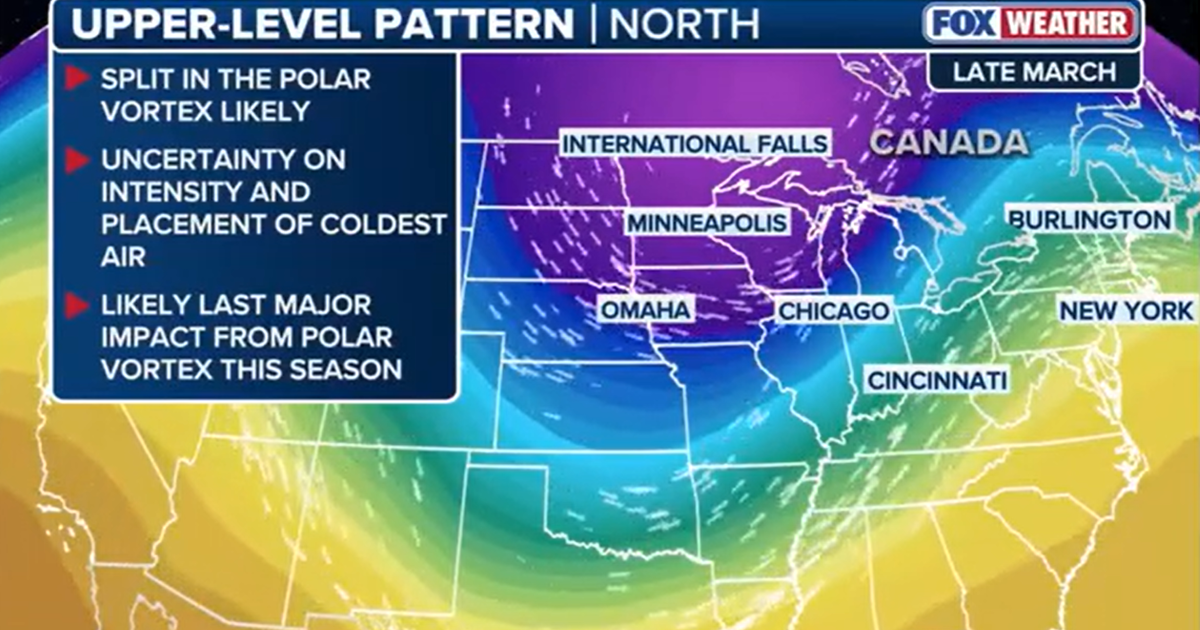
Long-range forecast models indicate the polar vortex, a mass of cold air typically positioned near the North Pole, may split by the end of March. If this occurs, colder air could shift southward into the northern United States, including the Northeast and New York City. The exact location where the coldest air settles remains uncertain, which will determine whether the city experiences a noticeable temperature drop or only a minor dip. Even a brief cold spell could disrupt early spring warming and affect outdoor plans. The polar vortex has been a significant driver of cold outbreaks throughout the winter, and forecasters suggest this could represent its final major impact before temperatures trend warmer heading into April.
"Long-range forecast models suggest the polar vortex - a mass of cold air typically locked near the North Pole - could split by the end of March. If that happens, colder air may shift into parts of the northern U.S., including the Northeast. Forecasters say this pattern could bring below-average temperatures to areas like New York City late in the month."
"Even a brief return to colder weather could disrupt the early spring warmup and affect outdoor plans across the city. While widespread snow is not currently expected, the shift could bring a reminder that winter isn't quite finished yet."
"The polar vortex has been a major driver of cold outbreaks this winter across the U.S. Forecasters say this could be its final significant impact of the season as temperatures trend warmer heading into April."
Read at FOX 5 New York
Unable to calculate read time
Collection
[
|
...
]