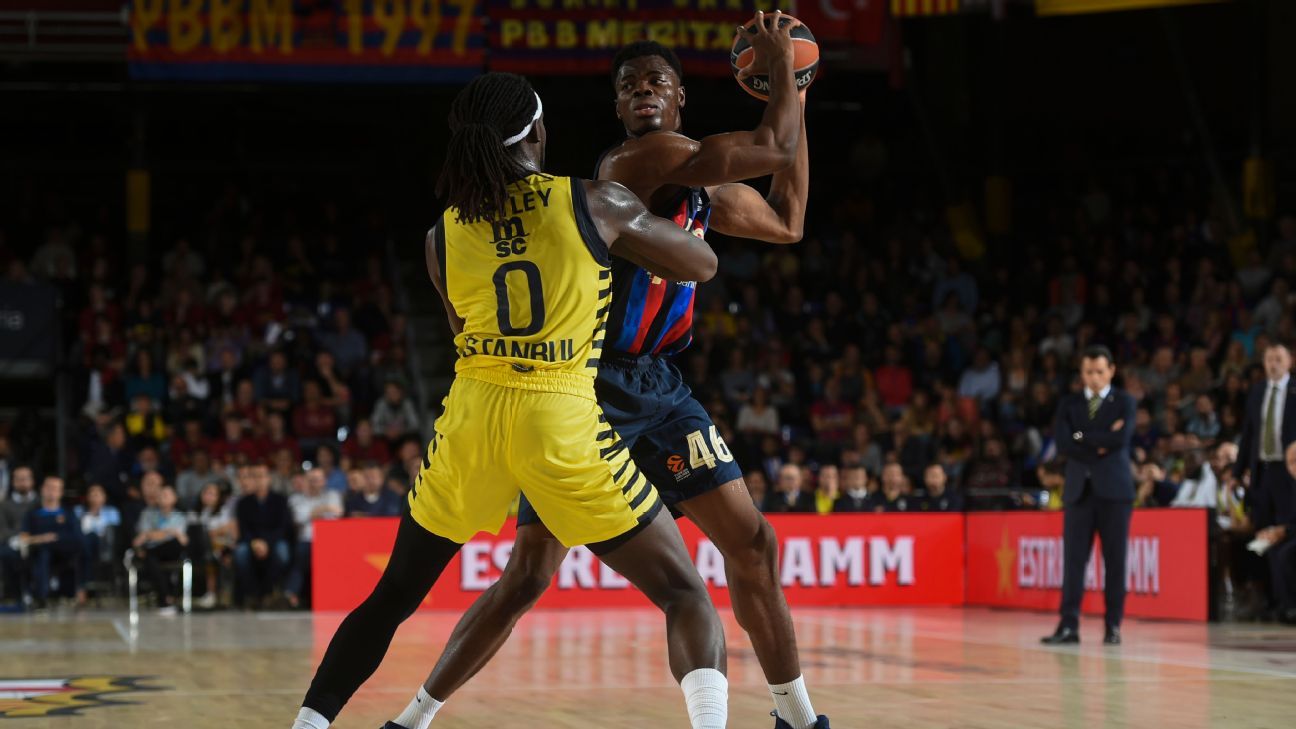
"Ideally, college basketball would have organized itself so that teams weren't adding dudes from European pro leagues in the middle of the season. Your roster on, say, Nov. 1, is your roster. Is that too much to ask? They have trade deadlines and signing windows in the NBA and NFL, after all. How about this: If you enter the NBA draft, you can't still play college ball."
"That's how Baylor got a stocking (and hoop) stuffer on Christmas Eve, when it announced it had signed James Nnaji, a 21-year-old, 7-foot center. You might remember him as the 31st selection of the 2023 NBA draft. Detroit picked him that night. He was later traded to Charlotte and then the New York Knicks. Nnaji has never seen NBA minutes (other than in the summer league) but has been playing pro ball in Europe since 2020."
College basketball currently permits teams to add professional players from overseas during the season, producing midseason roster upheavals and competitive imbalance. Baylor signed 21-year-old James Nnaji, a former 2023 NBA draft pick who has played professionally in Europe since 2020, yet retains four years of NCAA eligibility. The system lacks roster-freeze dates comparable to NBA and NFL deadlines, allowing late arrivals that affect conference play. College leadership failed to anticipate or regulate these developments, focusing on control rather than proactive planning. Coaches and programs exploit permissive rules to bolster rosters, exposing regulatory confusion around eligibility and fairness.
Read at ESPN.com
Unable to calculate read time
Collection
[
|
...
]