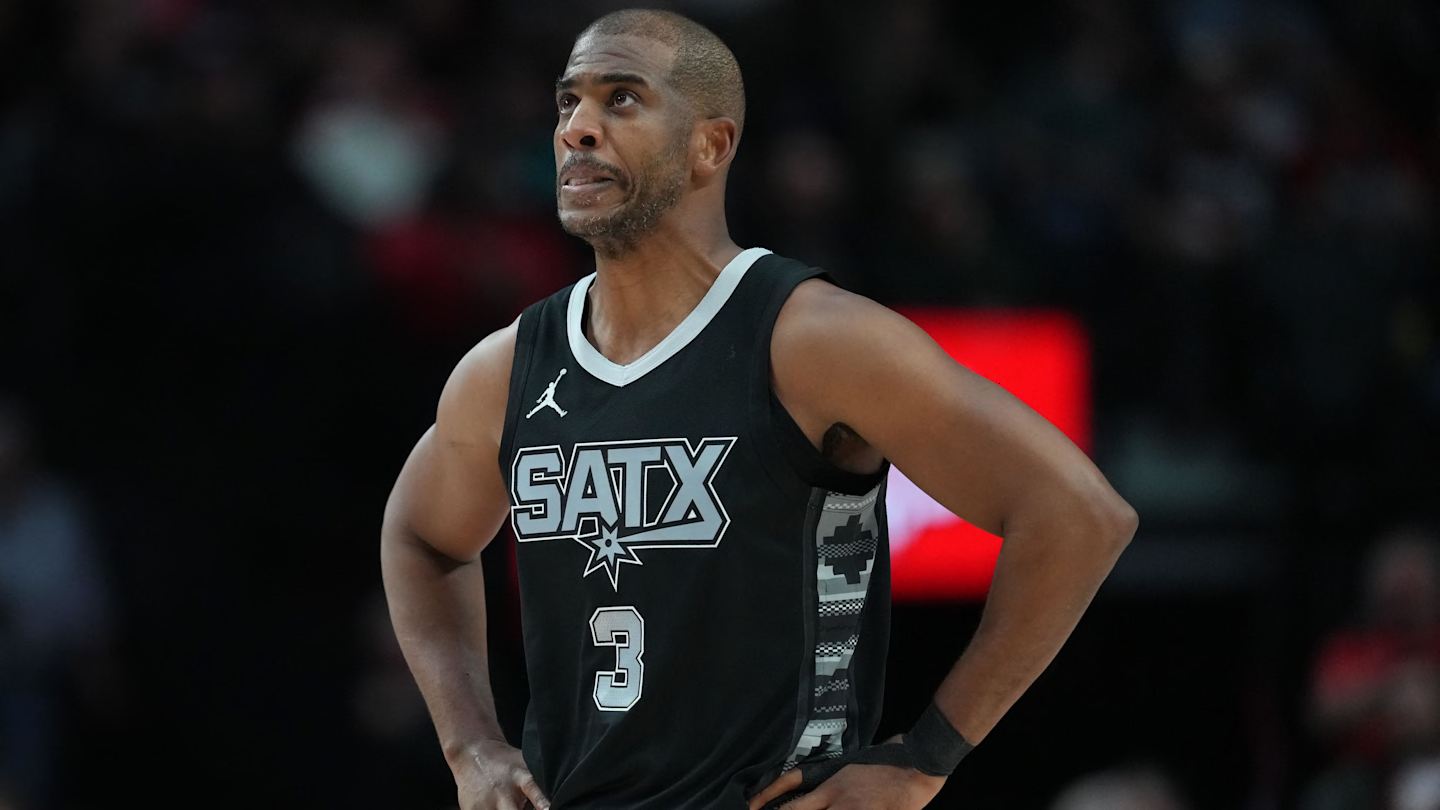
Toronto traded Ochai Agbaji and a 2032 second-round pick for Chris Paul, with plans to waive Paul and treat the move as a salary-dump. The team then sent a 2026 second-round pick to Golden State for Trayce Jackson-Davis, effectively turning two second-rounders and Agbaji into Jackson-Davis. The front office prioritized restraint, marginal roster depth improvements, and dropping below the luxury tax instead of cashing in future assets for short-term gains. Using Chris Paul as the vehicle removed any potential on-court benefit, though Paul could have stabilized bench units and added ballhandling if retained.
"When paired with Toronto's later deal with the Golden State Warriors, sending a 2026 second-round pick for Trayce Jackson-Davis, the Raptors effectively turned two second-round picks and Agbaji into Jackson-Davis. That is not a terrible deadline outcome. Many expected Toronto to be one of the teams making a bigger splash at the trade deadline, given its movable contracts and control of all future first-round picks."
"If Toronto was unwilling to move one of its higher-impact contributors, then Agbaji became its most useful salary-matching asset. The Raptors were also roughly $1 million over the luxury tax, making a cost-cutting move inevitable. Given those constraints, Toronto had options. They could have traded Agbaji for a younger, unrefined player on a minimum contract. They also could have targeted a veteran expected to actually play rotation minutes. Instead, Toronto acquired Paul, a player they intend to waive, gaining no on-court value from the transaction itself."
Read at Raptors Rapture
Unable to calculate read time
Collection
[
|
...
]