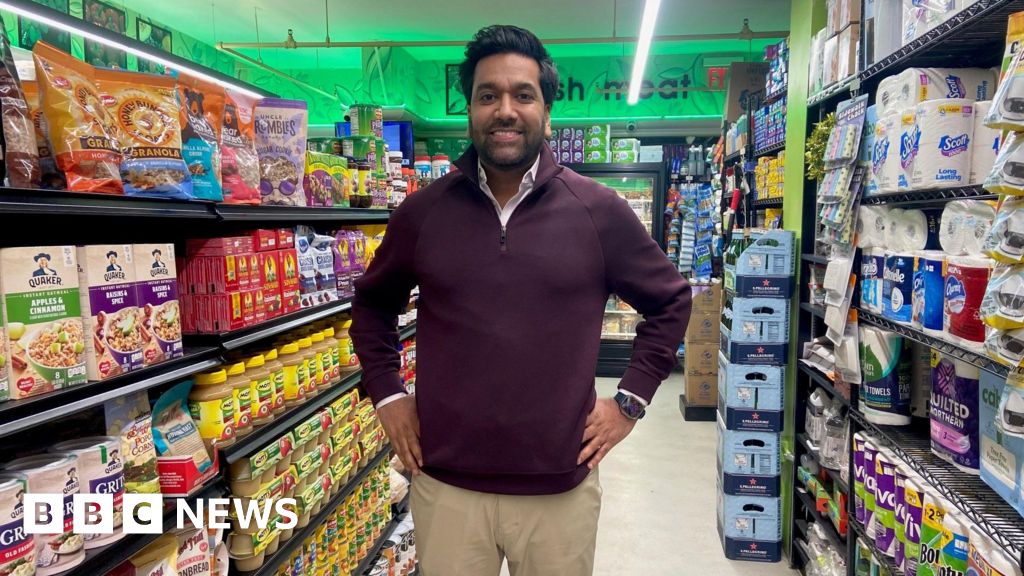
"He says he paid roughly $5 to his distributor to get the pack of Honey Bunches of Oats onto the shelf. But his much larger rivals, the big US supermarket chains, can sell that same box for around $5 - essentially, the price he has to pay wholesale. That dynamic makes it "impossible for us to compete.""
"Some of our competitors, obviously the larger chains and the larger big-box stores - they have direct relationships with manufacturers. They have preferred pricing. That's where it becomes challenging [for us]."
"In his testimony before the Senate Committee on Banking, Housing and Urban Affairs in May 2024, Vora described "fluctuating, opaque pricing structures" from distributors."
Independent grocery stores across the United States, numbering over 21,000 and accounting for one-third of grocery sales, struggle with significant pricing disadvantages. Small store owners like Alap Vora pay wholesale prices that large supermarket chains can match or undercut through retail sales, making competition untenable. Major retailers benefit from direct manufacturer relationships and preferred pricing structures unavailable to independent operators. Vora testified before the US Senate Committee on Banking, Housing and Urban Affairs in May 2024, highlighting fluctuating and opaque pricing structures from distributors. His willingness to speak publicly about these challenges reflects his comfort as a college-educated US citizen, contrasting with his immigrant father's reluctance to voice concerns about systemic business pressures.
#independent-grocery-stores #pricing-inequality #small-business-competition #retail-distribution #senate-testimony
Read at www.bbc.com
Unable to calculate read time
Collection
[
|
...
]