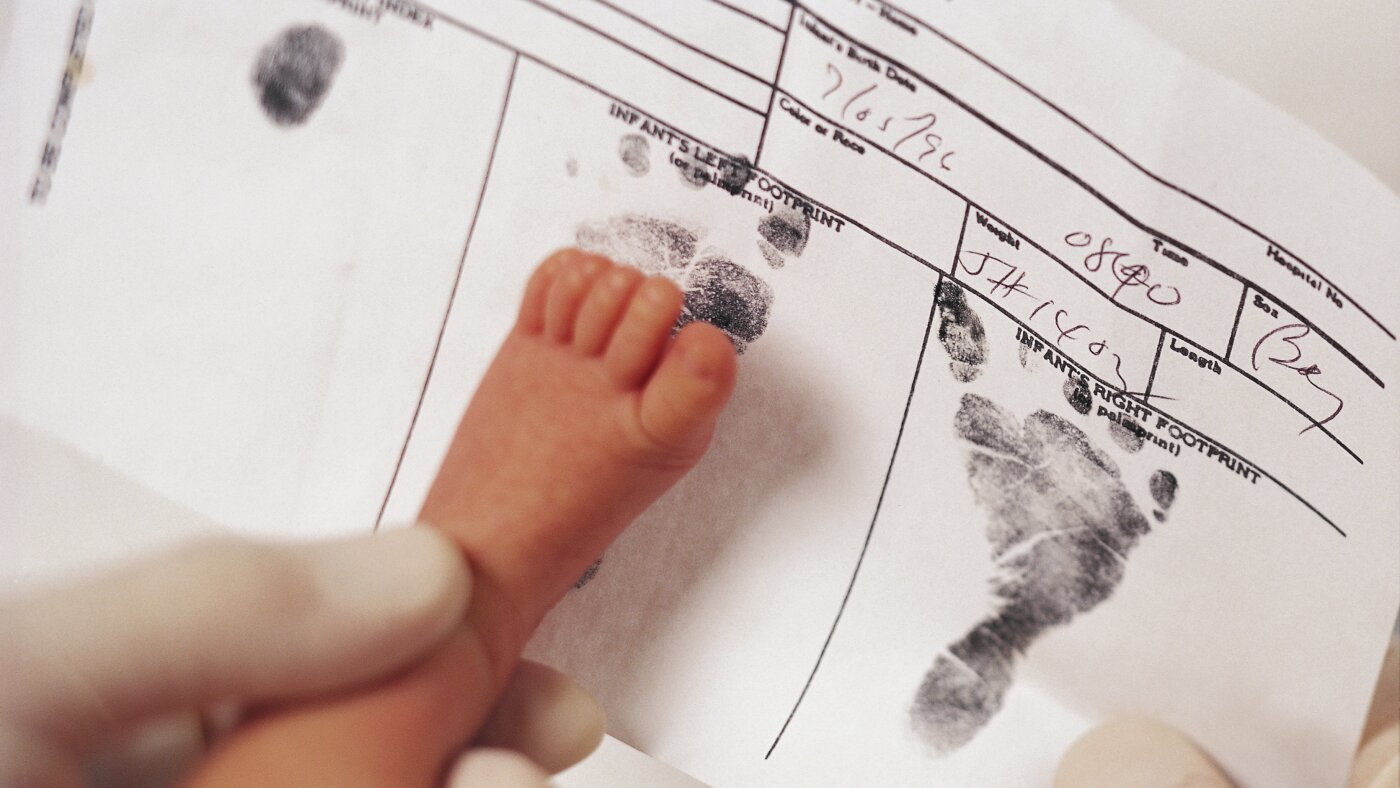
"When McKinnon was born, her parents believed registering their children for any form of government identification was a form of slavery. A Social Security number was the "mark of the beast," McKinnon recalled them saying. She has been trying, unsuccessfully, to rectify her parents' decision for half her life."
"McKinnon gave birth at home because she could not get health insurance to see an OB-GYN as her pregnancy progressed. She could not get a job to help her husband support their child. She could not even legally marry her husband. McKinnon could not do any of these things because, despite being born in the United States, she didn't have a Social Security number."
"McKinnon did not begin to comprehend the magnitude of her situation until she applied for a driver's license at age 16. She hoped to start driving to high school for a more traditional education, to eventually join the military and go into medicine. However, she didn't have the needed identification to apply for a driver's license."
Abigail McKinnon, born in Colorado in 1994, lacks a birth certificate and Social Security number because her parents refused government identification on religious grounds, viewing it as slavery and the mark of the beast. This documentation gap prevented her from obtaining health insurance, seeing an OB-GYN during pregnancy, securing employment, legally marrying, or getting a driver's license. She gave birth at home and required hospital stitches without insurance coverage. For over two decades, McKinnon attempted unsuccessfully to obtain a delayed birth certificate from Colorado, which had among the country's most restrictive rules for such cases. Her situation recently prompted Colorado to reform its delayed birth certificate policies, making them less restrictive and providing her a path forward.
#birth-certificate-documentation #government-identification #healthcare-access #religious-exemptions #delayed-birth-certificate-reform
Read at www.npr.org
Unable to calculate read time
Collection
[
|
...
]