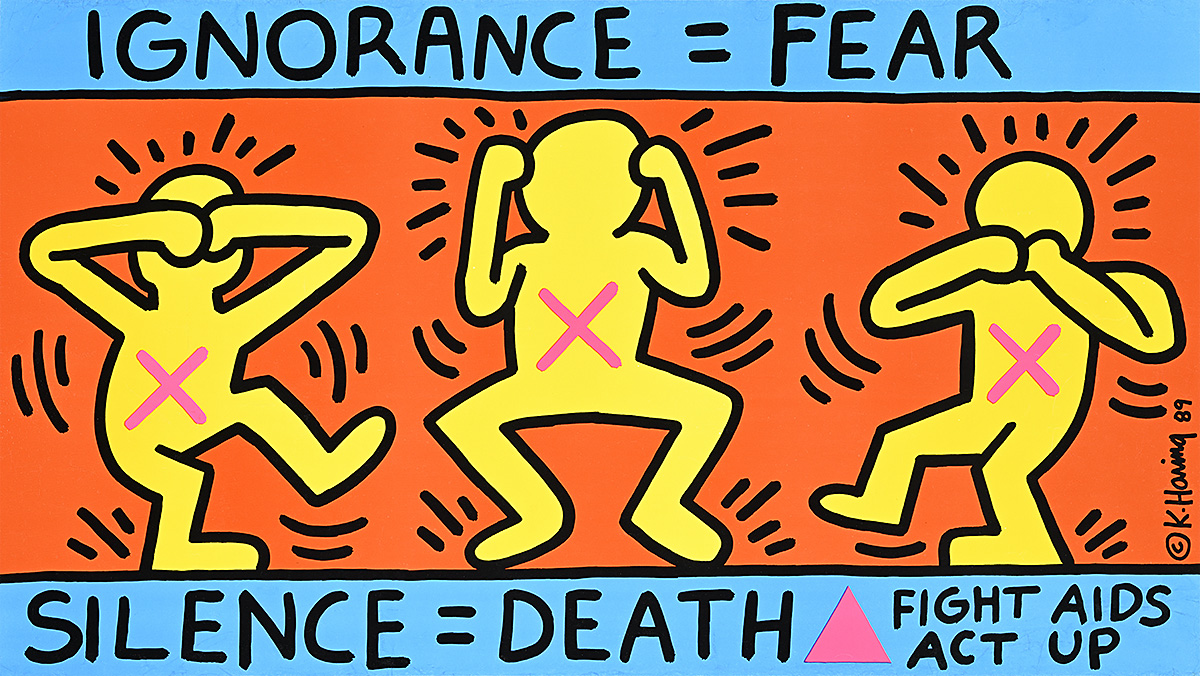
"Gay dance clubs, besides offering sweaty, blissful spaces to let loose, served as safe havens during the darkest days of the crisis. Places where the LGBTQ community gathered for emotional support, to share vital information, and to raise money for AIDS groups like ACT UP, GMHC, and amfAR."
"As the "gay cancer" began decimating young gay men in the early 1980s, local groups identified the danger while public health authorities, including Republican president Ronald Regan, blatantly ignored the crisis. The early term, GRID (Gay-Related Immune Deficiency), biased public perception, implying the syndrome could only afflict "homosexuals.""
"It is supremely sobering that many of the poster creators were cut down in their prime due to complications from HIV/AIDS."
During the early AIDS epidemic in the 1980s, the LGBTQ community mobilized through visual activism and community spaces when public health authorities and political leaders ignored the crisis. Gay dance clubs served as safe havens where people gathered for emotional support, shared critical information, and raised funds for organizations like ACT UP, GMHC, and amfAR. Club invitations and posters became powerful tools reflecting this activism and solidarity. The Poster House Museum's upcoming exhibition documents this visual response through posters, flyers, and graphics from New York's fight against AIDS. Many of the artists who created these impactful images died from HIV/AIDS-related complications, making their legacy particularly poignant.
#aids-activism #visual-culture-and-posters #lgbtq-community-response #1980s-90s-epidemic #act-up-and-grassroots-organizing
Read at Gay City News
Unable to calculate read time
Collection
[
|
...
]