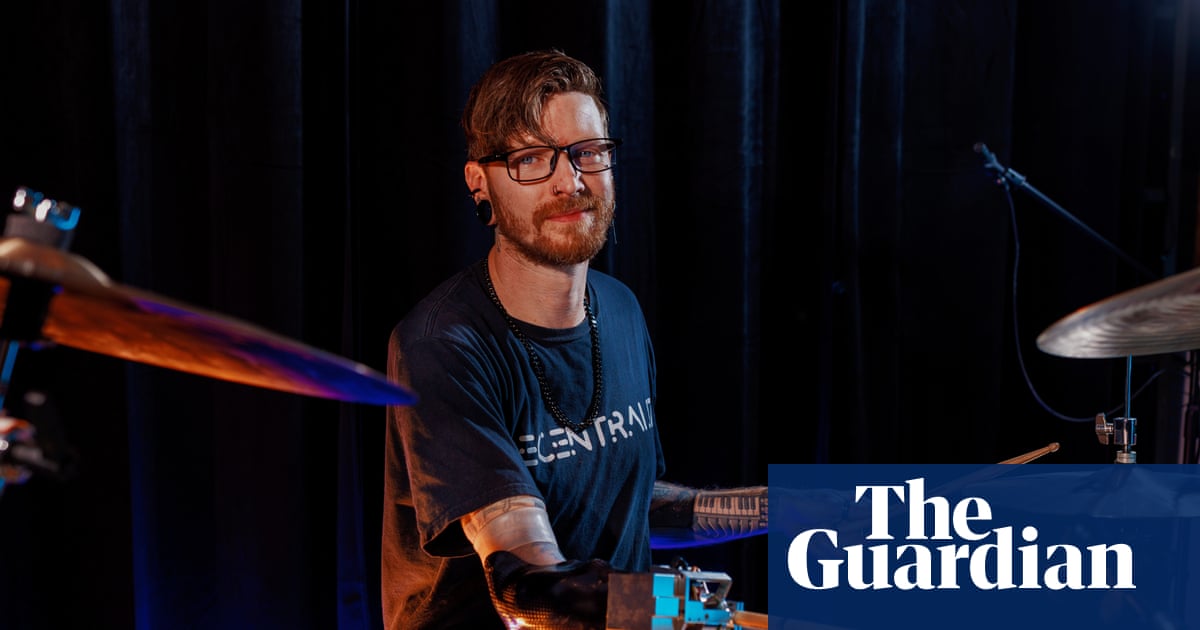
"I woke up in hospital. I had fourth-degree burns down my right arm, all the way to the bone marrow. After four weeks in the burns unit, doctors gave me a choice: spend years attempting to save the arm, or amputate and leave hospital within a week. I chose amputation. It was the right decision but it was still devastating."
"My drums were packed away in my mum's attic. One afternoon, I dragged them out, set them up on the porch and taped a drumstick to my amputated arm. Playing was incredibly painful, but I could still keep a groove. For the first time since the accident, something shifted."
"I started developing my own drumming prosthetic. The first one was crude—mouldable plastic shaped to hold a drumstick, attached to a standard prosthetic with a rubber band. Another, made with springs and bearings, worked well enough for me to start playing with my reggae band again."
A drummer suffered severe electrical burns and fourth-degree burns to his right arm while working on a restaurant roof in Atlanta. Faced with the choice between years of attempted arm salvage or amputation, he chose amputation for faster recovery. Initially devastated by the loss of his musical career, he eventually retrieved his drums and began experimenting with custom prosthetics. Starting with crude designs using mouldable plastic and rubber bands, he progressively developed more sophisticated prosthetics incorporating springs and bearings. These innovations allowed him to resume playing with his reggae band and re-enroll at the Atlanta Institute of Music approximately one year after the accident.
#prosthetic-innovation #amputation-recovery #musical-resilience #adaptive-technology #disability-adaptation
Read at www.theguardian.com
Unable to calculate read time
Collection
[
|
...
]