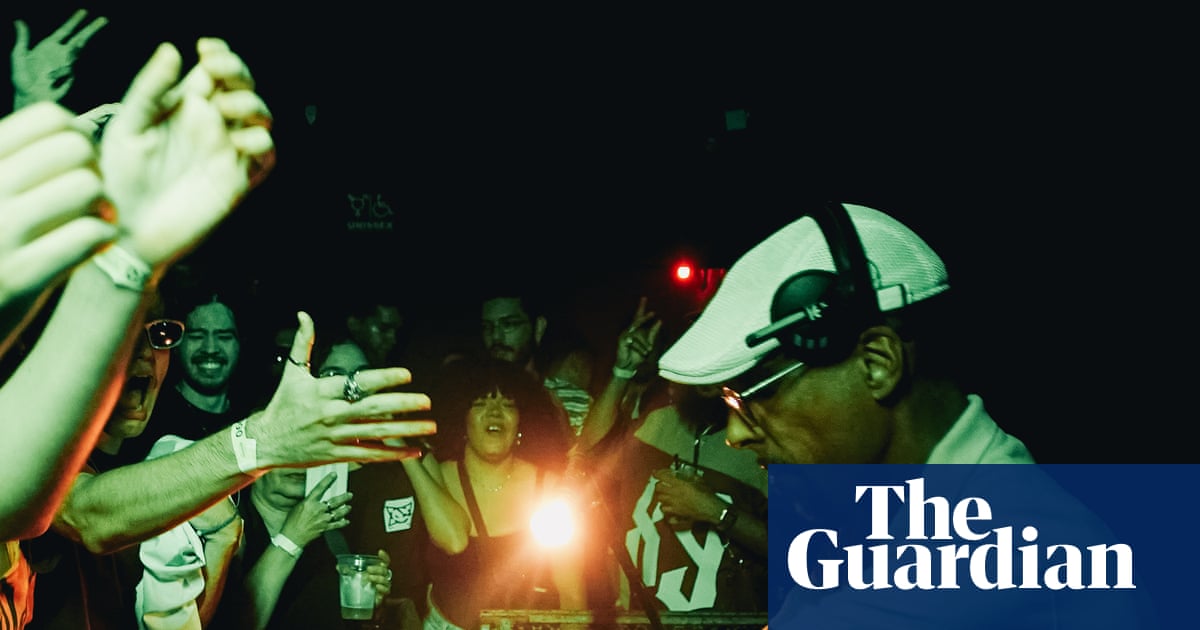
"Wagner Ribeiro de Souza wasn't carrying much in his backpack. A local compilation of techno, house and jungle hits, a couple of news clippings and a VHS tape with footage from the club where he played weekly: small fragments of a music scene that he, under the moniker DJ Patife, and some friends were building in Sao Paulo, Brazil. It was 1998. He had travelled to London to talk his way into the office of Movement, one of Britain's most important drum'n'bass nights, with a single goal: pitching an edition of the party in Brazil."
"I played that tape recorded at the club, Patife remembers. And when Bryan Gee saw like 2,000 people singing, he said: Let's go to Brazil right now!' From that moment on, drum'n'bass started flowing between the two countries, at just the right time. By the end of the 90s, drum'n'bass had become a bit boring in the UK, says Patife the chaos of jungle, which had emerged in the UK at the start of the decade, was starting to be codified into more rigid, macho drum'n'bass tracks."
"The ginga, or swing, of the Brazilian style, rooted in bossa nova samples and melodious instrumentation, reinvigorated the whole scene. We brought together two spectacular things: Brazilian music and electronic music, Patife says. Everyone drank from the Brazilian source! In turn, the UK also opened up the doors to UK electronic music for the Latin world, spanning from speed garage to two-step and grime. That cultural crossroads where Brazilian sounds met breakbeats and UK bass is now more vibrant than ever thanks to a new generation of artists on both sides of the Atlantic such as British producer and DJ Sherelle."
"There's a natural connection between Brazil and the UK: our music tastes are both so vast, she says. And if you've come from a working-class or even underclass background in the UK, music is really your only outlook to escape from certain things and express yourself, and I noticed that [is the same] here for a lot of the artists. DJ Patife in London, January"
In 1998, DJ Patife traveled from São Paulo to London with a small collection of music materials, including a VHS tape of his weekly club footage. He sought to pitch a drum'n'bass party edition in Brazil to Movement, a major UK drum'n'bass night. Bryan Gee reacted to the tape’s crowd energy and pushed for immediate plans to bring the event to Brazil. During the late 1990s, UK drum'n'bass had become more rigid, while Brazilian ginga—swing rooted in bossa nova samples and melodic instrumentation—reinvigorated the scene. The collaboration connected Brazilian music with electronic breakbeats and also introduced UK electronic styles to Latin audiences, influencing speed garage, two-step, and grime. A shared working-class musical outlet strengthened the cross-Atlantic link, with newer artists continuing the momentum.
Read at www.theguardian.com
Unable to calculate read time
Collection
[
|
...
]