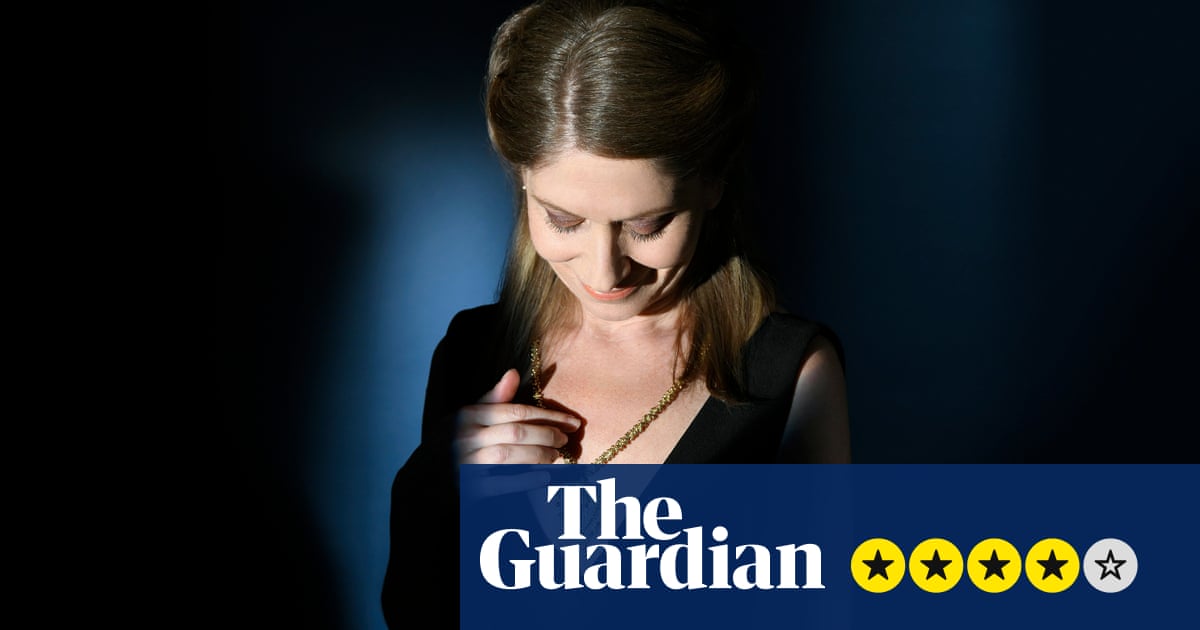
"Barbara Strozzi was a true 17th-century revolutionary. The adopted and quite possibly the natural daughter of poet and librettist Giulio Strozzi, she grew up in the bosom of the Venetian intelligentsia, taking part in debates from the age of 15. Her tally of 120 published works for solo voice was unequalled by any of her contemporaries. Despite remaining single, she managed to support four children on the income from her music alone."
"The musical language is full of madrigalian effects: dissonant intervals to express pain; measured rests to convey sighs and tears. Laura Catrani's unfussy soprano is emotive in L'Amante Segreto (The Secret Lover), a bittersweet lament over a drooping ground bass, and lively in Costume de Grande (Customs of the Great), Strozzi's setting of one of her father's poetic tilts at high society. Riccardo Doni's direction lets this music breathe and therefore speak."
Barbara Strozzi emerged from Venetian intelligentsia, possibly Giulio Strozzi's daughter, engaging in debates from age 15. She published 120 solo-voice works, an unequalled output among contemporaries, and supported four children solely from music despite remaining single. Her compositional quality rivals Monteverdi. Virtuosissima Sirena collects cantatas and arias alongside trio sonatas by Legrenzi and Castello. Accademia dell'Annunciata performs with two violins, cello, theorbo, double harp and harpsichord, producing a shimmering, sumptuous sound. The music employs madrigalian effects—dissonant intervals for pain, measured rests for sighs. Laura Catrani's soprano captures bitterness and liveliness; Riccardo Doni's direction emphasizes breathing and expression.
Read at www.theguardian.com
Unable to calculate read time
Collection
[
|
...
]