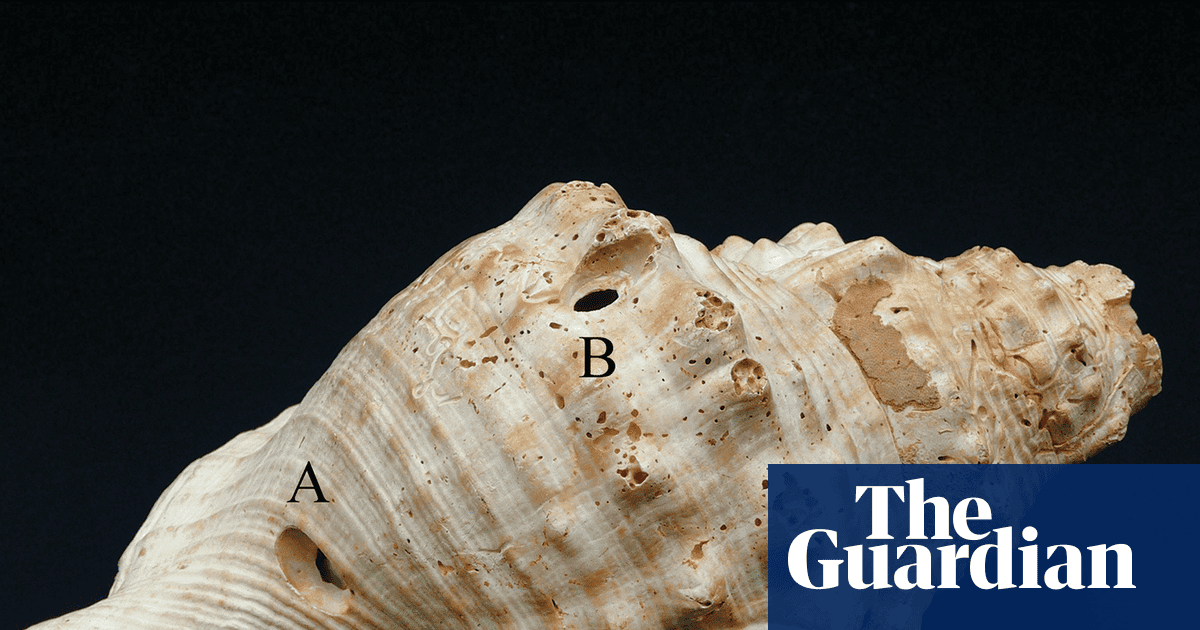
"As a child, Miquel Lopez Garcia was fascinated by the conch shell, kept in the bathroom, that his father's family in the southern Spanish region of Almeria had blown to warn their fellow villagers of rising rivers and approaching flood waters. The hours he spent getting that characteristically potent sound out of it paid off last year when the archaeologist, musicologist and professional trumpet player pressed his lips to eight conch-shell trumpets."
"In an article co-authored with his colleague Margarita Diaz-Andreu, the University of Barcelona researcher argues that 12 large shell trumpets found in Neolithic settlements and mines in Catalonia and dated to between the late fifth and early fourth millennia BC may have been used as long-distance communication devices and as rudimentary musical instruments. The fact that the shells appeared to have been collected after the Charonia lampas sea snails within them had died suggests they had been gathered for non-culinary purposes,"
"To put their theories to the test, the pair obtained permission to conduct acoustic experiments on the eight shell trumpets, which are sufficiently intact to produce sound. In November 2024, Lopez Garcia coaxed a really powerful, stable tone from the shells. It's quite amazing that you get that very recognisable tone from a simple instrument that is just a very slightly modified animal body, he says. I think the closest instrument today in terms of tone is the french horn."
Large Charonia lampas shells recovered from Neolithic settlements and mines in Catalonia date to the late fifth–early fourth millennia BC and number twelve in the assemblage. Shells show modified tips and were collected after the snails' deaths, indicating non-culinary purposes and use as trumpets. Acoustic experiments on eight intact shells produced powerful, stable tones comparable in timbre to the French horn. The tones suggest the shells could serve for long-distance signaling and rudimentary musical performance, offering insight into communication, ritual, or social practices in north-east Spain around 6,000 years ago.
Read at www.theguardian.com
Unable to calculate read time
Collection
[
|
...
]