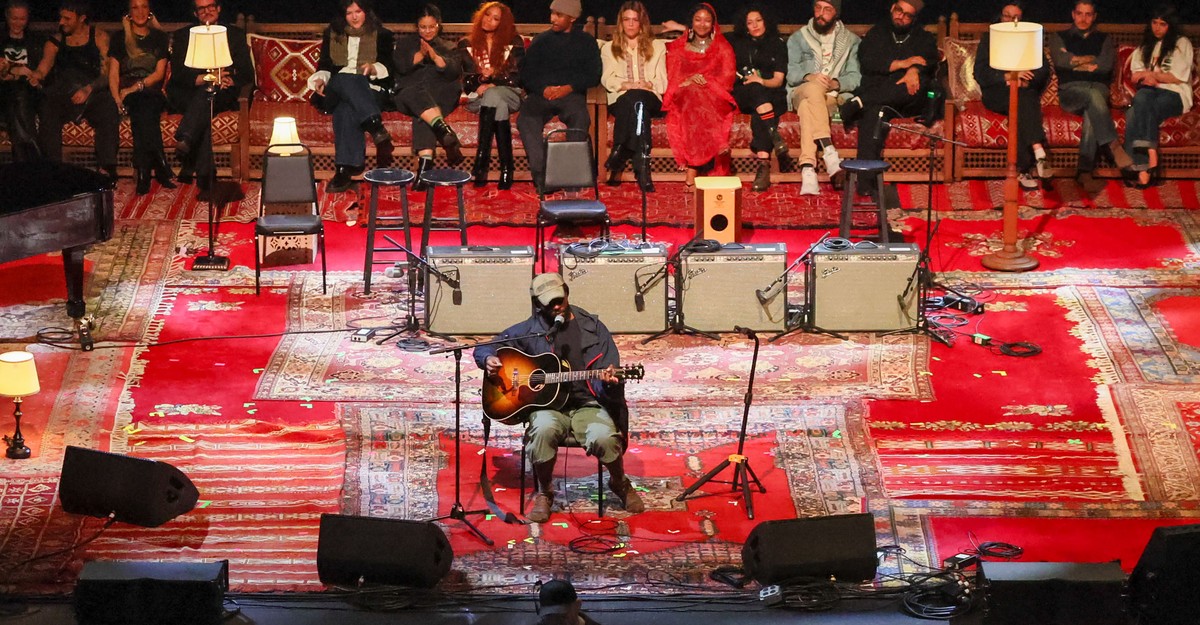
"In early January, at the Shrine Auditorium in Los Angeles, a concert benefit for Palestine and Sudan conjured all the fury of an acoustic night at the local coffee shop. Musicians played stripped-down songs on a stage decorated with rugs, floor lamps, and couches. Members of the audience, mostly 20-somethings and teens, leaned in and filmed intimate performances by their favorite cult artists."
"Music is the art form most associated with protest, and its history is full of united actions against war and humanitarian crises. Think of Woodstock-era sung-and-spoken condemnations of the Vietnam War, the 1980s megaconcerts and charity singles inspired by famine in Ethiopia and apartheid in South Africa, and the Rock Against Bush compilations that challenged America's invasion of Iraq. Only a few years ago, pop music overflowed with sloganeering lyrics and concert rallies related to Black Lives Matter, #MeToo, and Donald Trump."
"But the quiet broke late in the evening when a woman with a mane of red curls walked onstage. Shrieks and screams rang out as people recognized the surprise guest: the 27-year-old superstar Chappell Roan. I'd come to watch precisely because no one of Roan's stature had been slated to play what have been, to date, the American music world's only major communal performances in response to the conflict between Israel and Palestine."
A benefit concert at the Shrine Auditorium combined intimate, stripped-down performances with surprise high-profile participation, including Chappell Roan. The Artists for Aid event assembled a 20-artist lineup spanning cult favorites, emerging TikTok stars, and mainstream names. Previous Artists for Aid installments in 2024 drew little media attention despite global outrage over the Israel–Palestine conflict. Historically, popular music has driven united protest actions against wars and humanitarian crises, but visible musical activism in the 2020s has waned. The relative muted scale of American music-world responses contrasts with past megaconcerts and charity singles, suggesting uncertainty about whether public music activism is shifting.
Read at The Atlantic
Unable to calculate read time
Collection
[
|
...
]