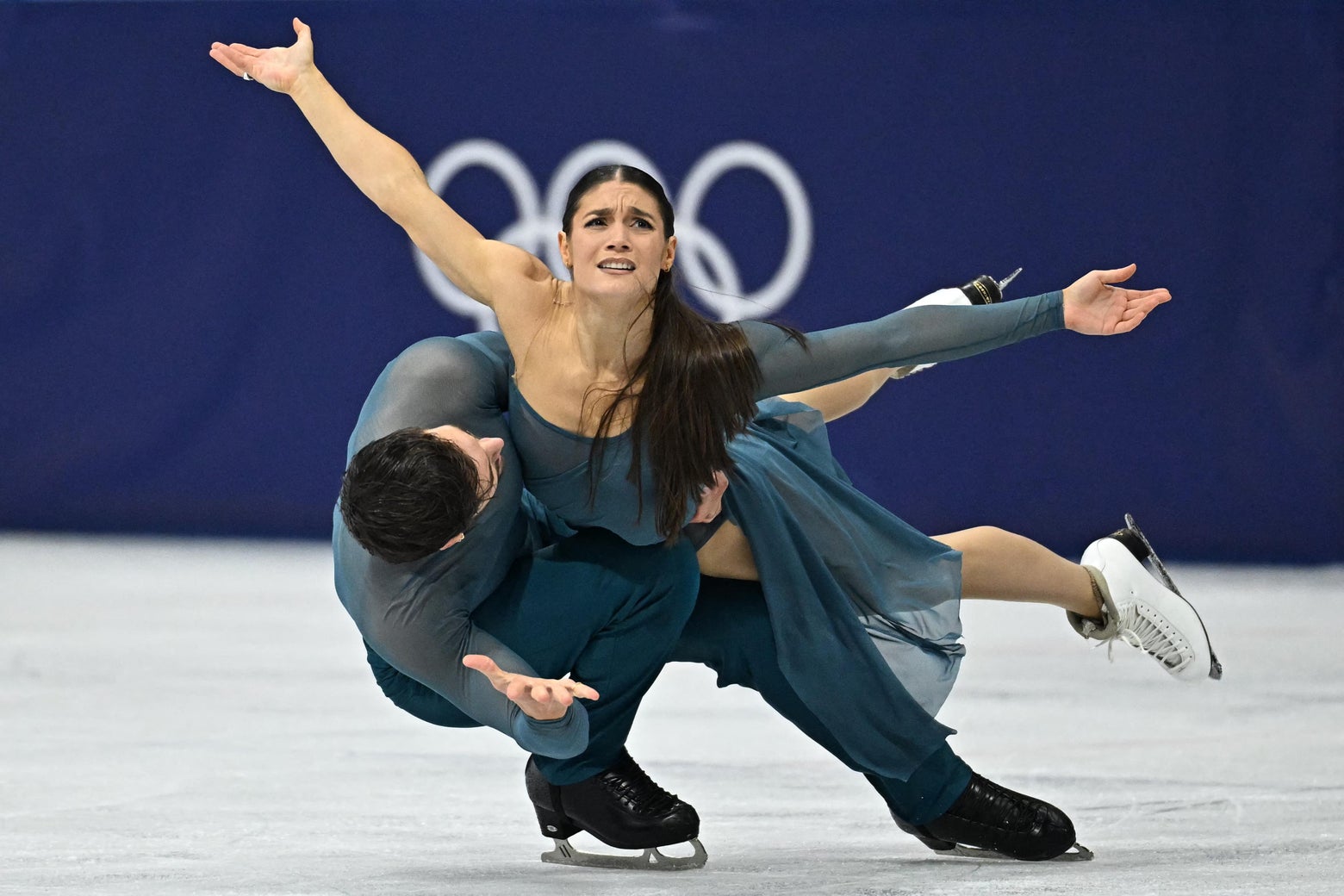
"I absolutely give you permission to learn what twizzles are, but if you're coming into this as a once-every-four-years viewer, I encourage you to appreciate these performances based on how the skating made you feel. For me, watching it reminds me of the first time I was taken to a classical music performance: "What am I supposed to do with my brain during this?" I thought."
"Even after doing pairs figure skating for 16 years, I am a bit lost in the intricacies of judging ice dance. While yes, it is on skates, and yes, it is performed to music, it's a whole different beast. Ice dancers are not allowed to perform jumps or overhead lifts. Their skating more closely resembles ballroom dance, focusing on musicality and edgework."
"One of the surprises of the night was Emilea Zingas and Vadym Kolesnik. Originally from Ukraine, Kolesnik was able to obtain U.S. citizenship last summer to be eligible for these Games. In 6 th place after the rhythm dance, Zingas and Kolesnik were able to pull up to the top 5 with a stunning performance to Prokofiev's "Romeo and Juliet." I found that their skating style really fit the character of the music, and they punctuating each beat of the piece beautifully."
Viewers can appreciate ice dance based on emotional response rather than technical understanding. Twizzles and other elements can be learned, but enjoyment often comes from the performance's beauty. Ice dance forbids jumps and overhead lifts and emphasizes musicality, edgework, and ballroom-style partnering. The discipline functions like a dessert course in figure skating, offering different skills from pairs or singles. Emilea Zingas and Vadym Kolesnik rose from sixth to the top five with a stirring free skate to Prokofiev's Romeo and Juliet, matching character to choreography and punctuating musical beats. Romantic gestures should be suggestive rather than literal during skating.
Read at Slate Magazine
Unable to calculate read time
Collection
[
|
...
]