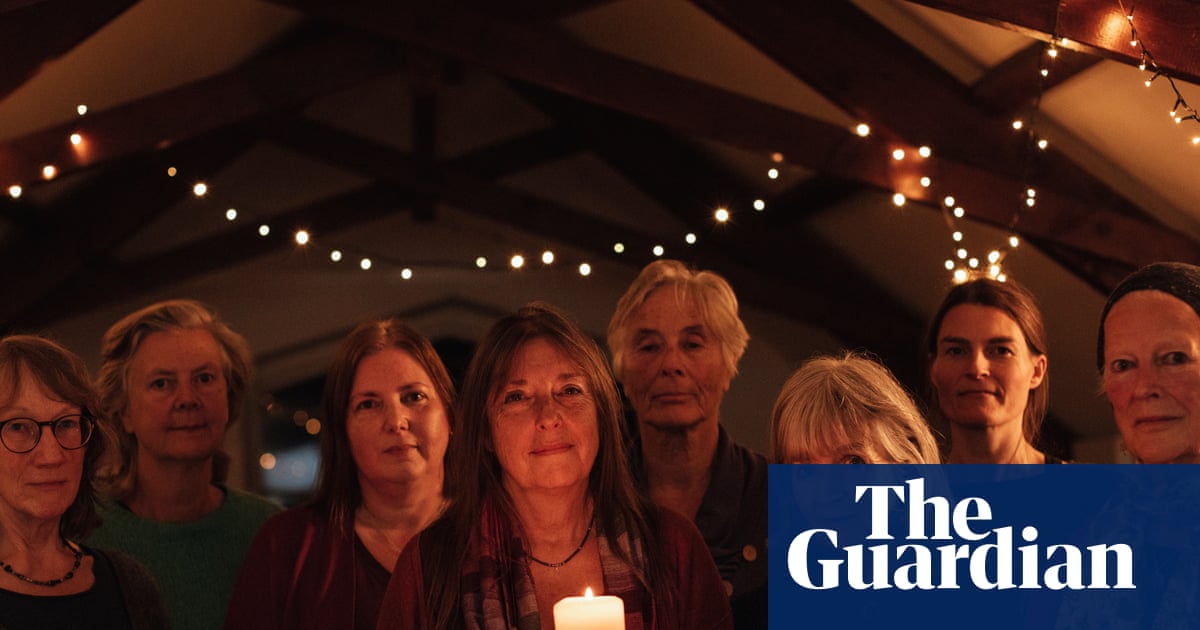
"It's a brisk November afternoon in the village of South Brent in Devon and, in a daffodil yellow cottage, two women are singing me lullabies. But these aren't the sort of lullabies that parents sing to their children. They are songs written and sung for terminally ill people, to ease them towards what will hopefully be a peaceful and painless death. We are at the home of Nickie Aven, singer and leader of a threshold choir."
"These patients are usually in hospices or in their own homes being supported by relatives, which is why 67-year-old Aven who is softly spoken and radiates warmth and kindness has asked me to lie down on the sofa under a rug while they sing. She says I can look at them, or I can close my eyes and allow my mind to drift."
"The pair sing a cappella and in harmony. Distinct from elegies or laments, the songs are gently meditative, written to provide human connection and foster feelings of love and safety. They are not just for the benefit of the dying but for friends and relatives caring for them or holding vigil. Their singing is simple, intimate and beautiful. It is also utterly calming."
Threshold choirs sing bespoke lullabies for terminally ill people to ease them toward peaceful, painless deaths and to comfort families and caregivers. Sessions are intimate, a cappella harmonies delivered bedside, in hospices, and in patients' homes, often with the recipient or others present. Songs are meditative rather than elegiac, designed to foster human connection, love, safety and calm. Choirs operate as volunteer groups that do not accept payment or tips. Performances also occur at funerals, memorials and baby blessings, reflecting a focus on life transitions. The movement has roots in practices pioneered by American singer Kate Munger.
Read at www.theguardian.com
Unable to calculate read time
Collection
[
|
...
]