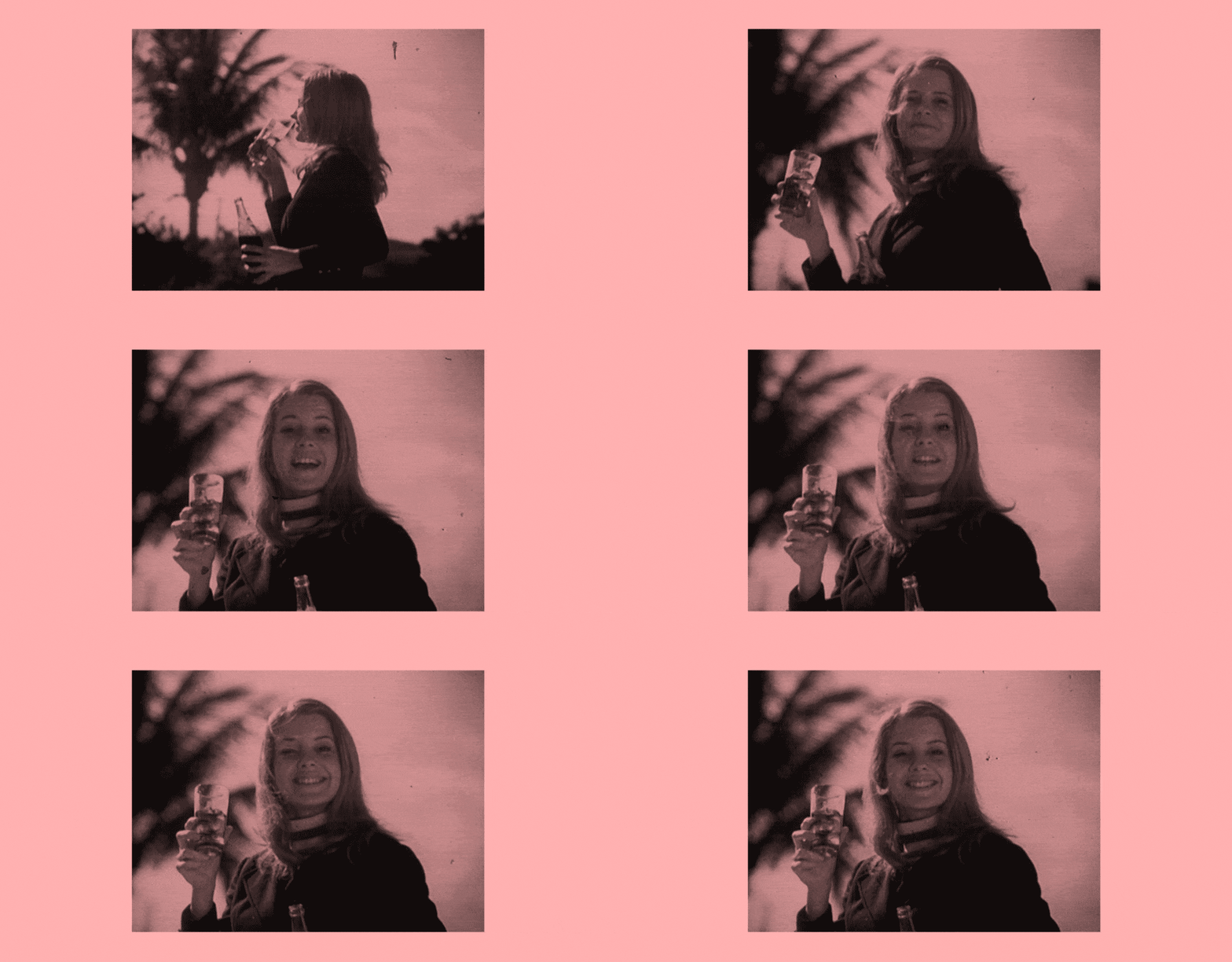
"They played a demo of what would become one of America's earliest advertising jingles. To the tune of "Do Ye Ken John Peel," it went: Pepsi-Cola hits the spot / Twelve full ounces, that's a lot / Twice as much for a nickel, too. Pepsi-Cola is the drink for you. The jingle became a hit. People played it on jukeboxes around the country; it was translated into 55 languages."
"Most of the music industry is made up of people in the gray area between "rock star" and "hobbyist," like the session musicians and composers who make not just albums, but commercial soundtracks and jingles. When a report surfaced in October that OpenAI was developing a music-generation tool similar to products like Suno and Google's Lyria, I wasn't worried about the rock stars. These artists at least have their celebrity to trade on."
An adapted 18th-century tune became a ubiquitous 1942 Pepsi jingle heard on jukeboxes, factory chimes, and in 55 languages. Hummable commercials proliferated on radio until listener complaints and station bans prompted instrumental workarounds. Jingles have supplied steady income for largely anonymous session musicians and composers who exist between rock stardom and hobbyist status. The emergence of AI music-generation tools from companies like OpenAI, Suno, and Google raises questions about the future of advertising music. Advertising musicians lack celebrity leverage, and simple, formulaic jingles may be particularly vulnerable to automation.
Read at The Atlantic
Unable to calculate read time
Collection
[
|
...
]